

The Jewy best of NY’s 2015 Tribeca Film Festival
Top picks include films about a philosophy prof’s family, a bull fighter’s near misses, and a documentary about two sons of Nazis confronting their parents’ past
 Add ToI as a Preferred Source on Google
Jordan Hoffman, a member of the New York Film Critics Circle, is The Times of Israel's long-time film reviewer and the co-host of The Reel Schmooze.

NEW YORK — The 14th annual Tribeca Film Festival has wrapped up and, as usual, there’s an ambivalent taste in my mouth. It’s great to see Instagram hashtags from friends at fab parties, but when you get past the cocktails and special events, you are left with the films.
Situated in the calendar after Sundance, Berlin and Austin’s South By Southwest, and not far before Cannes, Tribeca remains something of a “safety school” for movie debuts. I saw over a dozen films and, quite frankly, I only liked four of them.
Three of those four happen to come from Jewish filmmakers, and I swear this isn’t just confirmation bias, or rooting for “our side.” (One director, I didn’t even know was Jewish until after I saw the film.) As of right now, none of these projects are coming to a theater near you, though keep your eyes and ears open for eventual announcement for theatrical distribution or cable/VOD runs.
“Anesthesia,” from writer-director Jewish-American Tim Blake Nelson, feels if the “Crash” were to mate with Ingmar Bergman somewhere in Woody Allen’s New York. It opens with a violent incident, Sam Waterston bleeding and crying for help in a walk-up apartment doorway, and then jumps back in time a few days. We are introduced to a number of characters that seem to have no connection, and then, slowly, we see how they do eventually fit together.
They converge at that gruesome moment of urban violence but, of course, their individual conflicts are meant to mirror society’s larger ethical struggles. Lucky for us, Waterston, essentially the primary figure in this tapestry, is a retiring philosophy professor at Columbia University, so busting out into weighty monologues is par for the (full credit) course.
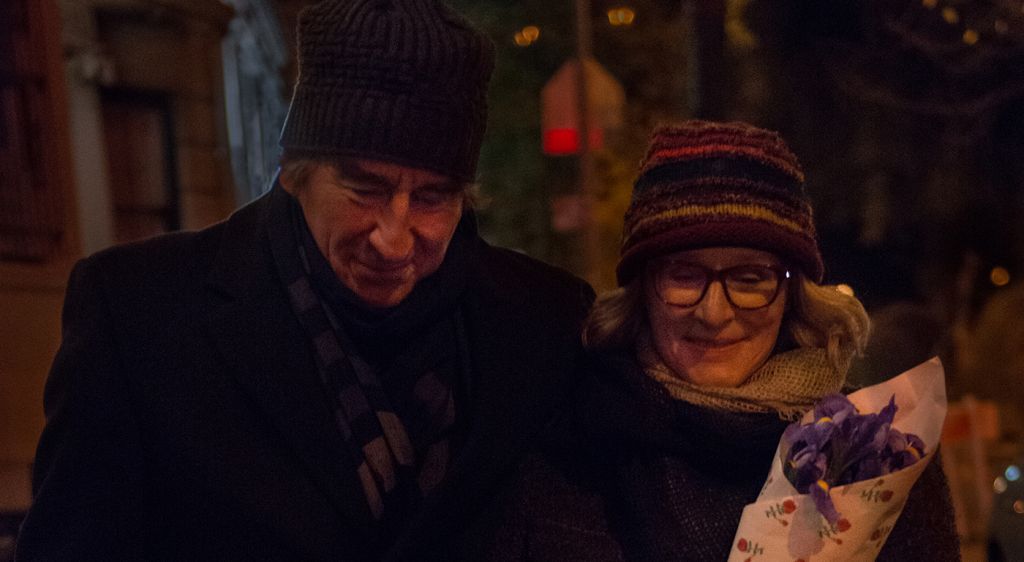
Waterston’s son is played by director Nelson, a man worried about his wife’s forthcoming surgery and what might be a malignant tumor. He has two children, including a son (played by newcomer Ben Konigsburg), a kid genius, marijuana enthusiast and avid reader of Holocaust literature. This family’s Jewishness is never confirmed on-screen, but one often doesn’t have to advertise on Manhattan’s Upper West Side. The three generations in this male line represent probing, ultimately optimistic minds.
Nelson’s wife (played by Jessica Hecht) is almost chaotically pragmatic. If, indeed, she has cancer and if it is due (as some suggest) to the experimental fertility drugs she took, then she immediately announces her demise would have been worth it. This before a doctor is even able to determine if she is sick. Konigsburg’s younger sister (a marvelous young actress named Hannah Marks) is less capable to deal with the potentially bad news, and is wracked with conflicted feelings of guilt.
Waterston, the paterfamilias, has a wonderful relationship with his angelic wife (Glenn Close) but feels obligated to aid his brilliant-but-fatalistic student (Kristen Stewart) who brings stormclouds to the screen in her dark turtleneck sweaters. Through it all, he talks about Schopenhauer and Heidegger like others mention sports scores.
It’s heavy stuff, and I’m only mentioning a third of the characters, but the movie is very much in the vein of thick, philosophy-heavy post-war Jewish novels. It was done on an extremely low-budget, so some of the rough edges show, but it ought to interest folks enamored with this type of material.
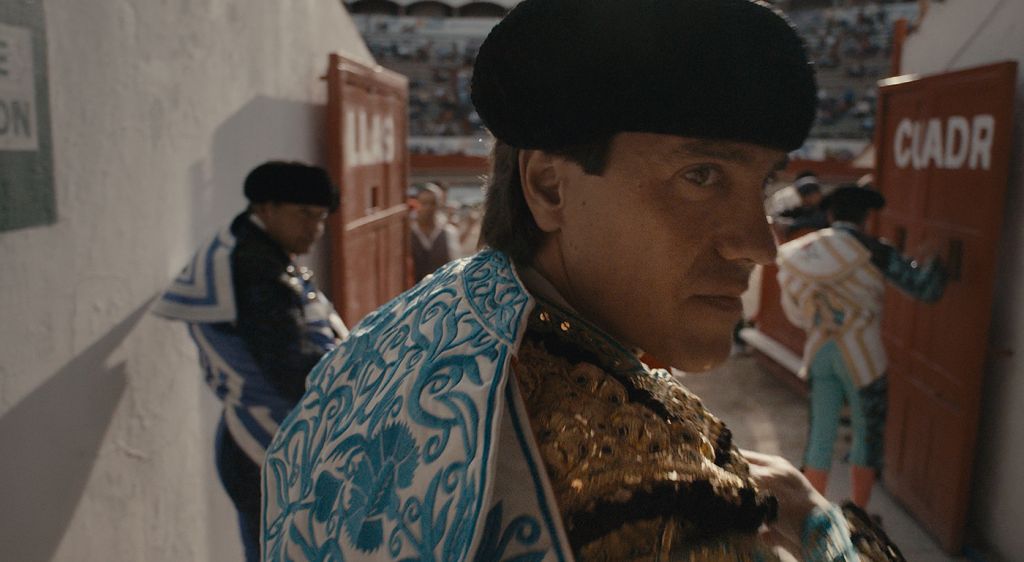
Very different in subject, but perhaps not so much in its line of inquiry, is the remarkable, small documentary “Gored.” Directed by Israeli Ido Mizrahy, it profiles Antonio Barrera, a Spanish Torero with the dubious distinction of suffering the most injuries inside a bullring. While I personally think torturing and taunting a bull is hardly sport or entertainment, I will grant that the “tragic ballet” certainly requires some grace and skill.
So, is Barrera the world’s worst bullfighter, or is he actually the best, considering how close he’s come to death?
The answer is: who cares? The man is a schmuck, and he fact that he’s got kids makes it even worse.
This movie follows him to his “last big match” in Mexico, and along the way we do our best to get inside the head of a man who thrives on danger. While I may have been secretly rooting for his four legged opponent, I can’t deny that this film is altogether fascinating.
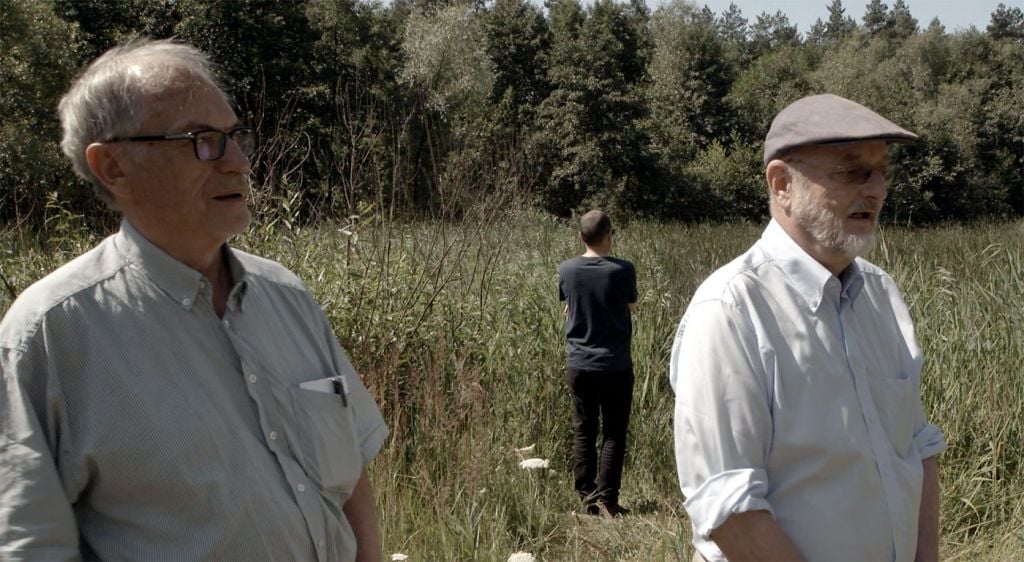
Of most interest, and the film most likely to get some sort of television broadcast, is “A Nazi Legacy: What Our Fathers Did.” Yeah, the title just rolls off the tongue, I know. But this British documentary directed by David Evans (“Downton Abbey,” “Whitechapel”) and produced by Jewish human rights lawyer Philippe Sands is a remarkable, important work.
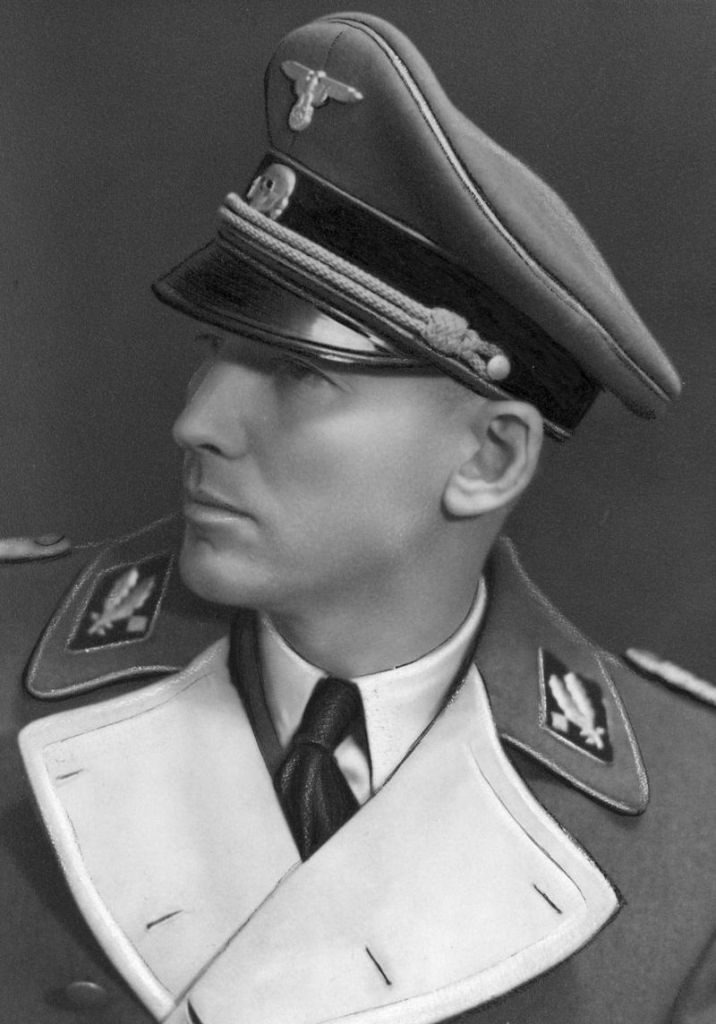
Hans Frank was a high-ranking Nazi, eventually appointed Governor-General in Poland. He was found guilty of war crimes at Nuremberg and executed. Otto von Wächter, while not quite as powerful, was appointed governor of Galcia in Lemberg (Lviv), and escaped justice after the war. He hid in the mountains, then was smuggled out by “friends in the Vatican” to Rome, where he ended up getting sick and dying in 1949.
Both of these men were clearly culpable for mass murder, and both had young sons, now septuagenarians, who barely knew them when they were alive. Niklas Frank has come to terms with his father’s crimes and has lived what most would call a good and righteous life. Horst von Wächter is a complicated case.
Something of a polymath, he seems, by all appearances, to hate Nazism. He is a pleasant, educated man, and over the course of his career has worked with Jews in a way to, somehow, give back. But he refuses to accept what are clear facts about his father.
He persists that Otto von Wächter was against the deportation of Jews, and tried to push back. He never personally ordered executions, his son believes. When confronted with clear documents refuting this, he equivocates. “Those are Soviet documents!” he argues, sprinkling a little doubt.
What is so heartbreaking is that Horst is not a bad person, but his personal connection, his hopes and half-remembered recollections, will not allow him to see clearly. In a devastating sequence in Lviv, neo-Nazis and old timers reflect on Horst’s father, remembering him as a good man, one who tried to help the Ukraine. The relief in Horst’s face sends Niklas into a panic. He fears that Horst could easily slide toward Nazism, that anyone could if they aren’t presented with hard facts.
When Phillipe Sands, our narrator, brings it home to the two men in Lviv that they are at the very spot where his entire family was murdered, we see two very different, unrehearsed reactions
When Phillipe Sands, our narrator, brings it home to the two men in Lviv that they are at the very spot where his entire family was murdered, we see two very different, unrehearsed reactions. Niklas is horrified – this is a man whose life has been destroyed with the weight of his father’s atrocities. Horst jumps into prevarications. He discusses the beauty of the (now empty) Lviv Synagogue and the persistence of the Jewish people. He talks about rebuilding and longevity. But he will not, and can not, accept that his father was a key architect of the destruction.
What the film does so wisely, of course, is build to this, so we are left wondering what we would do if we discovered such a thing in our own family tree. It’s very easy to point fingers – but it’s something that only a righteous man like Niklas Frank, who knows this unusual psychological pain first hand, can do.






The Times of Israel Community.