

Unflappable Aryeh Deri coasts through Knesset Q&A
Newly introduced ‘Question Time’ fails to challenge the interior minister, who emerges unscathed from bout with lackluster interrogators
 Add ToI as a Preferred Source on Google
Raoul Wootliff is a former Times of Israel political correspondent and Daily Briefing podcast producer.
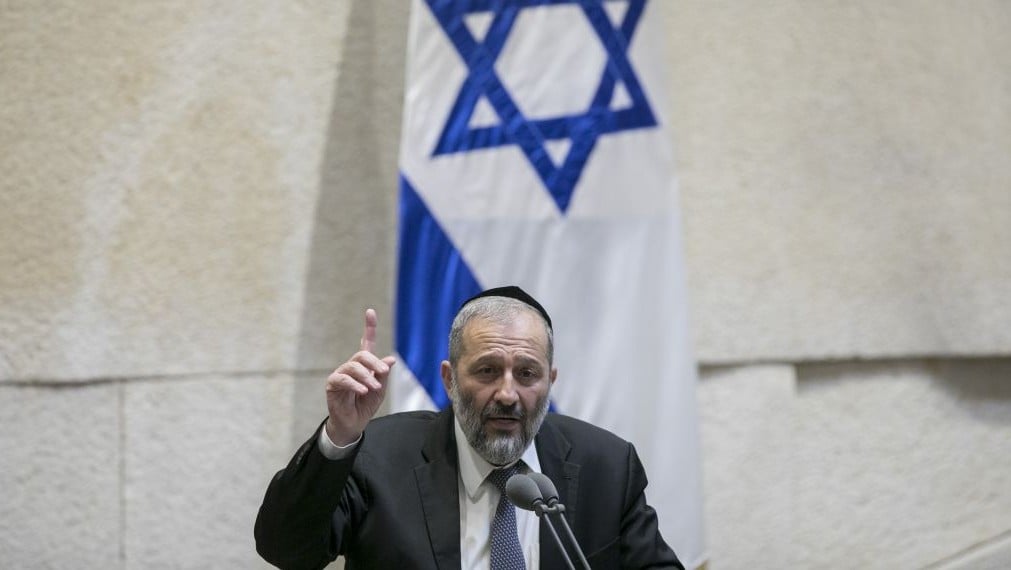
Aryeh Deri welcomes questions, at least that’s what he told the attorney general earlier this year when he was facing an investigation into alleged corruption. But he didn’t always. The last time the ultra-Orthodox Shas party leader faced corruption charges, in the ’90s — ones that no longer require that finicky prefix “allegedly” — he, somewhat coarsely, refused to respond to the charges against him. He wound up serving two years in jail for bribery.
But on Monday he was all smiles and bonhomie as he entered the Knesset plenum, long-since rehabilitated and ready to tackle on any query thrown his way. The hour-long Ministers Question Time, in which he would face a grilling from Knesset members, could not faze this seasoned debating master, for he was not like them.
The recently introduced and charmingly nicknamed “Norwegian Law” allows one minister from each coalition party to resign their seat in the time-consuming and boring Knesset while still keeping their spot in the much more important cabinet. And last week, in a shock move that was still certainly his most humdrum resignation to date, Deri did just that, saying that he he wanted to focus on his ministerial duties without the “distractions” of parliamentary work.
On Monday, he entered the Knesset chamber as a man unburdened by such menial distractions, able to give 100 percent of his time to his role as interior minister, and even more of his time to his other role as minister of development for the Negev and Galilee.
Striding toward the podium, Deri evinced a subtle swagger, almost masking the clumsy gait that the plenary’s sloped floors forces on its visitors. The minister was here to give serious answers to serious questions, not play with his phone like the lowly MKs.
But unfortunately for Deri, while he is indeed no longer a mere legislator, he is not quite as free to do as he jolly well pleases. His Shas party had already used up its “Norwegian law” spot when MK Meshulam Nahari resigned his seat in January 2016 and became the deputy interior minister. Deri is now just a minister without a Knesset seat. He might be free from parliamentary work, but is bound even tighter to the legislature, for if the coalition falls or parts ways with Shas, he is out of a job.
Perhaps that was what was going through his mind when, just before taking the podium, he decided it would be wise to get a pen and paper, sheepishly walking back to the edge of the chamber to obtain the tools from an aide.
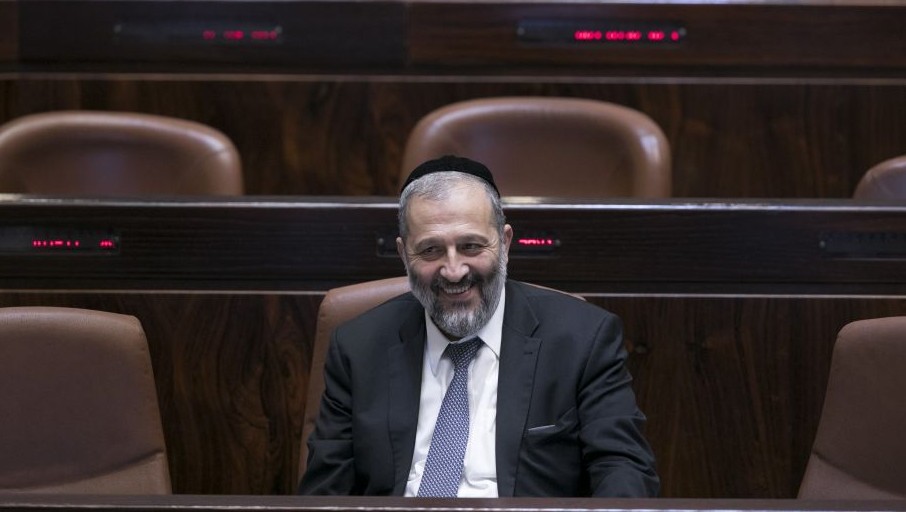
Then, when he got back, ready for battle, he was forced to sit down in his seat again, crossing his arms self-consciously as Speaker Yuli Edestein read him rules like a parent at a birthday party: Deri would receive 10 minutes more that the normal hour because he is presides over not one but two ministries, two minutes to ask questions and three minutes to answer; no interrupting or you wont get cake etc.
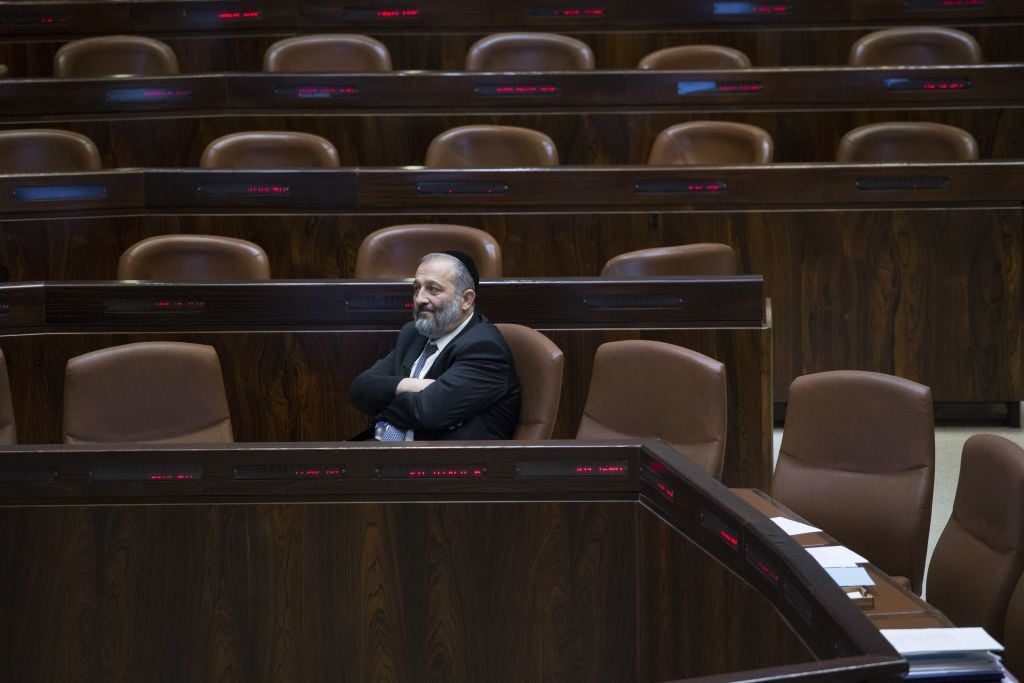
During the questioning Deri oscillated between confident, unflappable man of answers, and conciliatory attentive minister, listening carefully to the public representatives before him.
Handed a nugget on his plans to boost underprivileged “periphery” towns, he responded coolly, as a modern-day Robin Hood. “Sometimes you just have take from the stronger and give to the weaker,” he said. Faced with questions he didn’t like and clearly wanted to avoid, such as why some Gaza border communities had not received a budgetary boost promised them, Deri simply said, “that’s not the responsibility of my ministry. I can only do what I’m responsible for.”
At some points, Deri appeared a caring father, keen to listen his children’s woes, which he, and no one else, could deal with. When Meir Cohen (of the centrist Yesh Atid), his predecessor in the Interior Ministry, panned Deri for promising progress in the north but failing to make a difference, Deri nodded along as if he agreed, appearing to look deep into Cohen’s eyes with a compassionate gaze. “I have called an urgent meeting on this exact topic. We will make the progress we promise,” he replied, almost gently.
In the end, however, he had no need to turn up the bravado, as the Knesset failed to produce the choppy waters that some had expected the session to stir up. Few questions proved challenging and prickly, few answers controversial.
As the minutes ticked on, Knesset members slumped in their chairs, seeming to compete for the title of most gratuitous yawn — won in the end by Joint (Arab) List chair Ayman Odeh. Several journalists, expecting a spectacle, audibly complained and grunted that nothing interesting was happening.
Introduced last year in a pale attempt to reproduce the high drama and exhilarating debate of Westminster Palace’s weekly exchange, the Knesset’s Question Time so far has failed to excite.
This week, Deri was able to walk away unscathed, even without necessarily welcoming, or answering, every question.








The Times of Israel Community.