

US eyes coalition talks warily, but policy shift unlikely until Iran deal settled
Washington might actually prefer a wafer-thin right-wing government for now, says one analyst, so that Netanyahu has to reach out to Herzog with less leverage later
 Add ToI as a Preferred Source on Google
Rebecca Shimoni Stoil is the Times of Israel's Washington correspondent.
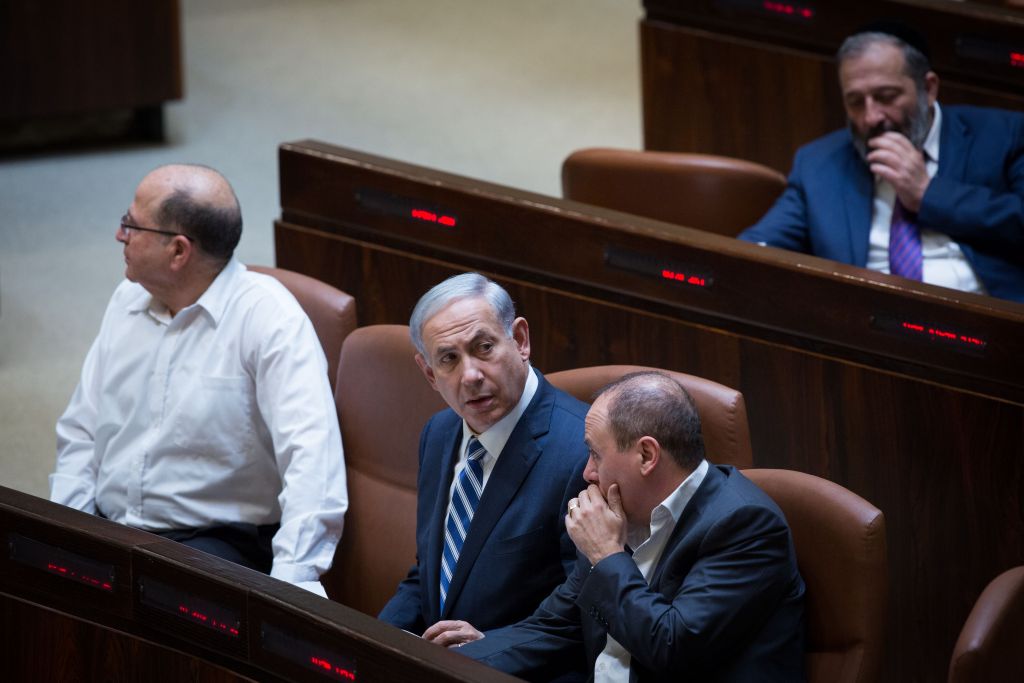
WASHINGTON – With coalition talks in Jerusalem nearing their deadline, Washington is keeping a wary eye on Prime Minister Benjamin Netanyahu’s attempts to reach the magic number of 61 MKs for a narrow ruling majority .
In the six weeks since the March 17 elections, the Obama administration has repeatedly emphasized that the makeup of the new government could hold serious implications for US policy — with President Obama talking about freshly “evaluating” the US approach to the Israeli-Palestinian conflict. Still, observers say that the shadow of Iran talks — a deal on Iran’s nuclear program is supposed to be finalized by June 30 — means that an immediate policy change stemming from the coalition’s make-up would be unlikely.
Aaron David Miller, an analyst for the Woodrow Wilson Institute and also a member of past US peace negotiation teams, believes the US will first devote its energy toward completing the Iran deal, and that any shift in policy regarding Israel – including changing the US policy of vetoing Security Council resolutions that impose terms on Israel – will only come at least six months from now, if at all.
At the same time, he said, he is “absolutely persuaded that within the next 20 months, you will either see the Obama parameters emerge or a UN Security council resolution which contains elements of a putative basis for reconciling Israelis and Palestinians.”
Miller emphasized that no major policy changes would happen, first, until the Obama administration sees the Iran deal through and, second, “before the administration makes a determination about what kind of government they’re going to be dealing with – is it going to be 61 or 67 or is it going to be a broader government which involves Herzog.”
Any immediate policy response to a right-wing government, Miller said, would send a wrong message to the Israelis and the Palestinians alike and would be “unproductive,” as well as further threatening the administration’s ability to sell the final parameters of an Iran deal to a reluctant Congress.
Like most analysts in Israel, Miller downplayed the chances of a unity government being formed, but unlike many Israeli observers, he said the administration would actually prefer to see the narrow right-leaning coalition Israel seems headed for, at least in the short term.
“I suspect that both for Labor’s purposes and the [Obama] administration’s purposes, they prefer to allow the pressures that are likely to build on a narrow government to continue to build. They’d probably like to see Netanyahu weakened even further and, months down the road, have to reach out to Herzog. [The Zionist Union leader could then] be in a better position to contain the prime minister,” Miller suggested.
In the off-chance that a unity government materializes, Miller suggested, “it would probably represent a basis for fundamental paralysis on almost every significant issue that the State of Israel faces.”
Such a government, he said, “is the Palestinian’s worst nightmare, you’ll have a kinder, gentler face on the Israeli government and less tensions with the administration and the international community but no movement.”
However, Zionist Union MK Erel Margalit said he thought the White House would actually prefer a larger Israeli government.
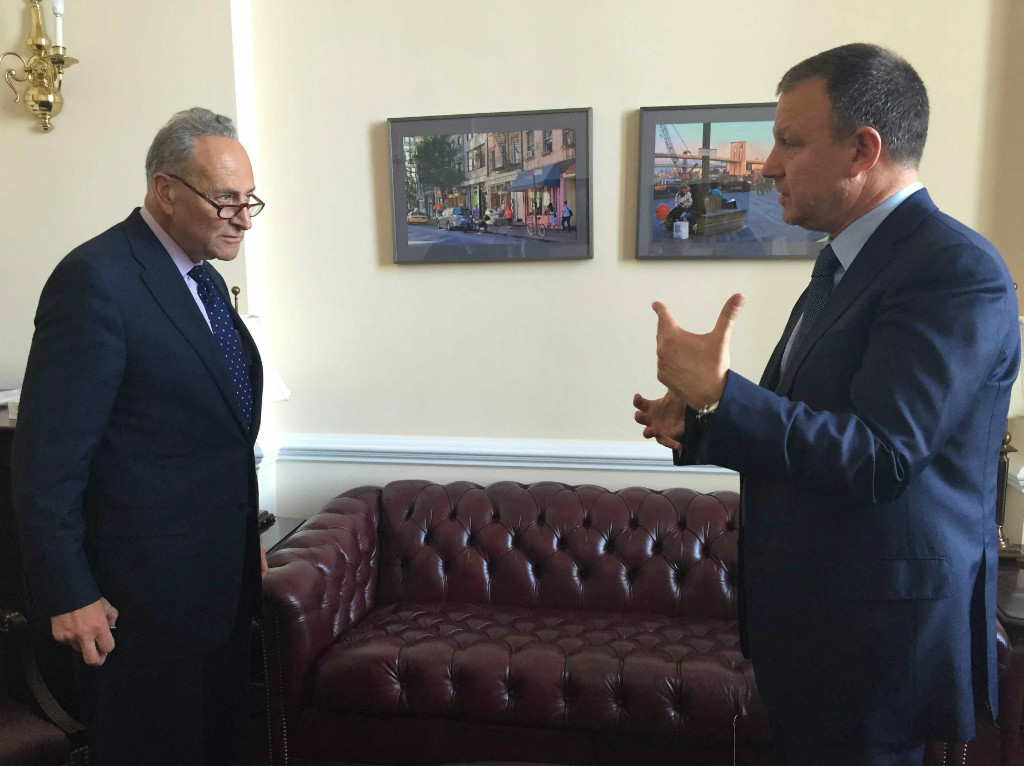
“My impression here on the Hill and in various meetings I had across the US in the last week is that there would be a preference for a broader government rather than a narrower right-wing government,” he told the Times of Israel between meetings on Capitol Hill late last week.
Margalit said that he thought that a national unity government could aid Israel internationally, but warned that “its up to Netanyahu really to decide – its hard for us to see how we can be part of a government that has these kinds of [hard-line] statements out there.”
David Makovsky, director of the Washington Institute for Near East Policy’s Project on the Middle East Peace Process and former a senior member of the US team advancing peace talks between 2013-2014, suggested the government makeup would have little to no effect on current US-Israel tensions arising from differing opinions on the conditions that should be imposed on Iran.
Even while he urged a new perspective toward Israel’s foreign relations, and emphasized “modesty” in Israel’s relations with its closest ally, Margalit also acknowledged that there was little distinction between his party’s concerns regarding the outcome of the P5+1 talks with Iran and those concerns held by Netanyahu himself.
A unity government might change the tactics that Israel used to air its grievances – Margalit spoke out against any acts that could be interpreted as taking a partisan side in US politics – but there would be little difference in the substantive opposition to an Iran deal seen as insufficiently demanding of Tehran.
The State Department has signaled in recent weeks that it is waiting to see the composition of the incoming government. A government seen as less amenable to a two-state solution, officials implied, might have policy implications in Washington.
Speaking last week at a gathering of Reform Jewish leaders, Undersecretary of State for Political Affairs Wendy Sherman said that the administration “will be watching very closely to see what happens after a new government is formed on this issue of working toward two states living side by side in peace and security.”
“If the new Israeli government is seen as stepping back from its commitment to a two-state solution — something that all of you, and a vast majority of American Jews, support — that makes our jobs in the international arena a lot tougher because our ability to push back on efforts to internationalize…Israeli-Palestinian issues has depended on our insistence that the best course in achieving a two-state solution is through direct negotiations between the parties,” she explained.
Following the March 17 Israeli election, officials from both the White House and the State Department cautioned that any perceived backtracking from Israel’s commitment to the two-state solution could mean that the US will not veto attempts to unilaterally push for Palestinian statehood through the United Nations. When pressed on when a decision to change Washington’s policy might be anticipated, the administration has suggested that it is waiting to see the makeup of the government – and its actions toward progress with the Palestinians.
Miller said the final makeup of the coalition could have drastic implications for how Washington tackles the peace process.
“If, in fact, it is a unity government and it imposes certain constraints on settlement activity and enlarges the parameters in which this unity government might negotiate with the Palestinians, then I think that the Obama government might change course and you might see Kerry in another mediation mission,” Miller said.
Makovsky wrote last week that “going forward, the question is whether the new government can align its settlement policy with Netanyahu’s post-election clarification that he remains committed to a two-state solution. President Obama is skeptical of that clarification, so an Israeli pledge to avoid further settling beyond the blocs adjacent to the security barrier could ease friction with the White House.”
Furthermore, he warned, “European governments might take action of their own, since some officials believe that a new right-wing government in Israel means direct negotiations are futile,” even as “they also privately acknowledge Abbas’s complicity in the current impasse.”
Washington, he said, will likely urge the Europeans “not to push for an imposed UN Security Council solution — at least until Netanyahu’s new government can offer its own peace initiative.”
Makovsky suggested that if the government did turn out to be a right-leaning one, without the participation of the Zionist Union, “ultimately, the world will judge the new government on its policies — and given Netanyahu’s increased leverage and right-of-center coalition choices, people will likely attribute these policies to his personal imprimatur rather than to coalition constraints.”
The dovish Israel Policy Forum’s David A. Halperin repeated Margalit’s suggestions that a unity government would help to “dial back” the recent political tensions with the United States. “I could imagine that on the Hill and in Washington, there would be a view that a national unity government would be a more cooperative landscape for US-Israel relations than the recent topsy-turvy period.”
Beyond whether or not there is a unity government, Halperin said that Washington is watching to “see whether there is an Israeli initiative” that would take steps to further a two-state solution.
But the Brookings Institution’s Natan Sachs suggested an entirely different scenario. “In general there tends to be a preference” for a unity government in Washington, but “the atmosphere right now is a bit different. I think especially given the experience from the last Netnyahu government, there is an appreciation of the fact that the Prime Minister’s Office is going to call the shots on most of the things that the administration cares about, particularly concerning the Palestinians.”
“I wouldn’t be surprised at all if there are many hoping for a national unity government, hoping that the foreign minister is someone who is amenable to US policy, but I’m not sure if this time it is as strong as in the past,” he said. “I’ve heard people think otherwise – that if you water down a Netanyahu government, you’re not gaining anything beyond optics – though the optics certainly would be easier.”








The Times of Israel Community.