

Watchdog: World response to Syria refugees ‘pitiful’
Amnesty censures EU, Gulf states for not resettling emigrants, heavy burden placed on neighboring nations
 Add ToI as a Preferred Source on Google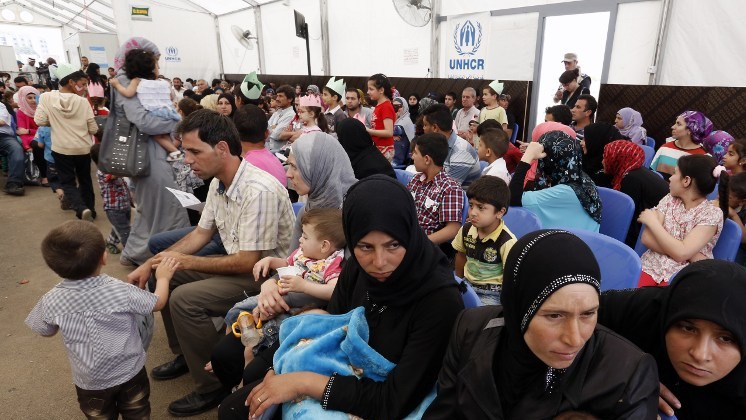
BEIRUT, Lebanon — Wealthy nations have only taken in a “pitiful” number of the millions of refugees uprooted by Syria’s war, placing the burden on the country’s ill-equipped neighbors, Amnesty International said Friday.
In a statement ahead of a December 9 donors conference in Geneva, the London-based rights group blasted as shocking the failure of rich nations to host more refugees.
“Around 3.8 million refugees from Syria are being hosted in five main countries within the region: Turkey, Lebanon, Jordan, Iraq and Egypt,” said Amnesty.
“Only 1.7 percent of this number has been offered sanctuary by the rest of the world.”
Highlighting what it called “the pitiful numbers of resettlement places offered by the international community,” Amnesty noted that the Gulf states, Russia and China had not offered a single resettlement place.
And excluding Germany, the European Union as a whole has pledged to take in only 0.17% of the refugees now housed in the main host countries around Syria.
“The shortfall… is truly shocking,” said Sherif Elsayed-Ali, Amnesty’s head of refugee and migrants’ rights.
“The complete absence of resettlement pledges from the Gulf is particularly shameful,” he added. “Linguistic and religious ties should place the Gulf states at the forefront of those offering safe shelter.”
The group said the failure of wealthy nations to share the burden had placed enormous strain on Syria’s neighbors, which were largely ill-equipped to deal with the pressure.
Amnesty said it was calling for the resettlement of 5% of Syria’s refugees by the end of 2015, and another 5% the following year.
That would accommodate all of the approximately 380,000 refugees identified for resettlement by the UN because of particular vulnerabilities, including lone children and torture survivors.
“Countries cannot ease their consciences with cash payouts, then simply wash their hands of the matter,” Elsayed-Ali said.
“Those with the economic means to do so must play a greater role.”
Syria’s conflict began in March 2011 with anti-government demonstrations, but has spiraled into a bloody civil war that has displaced around half the country’s population.
In addition to those who fled the war-ravaged country to become refugees, the United Nations says more than seven million Syrians are internally displaced.
The refugees face poverty, illness and growing tensions with host communities in their already-impoverished temporary homes.






The Times of Israel Community.