

Amid rash of road deaths, dangers abound on Tel Aviv-Jerusalem highway
A bankrupt contractor has halted work on the main road into the capital for weeks, leaving an already perilous stretch even more unsafe
 Add ToI as a Preferred Source on Google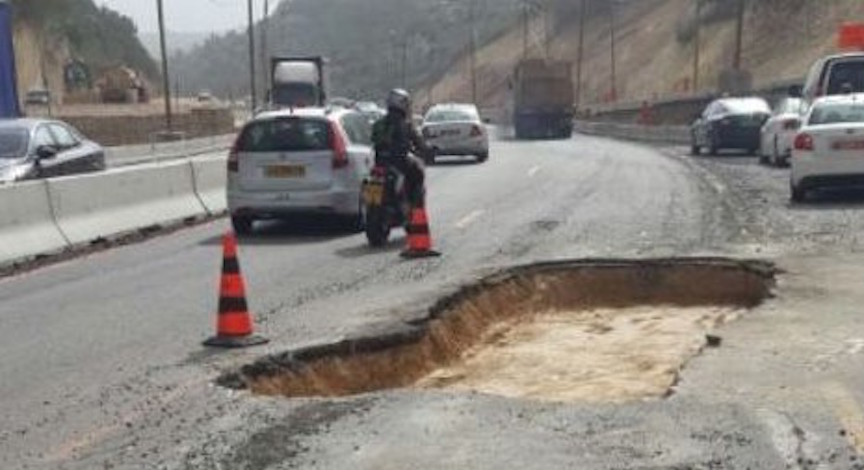
Urgent construction work on the main Jerusalem to Tel Aviv highway, one of the country’s busiest and most dangerous roads, has ground to a halt in recent in recent weeks because one of the contractors has gone into receivership. Some of the affected sections that were in mid-repair and upgrade are now disintegrating, exacerbating dangers.
Major construction on the highway was originally scheduled to be completed in 2017, but that date will apparently not now be met, and the current halt to work leaves drivers in potential peril, experts say. The Transportation Ministry said it expected work to resume on the affected section in the coming days.
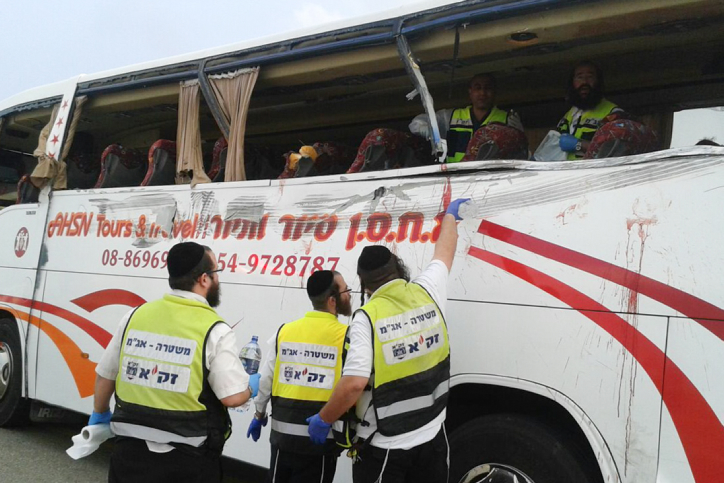
Traffic accidents are a major cause of death in Israel — overtaking even wars and terror. On Tuesday, eight women from the Bedouin town of Hura were killed and dozens more injured when their bus collided with a tractor that was being carried by a truck on a southern highway. Some officials blamed the highway infrastructure for that crash.
Route 1, which stretches from Tel Aviv to the Dead Sea via Jerusalem, has been undergoing a major upgrade that was planned for decades and begun in 2013, with construction closing down lanes, shoulders, and exits on a long section of the highway on its approach to Jerusalem. The Transportation Ministry says that when completed, the road will be safer, easier to navigate, and faster to drive, with the journey from Tel Aviv to Jerusalem taking 30 minutes instead of 45-60.
But the 2017 deadline will almost certainly not be met, because one of the major contractors doing work on the road, Mordechai Binyamin & Sons Earthworks, has gone into receivership, and work on the section it was assigned has been halted.
To make matters worse, partial demolition of sections of the road that took place during the construction process has caused protective layers of concrete to start disintegrating. As a result, major potholes have developed in sections of the road, and these have been aggravated by recent heavy rains.
Dozens of drivers have suffered flat tires after driving into the potholes in recent weeks, and there have been dozens of fender-benders as drivers swerve to avoid the obstacles. In addition, many of the warning signs that had alerted drivers to dangers on the road have been removed, causing more accidents as panicked drivers are unsure of what to do at critical moments, traffic experts said.
The affected section is an eight-kilometer segment between Sha’ar Hagai and Shoresh, a particularly problematic piece because it features a very steep ascent that many trucks and smaller cars take very slowly. Impatient drivers, the Transportation Ministry said, often cause accidents in this sectionof the road.
Completion of the segment is thus one of the most essential tasks in the Highway 1 upgrade effort. But nothing has been done there for weeks; heavy equipment sits idly by the side of the road, supervisors walk around aimlessly without crews to direct, and there is no one to remove the occasional traffic cone that blows out onto the highway.
When it first applied for the tender for construction of the segment, Mordechai Binyamin & Sons Earthworks was one of the biggest infrastructure earthworks and construction firms in Israel. However, the company is now NIS 178 million ($45 million) in debt, with apparently no way of paying that off, a bankruptcy court decided in November.
During a hearing, the company said that its losses were due to changes in the schedule according to which the state is supposed to pay it. The court said that it would search for another, more solvent company to buy out the bankrupt firm but no candidate had been found.
The Transportation Ministry said that it has been working on finding a replacement for the failed company, and is set to hire the Einav-Ahets construction firm to complete the segment. It said it expected work to resume in the coming days. In a statement, the ministry said that the upgrade project had been split up into five portions: “A part of our strategy to minimize inconveniences to drivers. Work on the Highway 1 project is continuing at full force, and we expect to be able to stick to our timetable on the entire project, except perhaps the segment between Sha’ar Hagai and Shoresh.”
Tuesday’s fatal collision at the Lehavim junction – where Routes 31 and 40 meet – underlines the potential dangers. Lehavim has long been considered one of the most dangerous junctions in Israel. An average of nine people a year have died in traffic accidents on Routes 31 over the past decade. Busy though it is, the Lehavim junction had nothing like the volume of traffic on Highway 1 – and was, according to traffic experts, in much better physical shape than the segments of Highway 1 that are being upgraded.
The Highway 1 upgrade project has been in planning for decades, with the government long hoping to straighten out a very crooked route with many curves, hills, and dangerous twists. Highway 1 stretches between the southern reaches of Tel Aviv and the western entrance to Jerusalem. Traveling from Tel Aviv, the road is a relatively comfortable three lanes wide in both directions for its first 40 kilometers, and expanded to four lanes in some areas after several smaller upgrade projects, which “smoothed out” several curves, expanded the roadbed, and instituted safety features like upgraded lighting and wider shoulders.
It’s when the road reaches the foothills of Jerusalem that the trouble starts. Beginning at the Sha’ar Hagai (the Valley Gate) interchange, Highway 1 narrows into a two-lane road in either direction, with the road following the curvature of the hills it passes through. The result is a winding mountain path where the speed limit of 80 kilometers per hour (50 mph) is the same as on single-lane country roads in Israel’s back country.
Highway 1 follows the historic trail that had been used for thousands of years to traverse the hills to reach the Holy City from the coastal plain, and some parts were hastily put together to allow access to Jerusalem when the Jordanians took over some segments of the road after the War of Independence in 1948. After the Six Day War in 1967, plans were made to straighten out parts of the road near Latrun, about midway between Jerusalem and Tel Aviv. The road passes over the Green Line at several points.
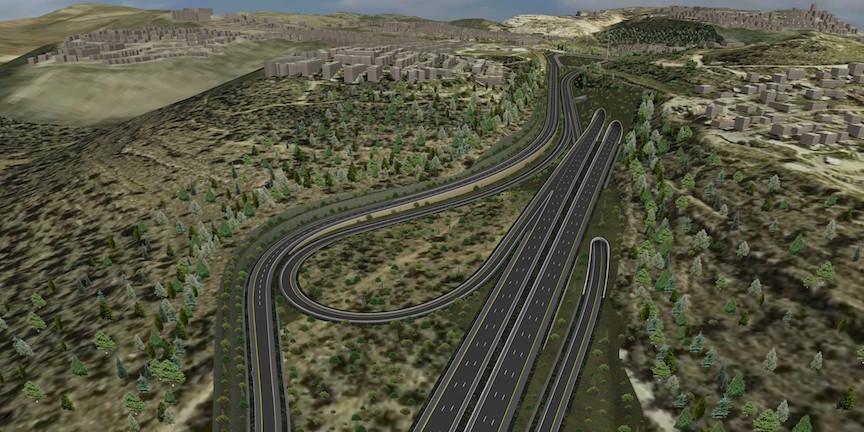
The upgrade work, which began in 2013 after five years of hearings – mostly due to opposition by environmental groups to the work – aims to transform the Sha’ar Hagai-Jerusalem section of the road, bringing it up to the international freeway standards level of the Tel Aviv-Sha’ar Hagai portion. According to Netivei Yisrael, the government corporation for road infrastructure, the project – estimated to cost NIS 2.5 billion (over $500 million) – will add a third lane to the segment in both directions and straighten out many of the curves. In addition, several new tunnels and bridges will feed into new roads to dilute the traffic at the entrance of Jerusalem and allow drivers to get to areas inside the city without having to navigate congested local streets.
According to the organization, “upgrading Highway 1 will improve the flow of traffic in one of the most important traffic arteries in Israel. Widening the highway by adding a third lane and straightening out the dangerous Motza curve will allow tens of thousands of passengers to bypass traffic jams and reach Jerusalem quickly and safely.”
To accommodate traffic Netivei Yisrael did some upgrade work to the alternative east-west road, Road 443, which stretches from Modiin in the center of the country to northern Jerusalem. In order to alleviate traffic problems during rush hours, the Transportation Ministry has banned trucks from Highway 1 until 9:30 a.m. weekdays; trucks that need to get to Jerusalem must use Road 443.
Despite the ministry’s efforts, however, Highway 1 is hugely overcrowded – especially during rush hours, when traversing the 18 kilometers from Sha’ar Hagai to the western entrance to Jerusalem (the Sha’ar Moriah Interchange) can take an hour or more.

A total of 320 people were killed in road accidents in Israel last year. While Israel is close to the top of the safety charts in the number of road fatalities per 100,000 inhabitants – 3.3 per year (in the US, it’s 11.6 per 100,000) – World Health Organization numbers indicate that Israel’s roads are relatively unsafe, compared to other Western countries. Israel in 2012 had 9.5 fatalities per 100,000 motor vehicles, suggesting that Israel has more vehicles than its roads can handle.








The Times of Israel Community.