

‘Dancing with the devil’: Nadav Lapid wants his satire film ‘Yes’ to ‘shake souls’
Director says his latest, set in the wake of the October 7 attack, isn’t about Israel per se, but rather a mix of ‘vulgarity, nationalism and authoritarianism’ around the world
 Add ToI as a Preferred Source on Google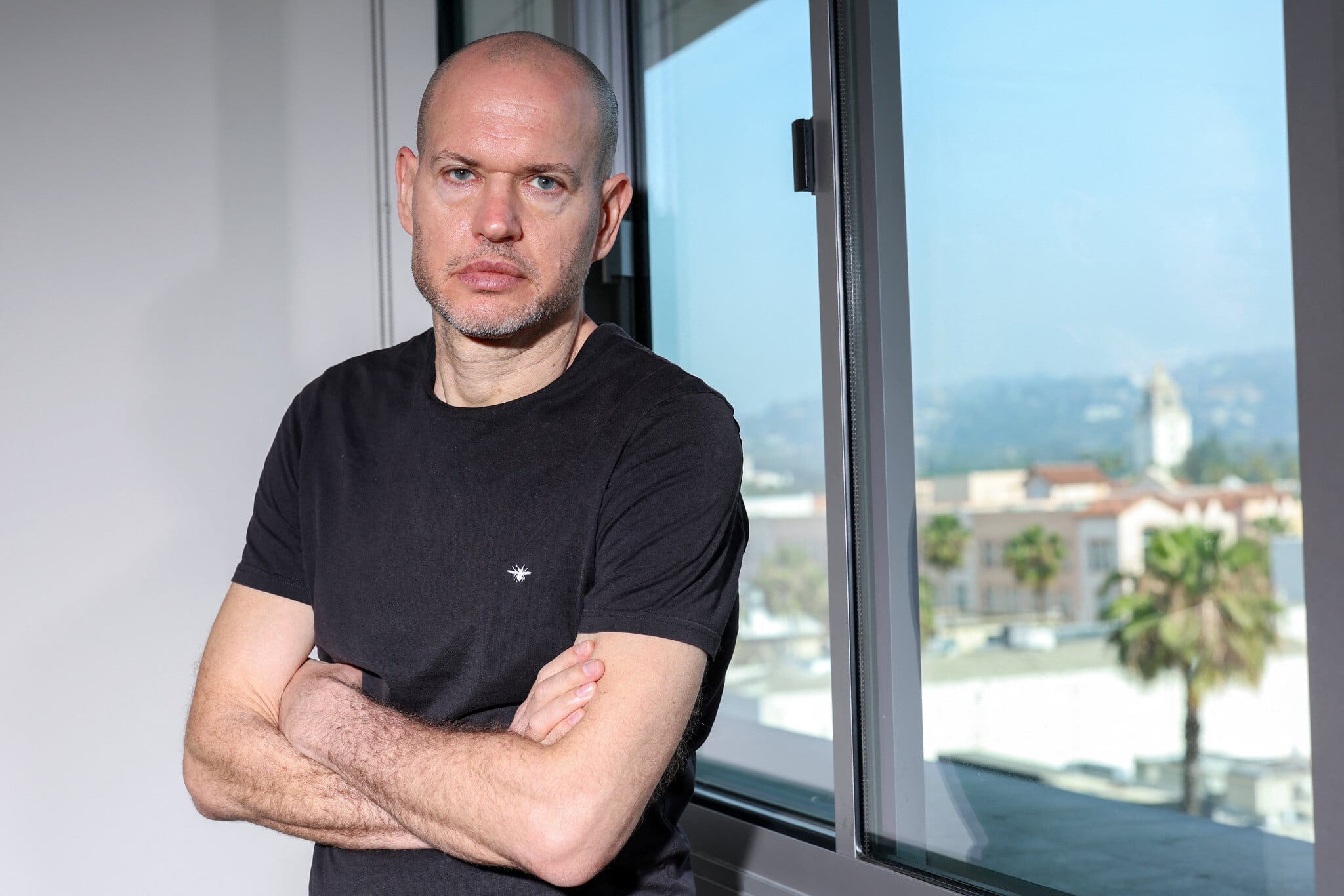
Israeli filmmaker Nadav Lapid thinks sometimes movies can change history; other times they simply narrate it.
With his latest production, which hits US theaters Friday, the filmmaker has set himself a different goal.
“I hope ‘Yes’ shakes people’s souls,” he said.
The chaotic satire, which premiered in Europe last year, follows musician Y (Ariel Bronz) and dancer Yasmin (Efrat Dor), a young couple in Tel Aviv who raise their newborn son during the day while entertaining at wild fetish parties for the wealthy by night.
The couple’s lives schizophrenically jump between booze-fueled submissive sexuality and the banality of paying the babysitter.
This routine begins to unravel into a quest for identity and existential meaning when Y is hired to compose a new patriotic anthem.
“Yes” is set in the aftermath of October 7, 2023, when the Hamas terror group launched its cross-border assault on Israel, invading from Gaza to kill some 1,200 people, mostly civilians, and take 251 hostages.
The subsequent fighting in the Strip, which killed tens of thousands and devastated the coastal enclave, largely came to a stop with an October 2025 hostage-ceasefire deal.
Lapid began writing the screenplay before the attack on Israel.
He made only slight changes following the massacre.
“The modifications weren’t so big because, in a way, already the first version of the script described a society on the edge, on the edge of a moral abyss, on the edge of its collapse, on the edge of catastrophe,” he told AFP in Los Angeles.
“Everything was there, but a little bit contained, a little bit restrained,” he said. “And then such an extreme event takes place, and in a way, liberates everything — all the emotions, all the ideas and the passions, all the terrible things.”

Lapid, who has frequently criticized the Israeli government, says he understands the wave of anti-Israel feeling washing around parts of the world. But he thinks some of that feeling is misdirected.
“It’s too easy to project everything…to turn Israel to a kind of… demon,” he said. “I think sometimes it enables people not to look in the mirror, not to observe themselves and their own societies.”
In any case, he insists, “Yes” is not about Israel per se; rather, the country serves merely as a setting in which to observe that “strong feeling of chaos” he sees in the world today.
And that, the director believes, is why audiences can connect with the film. Cinemagoers can see similarities between their own lives and those of the characters.
Society is depicted as “worshiping only power and money, despising art, sensitivity, tenderness, where people …don’t talk anymore.” What he calls a “mixture between vulgarity, nationalism, and authoritarianism” that is creeping around the world.

The film explores fear — a sentiment Lapid believes is pervasive today.
The protagonist’s “reaction to this fear is to convince himself that the right thing to do is to say ‘yes’, instead of resisting.”
That’s a fundamentally human impulse, says Lapid. “We all look for belonging, want to love and be loved, to believe in the end everything is okay.”
However, “slowly, slowly, you find yourself dancing with the devil,” he said. “I think what characterizes this moment is that people are afraid.”
“Yes” opens in select cinemas in the US on Friday.










The Times of Israel Community.