

Death of Lod Airport massacre terrorist ‘closes chapter’ in victim family’s painful story
Pastor José Vega Franqui, who survived the attack that killed 26 and wounded 80 in 1972, says he found forgiveness for Japanese Red Army terrorist Kozo Okamoto, part of a 3-man squad
 Add ToI as a Preferred Source on Google
Reporter at The Times of Israel
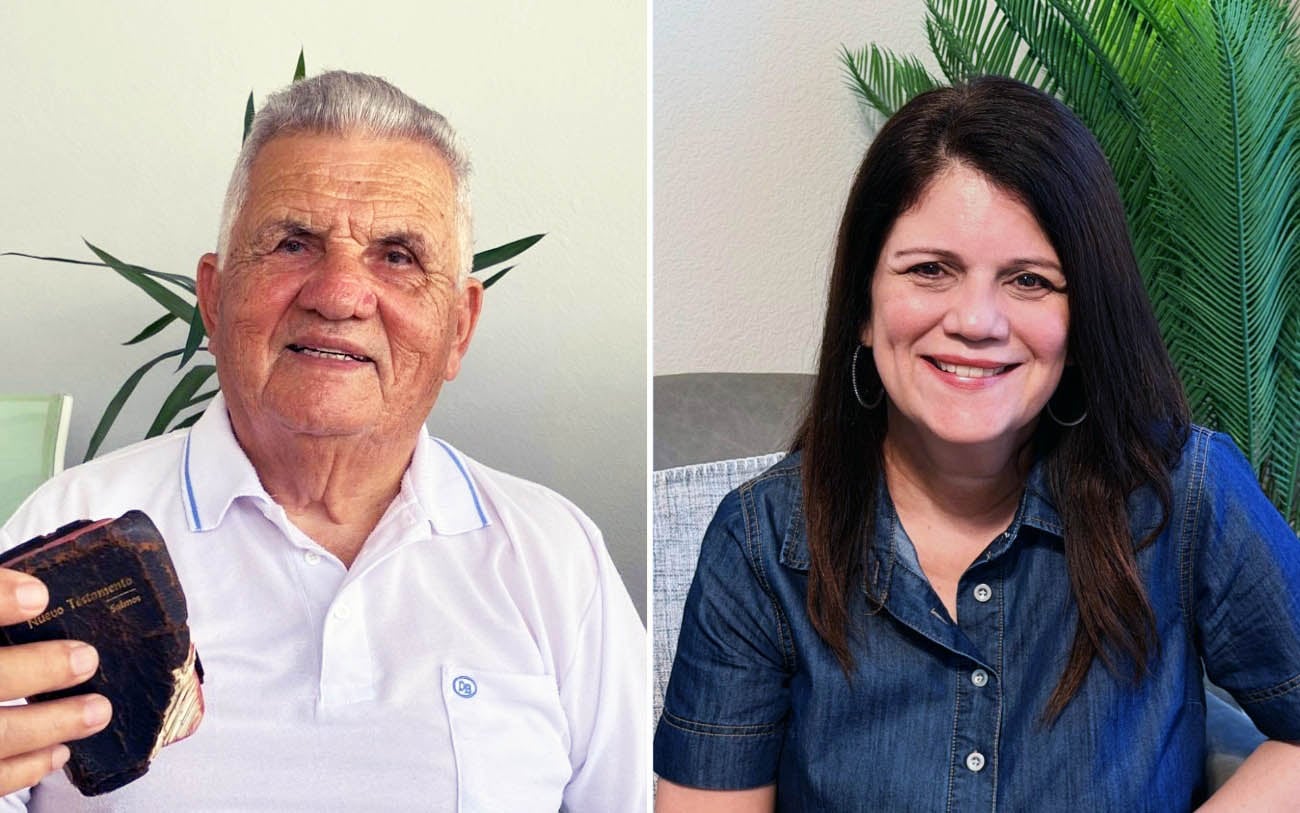
When Dámaris Pérez heard the news last week of the death of Kozo Okamoto — one of the three terrorists who carried out the deadly 1972 terror attack at Lod Airport — she felt deeply shaken.
Okamoto was part of a Japanese Red Army terrorist squad that killed 26 people: eight Israelis, one Canadian, and 17 US citizens from Puerto Rico. The US citizens included Pérez’s mother, Vasthi Zila Morales, who had flown to Israel on a pilgrimage to the Holy Land. At the time, Pérez was 15 months old.
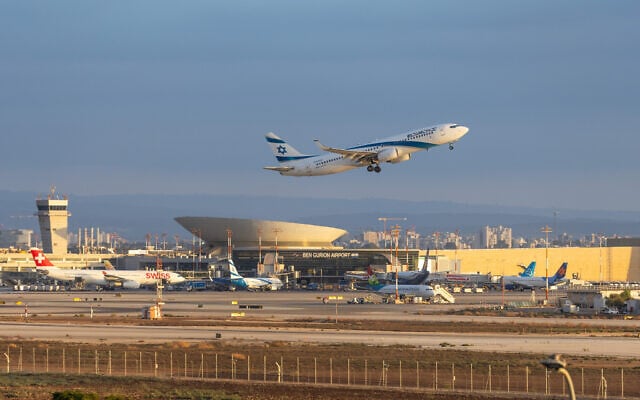
Pérez’s father, Pastor José Vega Franqui, was wounded in the attack, which was carried out by the Japanese Red Army on behalf of the Popular Front for the Liberation of Palestine (PFLP), at what is now known as Ben Gurion International Airport.
The pastor says he survived because of a small copy of The New Testament that he was carrying in his shirt pocket.
“I was very emotional when I heard the news because he [Okamoto] never asked for forgiveness or showed any repentance,” Demaris told The Times of Israel in a video call. “He never said, ‘I’m sorry.’ He never had a change of heart; he never realized that what he did was wrong. He lived 78 years and had a full life, but my mother lived only 26 years.”
Demaris said that, for years, she was “the baby crying at the window, waiting for my mom to come back. I was the girl with the sad eyes.”
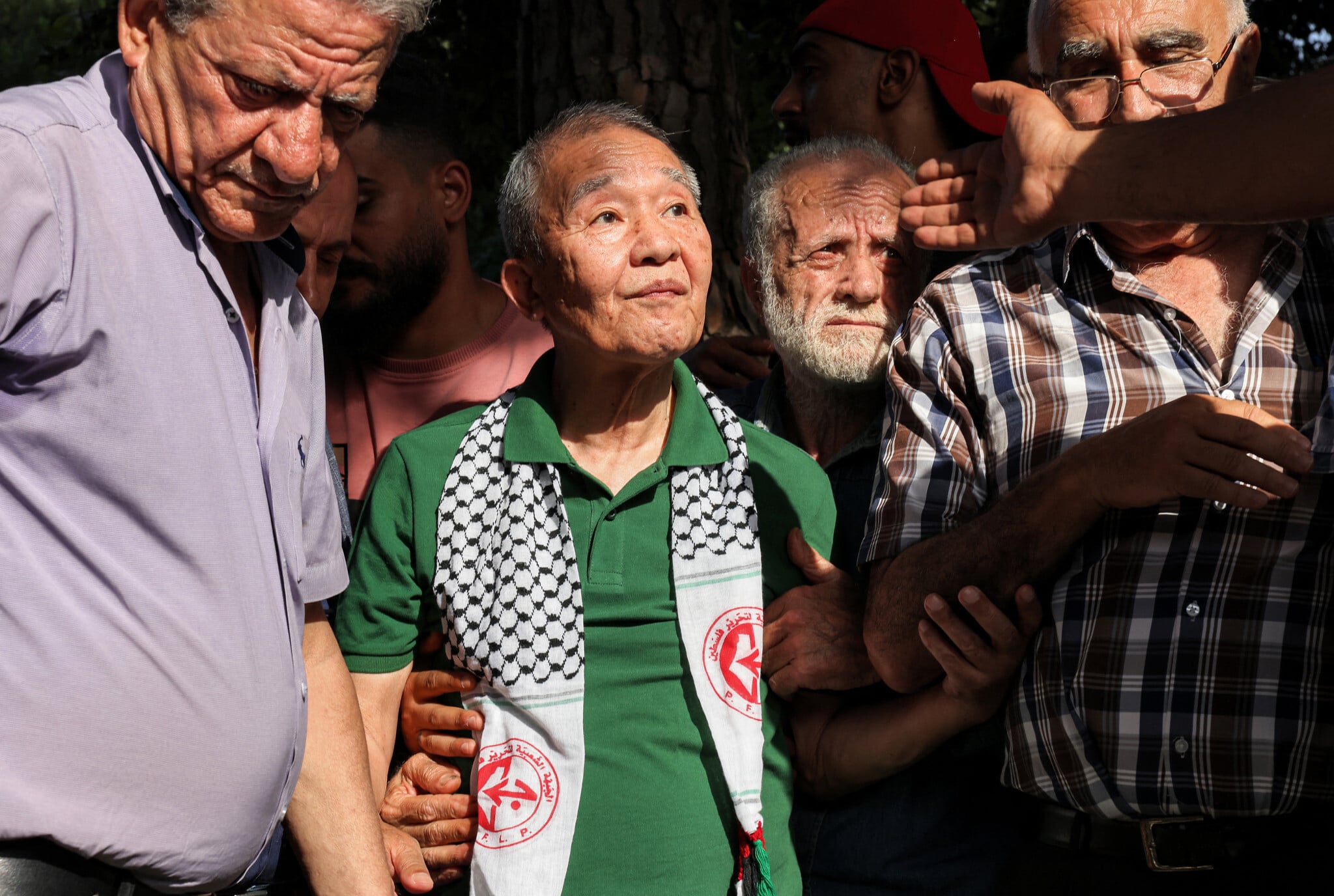
The attack at the baggage claim area of Lod Airport
On May 30, 1972, Okamoto, along with Tsuyoshi Okudaira and Yasuyuki Yasuda, arrived in Israel on an Air France flight using fake passports.
Prior PFLP hijackings had led to increased passenger screening by airlines, but inspection of check-in luggage was still rare. Okamoto and his two accomplices passed through immigration untroubled, picked up their baggage from the carousel, and whipped out assault rifles and grenades from violin cases. The three then opened fire.
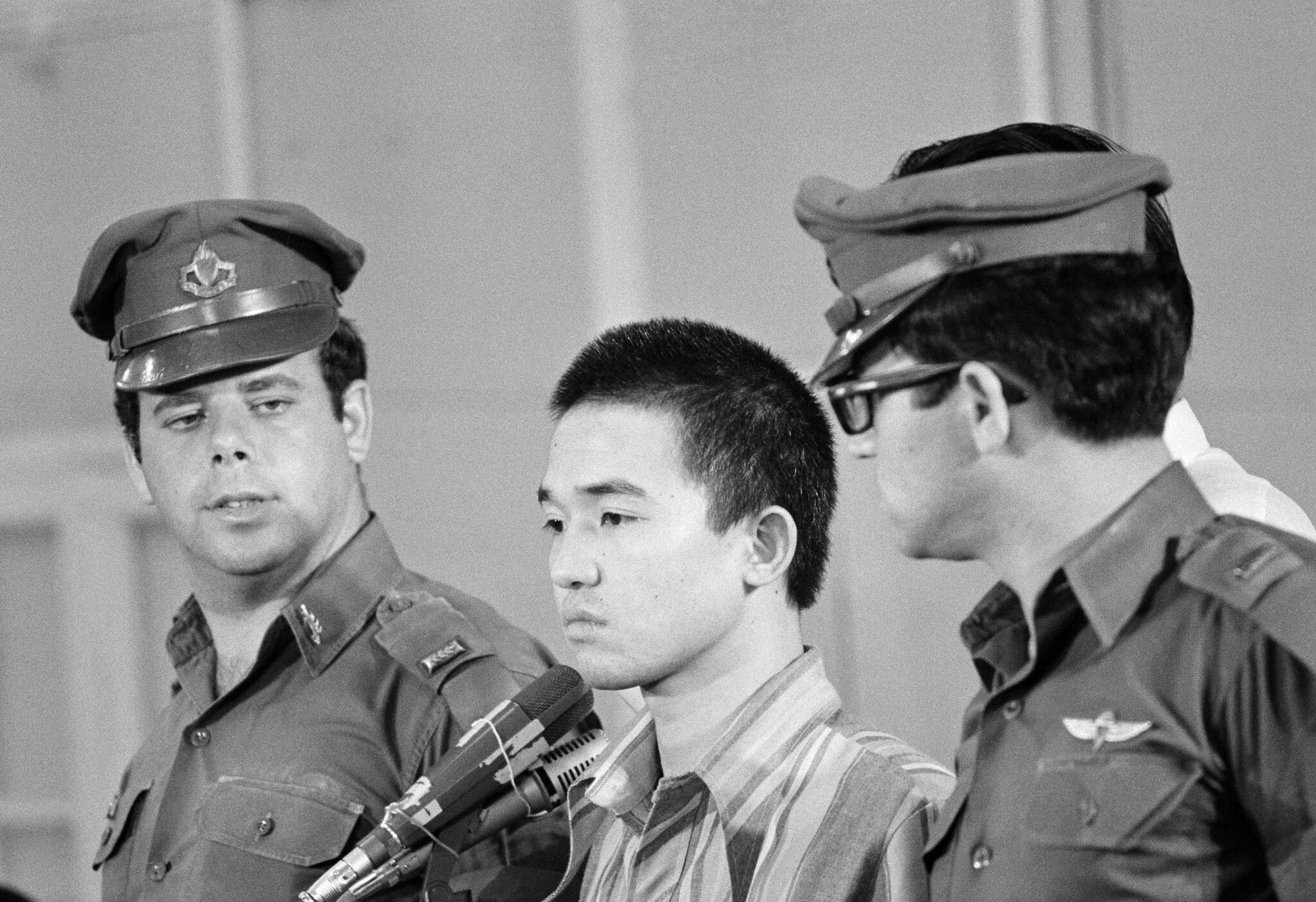
Okudaira and Yasuda were killed in the attack, but Okamoto was wounded by Israeli security, captured, and eventually sentenced to life in prison in Israel.
He was released in a huge prisoner exchange deal known as the Jibril Agreement in 1985.
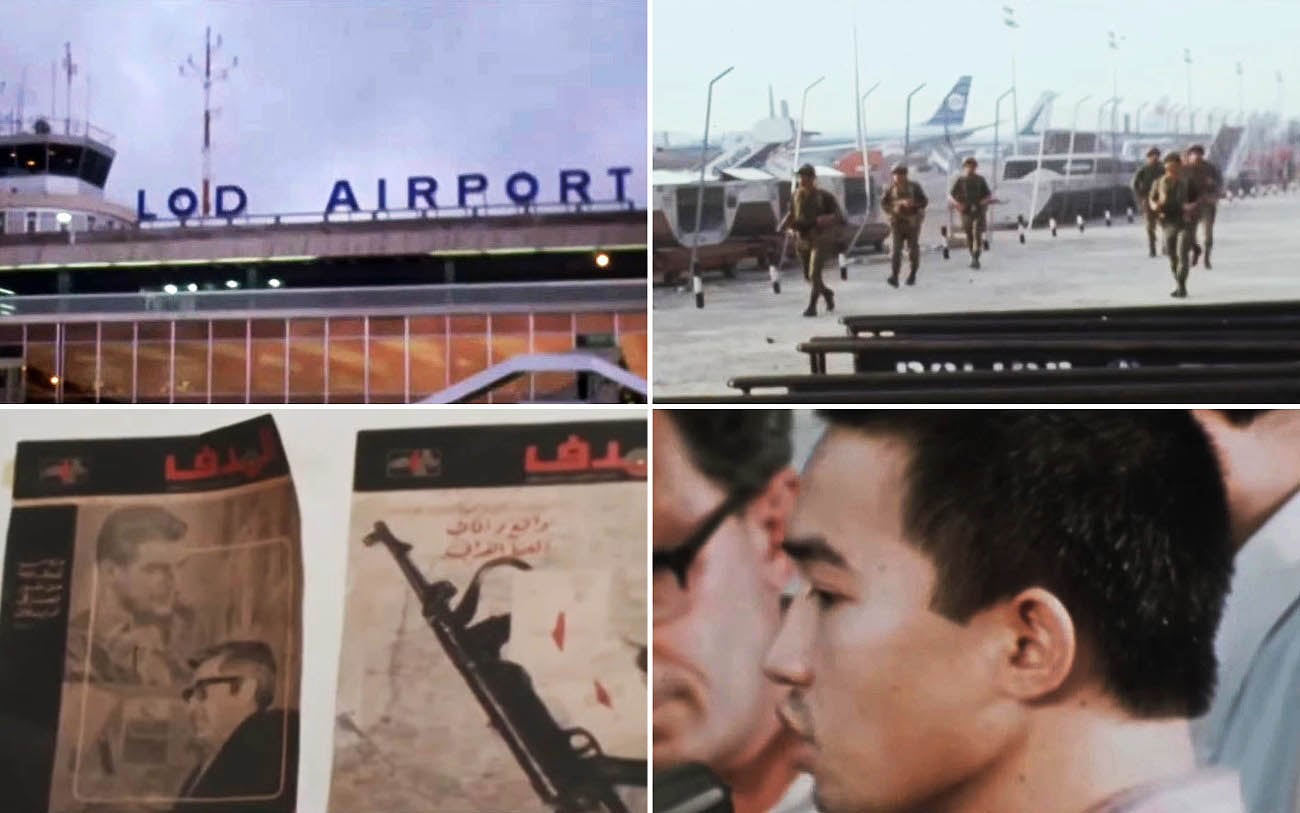
He was imprisoned in Lebanon in 1997, this time on forgery charges, but narrowly avoided extradition to Japan, where he was wanted for terrorism, and in 2000 became the first person to obtain political asylum in Lebanon. He remained in Lebanon under the protection of the PFLP until his death.
In May 2022, Okamoto made a rare public appearance at a PFLP event in Beirut marking 50 years since the airport massacre. During the brief wreath-laying ceremony for Okudaira and Yasuda, he smiled at the cameras, flashed a V-sign, and was escorted away.
‘Another chapter closed’
In an interview with the Semanario Hebreo Jai, a Uruguayan news site, during Franqui’s second visit to Israel in 2020, Franqui recounted the terrorist attack at the airport’s luggage claim area 48 years earlier.
“Suddenly, people heard an explosion,” he said. “A young man was standing right in front of us with a machine gun. My wife told him, ‘Don’t kill,’ but he fired in such a way that she took the first bullets. I was wounded as well.”
Franqui was treated at Beilinson Hospital in Petah Tikva and then flew back to Puerto Rico the following week. In addition to Pérez, the couple had a 4-year-old daughter, Vasthi Noemi.
Several years afterwards, Franqui married Rosita Vázquez, a Christian pilgrim traveling with the same group from Puerto Rico, who was also wounded in the terror attack.
A memorial to the Lod Massacre victims is part of a Holocaust memorial plaza that sits across the street from the Capitol building in San Juan, Puerto Rico.
The spirit of forgiveness
Franqui, 82, told The Times of Israel in a video call with his daughter, Dámaris, that, when he first heard about Okamoto’s death, he felt that “another chapter to the painful story of the massacre has closed.”
However, Franqui said, “we don’t rejoice in his death, nor does it sadden us.”
“Our faith in Jesus Christ, who forgave his transgressors, led us to the conclusion that there had to be a spirit of forgiveness in us too,” Franqui explained. “Not just thinking it, but feeling it in our lives. That is why, from those very first days, we removed all spirit of vengeance toward others from our hearts and instead always held a spirit of forgiveness.”
Pérez, however, said that her journey to forgiveness took longer than her father’s did.
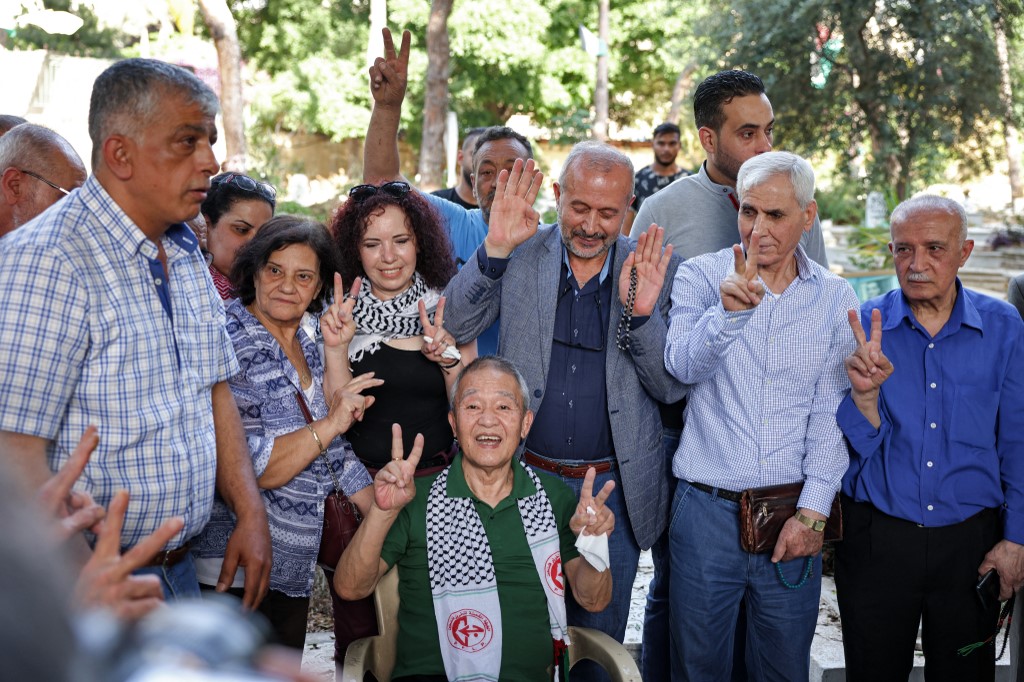
She was “shocked” to see that Okamoto joined the “big celebration” of the 50th anniversary of the massacre in 2022.
“How is it possible he never had a change of heart after an event that shed so much blood?” Pérez asked rhetorically.
She said she and her sister are “happy, successful women,” who are married with children.
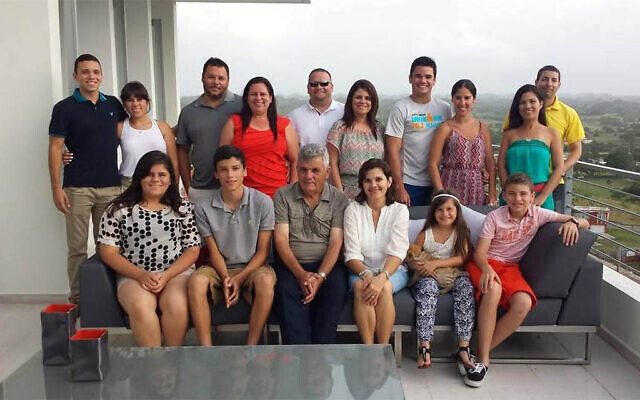
“But our mother never got to meet her grandchildren,” Pérez said. She added that she hoped to come to Israel one day because her mother never had the chance to see “the country she loved.”
“I had to grow up to go through a long process of healing,” said Pérez, who will soon publish an English-language version of her book, “The Tragedy of Tel Aviv: A Story of Pardon, Hope and Transformation,” about her experiences.
“God was able to restore us, to teach us how to forgive, to have a hopeful life, and to be transformed,” she said.
“Okamoto will now face God and give an account of his actions,” Pérez said. “In the presence of God, he will get the consequences.”


The Times of Israel Community.