

Despite Brexit woes, Theresa May is a hero to many British Jews
UK prime minister, who seems unlikely to continue in role for much longer, has taken unprecedented positions in favor of the Jewish people and Israel
 Add ToI as a Preferred Source on Google
Cnaan Liphshiz was a Jewish World reporter at The Times of Israel
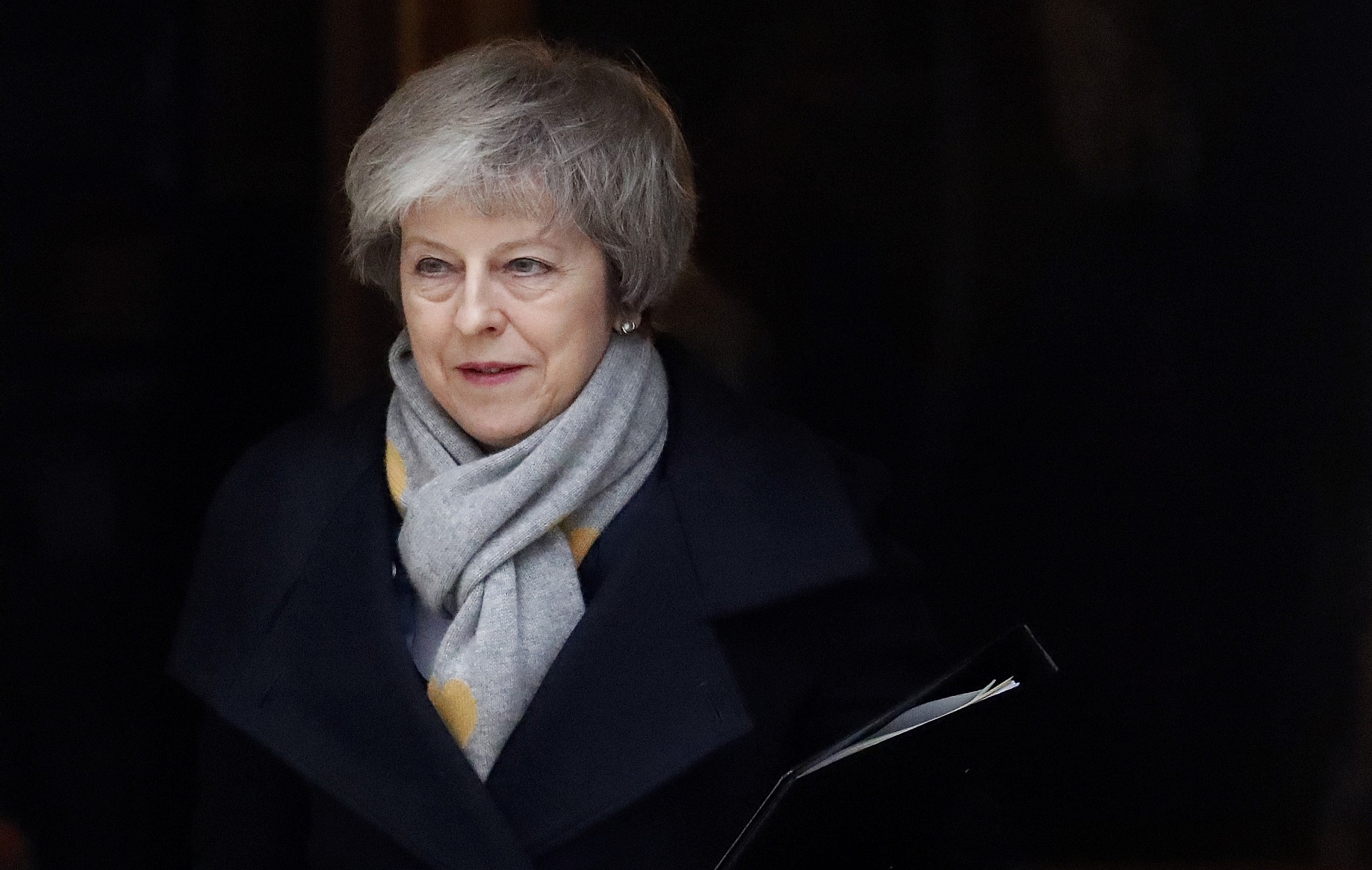
JTA — As the United Kingdom’s political establishment continues its tailspin over Brexit, little can be said with certainty about either’s future.
All bets are off as Prime Minister Theresa May, whose own survivability in office seems increasingly doubtful, continues a desperate balancing act meant to satisfy her own coalition’s many hardliners, the opposition and an unsympathetic European Union.
Deeply unpopular among voters, May has faced successive defeats in the Parliament, where even members of her own Conservative Party oppose her deal for Britain leaving the European Union. The deadline for the divorce is April 12. She is so desperate to pass her deal that last week she offered to resign if it passes in the Parliament. So far it’s still a no-go.
But for many British Jews, one thing is certain: If May goes, her departure will mean goodbye to one of the friendliest prime ministers that the Jewish community has had in the kingdom’s history.
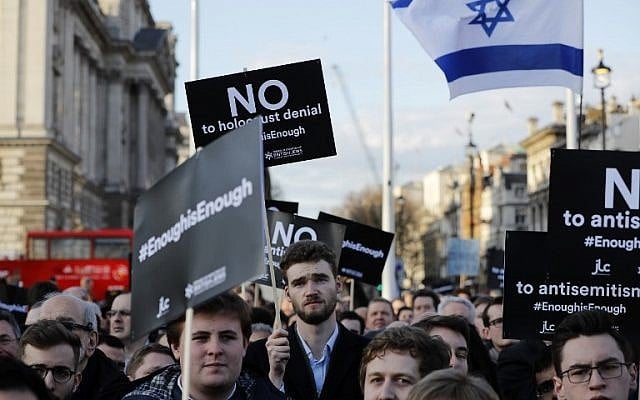
“Prime Minister May followed a line of what you might consider leaders who are attentive and friendly to the Jewish community, as well as to Israel,” said Jonathan Arkush, the previous president of the Board of Deputies of British Jews. Yet May, he added, “distinguished herself” even against that background.
Under May, the United Kingdom has taken unprecedented positions in favor of the Jewish people and Israel.
Her Cabinet led the adoption of the International Holocaust Remembrance Agency’s definition of anti-Semitism, which some anti-Israel activists reject for the way it addresses how hate speech about the Jewish state sometimes cloaks anti-Jewish sentiments.

It also has blacklisted the entire Hezbollah group rather than just its military wing. And the United Kingdom under May in 2017 said it would vote against a permanent article against Israel on the United Nations Human Rights Council. Last month, the rest of Europe followed in Britain’s footsteps in this regard.
Last year, Prince William ended a decades-long unofficial perceived boycott on official visits to Israel by senior members of the British Royal House. May’s government had a central role in facilitating the visit.
May has even clashed with the Foreign Office over Israel, imposing her own policies and successfully “diluting its institutional hostility toward Israel,” said Jonathan Hoffman, a North London-based blogger and former vice chair of the Zionist Federation of Britain.

Diverging from the Foreign Office’s attempts to appear impartial on the Balfour Declaration – a seminal document in the history of Zionism – May embraced it openly during the statement’s centennial anniversary in 2017.
But one of her greatest gifts to British Jewry may have been what she appeared careful not to do: Namely, attempt to use the anti-Semitism crisis raging with the opposition Labour Party for the benefit of her own Conservative Party.
Accusations of anti-Semitism directed at Labour officials exploded following the 2015 election of the far-left politician Jeremy Corbyn to lead the party. It was a traumatic turn of events for many British Jews, who had considered Labour their political home.
Corbyn is an anti-Israel stalwart who has defended an anti-Semitic mural and said British-born “Zionists” don’t understand irony. He attracted thousands from the far left to join Labour. Discourse within the ranks became so toxic that many Jews left the party, including prominent Jewish lawmakers.
Through it all, May resisted the temptation to exploit the issue for political gain, Arkush said.
“It would have been very harmful had the fight against anti-Semitism become some sort of pawn,” he told the Jewish Telegraphic Agency.
But as the ruling party, the Conservatives would have been wrong to ignore the problem altogether, Arkush said.
“We felt May had our back without leveraging the issue,” he said.
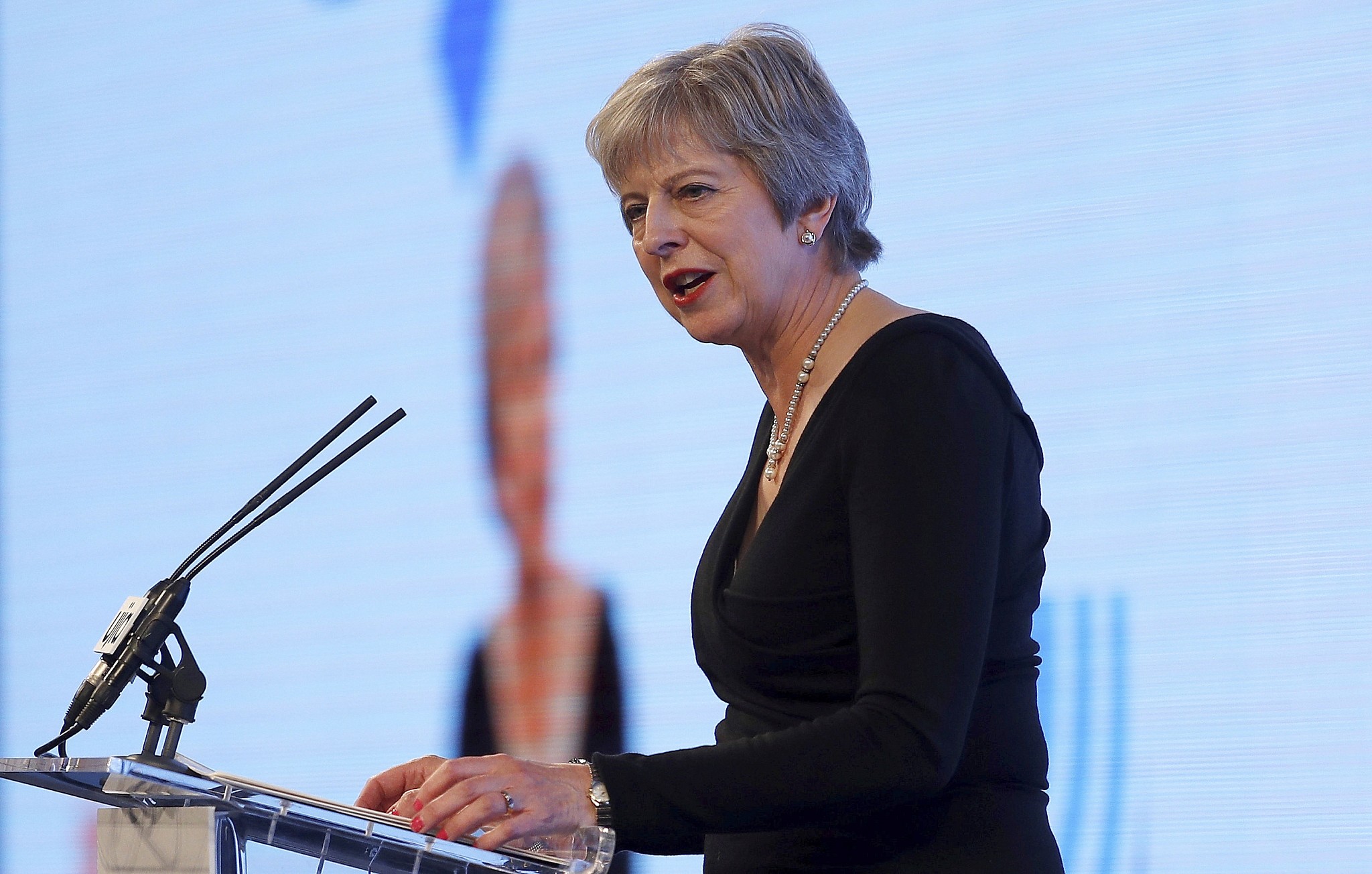
Under May, the Conservatives limited their handling of the issue to the Parliament floor, where their representatives addressed the problem in queries and speeches.
“It was just the right strategy,” said Hoffman, an economist who had worked with May when she was an employee of the Bank of England.
But May’s own party has shown itself to be less than immune to racism and radicalization.
Last month, 15 local Conservative politicians who had been suspended for posting anti-Muslim rhetoric were quietly reinstated. One of them called Saudis “sand peasants.” Another compared Asians to dogs. In December, a Conservative Party complaints panel cleared May’s former foreign secretary, Boris Johnson, of complaints after he compared women wearing burkas to mailboxes and bank robbers.
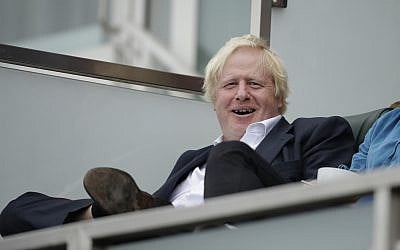
Johnson’s comments did not go down well with Jewish community leaders.
A spokesperson for the Board of Deputies of British Jews wrote on Twitter: “Solidarity with the Muslim community over rising anti-Muslim incidents. Totally unacceptable, whether on the street or in our politics.”
The chairman of the Jewish Leadership Council, Jonathan Goldstein, called Johnson’s comments “totally disgraceful.” Edie Friedman, the chief executive of the Jewish Council for Racial Equality, condemned what she called his “dog whistle racism.”
British Jewish community leaders “traditionally support left-wing positions,” Hoffman said. “This prevents them from embracing May and the Conservative Party wholeheartedly.”
Hoffman won’t vote for May, either, because of his preference for a more “centrist voice” and her conduct on Brexit, which she vowed to advance after succeeding David Cameron. Both May and Cameron were opposed to the idea that the United Kingdom should leave the European Union. But after Cameron resigned in the wake of a national referendum calling for Britain to leave the EU, May stepped up to replace him with the stated goal of securing for her country the best terms for leaving.
It hasn’t worked out well for May, at least in the House of Commons, the lower house of the Parliament. A majority rejected her plan three times.
These and other setbacks have exposed May to scorn, hatred and misogyny.
But true to her apparently endless ability to weather the abuse, May owned the disdain shown to her on social media and elsewhere, when she literally (and woodenly) danced her way onto the podium at a party event last year.
The ridicule may have partially backfired, producing sympathy toward her even among some of her critics. But her popularity is low. In a poll from December, only 41 percent of respondents said she was decisive. It was the highest score she had received in polls since the 2017 elections, which she won narrowly.
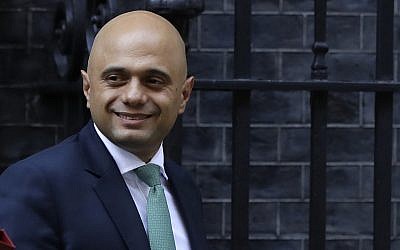
If May resigns, British Jews will find a friend in virtually all Conservative politicians likely to take her place, Arkush said. They include Foreign Secretary Jeremy Hunt, Home Secretary Sajid Javid and Environment Secretary Michael Gove.
Despite Corbyn’s own image issues, he has increased Labour’s strength in the House of Commons by 12 percent. The Conservatives, meanwhile, have lost 4 percent of theirs.
As for Hoffman, an economist, he said he can’t overlook May’s role in Brexit, which he calls “a tragedy if it happens.” Instead of May promoting the move, he and many other Britons want her to call a second referendum on the issue.
If not for Brexit, Hoffman said he would have voted for May.
“But right now that’s a bit ridiculous,” he said, “because British politics is all about Brexit — that’s the only thing on the agenda.”









The Times of Israel Community.