

For Shaer family, targeted killing of Arouri brings some closure to son’s 2014 murder
Bat-Galim Shaer, mother of son Gil-ad, who was slain by Hamas terrorists in 2014, focuses her energy on building unity and resilience within Israeli society – especially during war
 Add ToI as a Preferred Source on Google
Renee Ghert-Zand is the health reporter and a feature writer for The Times of Israel.
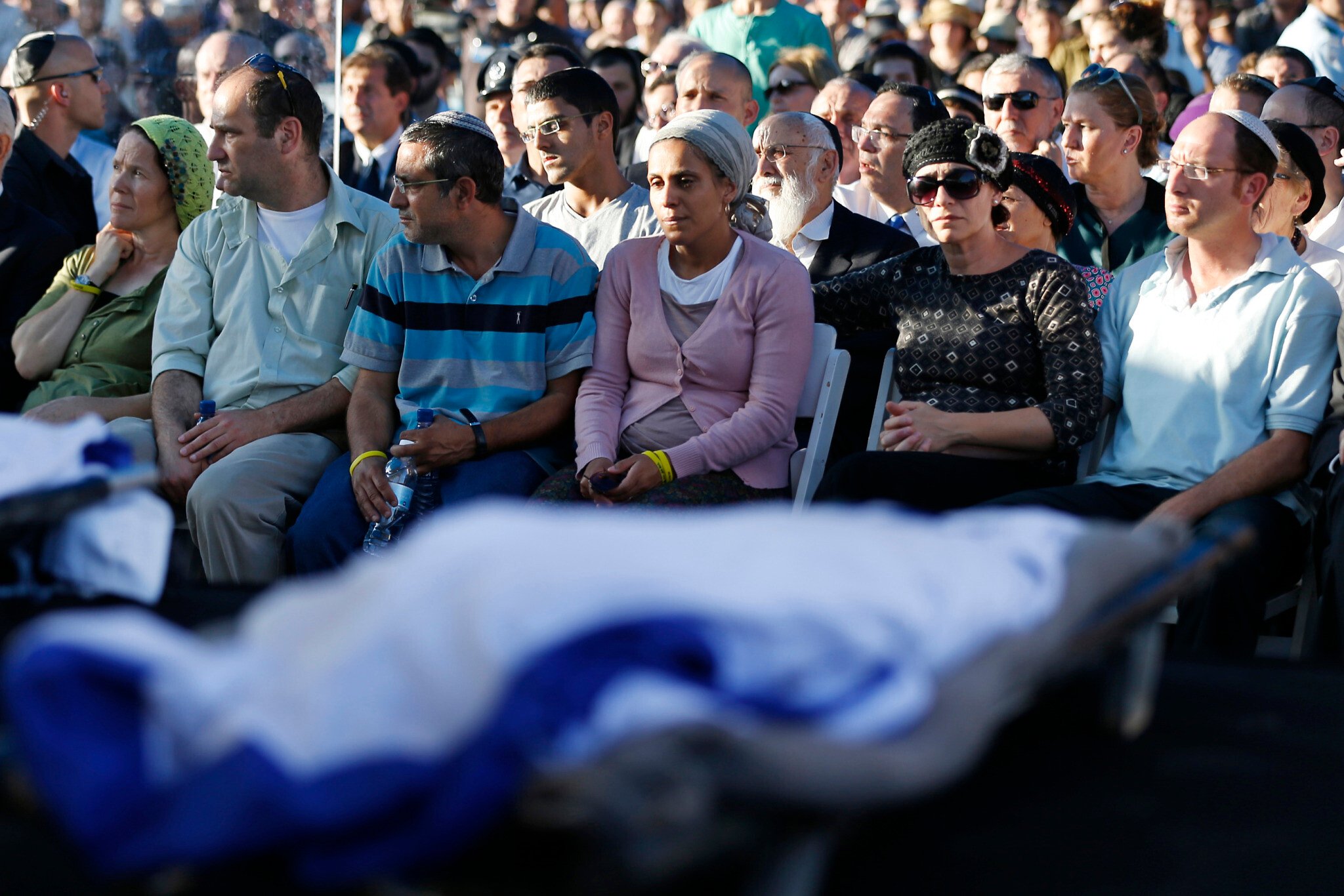
The targeted killing of Saleh al-Arouri by an Israeli drone strike in Beirut on January 2 marked a sort of closure for Bat-Galim Shaer, her husband Ofir, and their five daughters.
Hamas’s deputy leader abroad and the mastermind behind the terror group’s infrastructure in the West Bank, Arouri is believed by Israeli intelligence to have planned the kidnapping and murder in June 2014 of the Shaers’ son Gil-ad, along with two other Israeli teens, Naftali Fraenkel and Eyal Yifrach. The tragic event sparked a seven-week war between Israel and Hamas that summer.
“Arouri’s killing won’t bring back our son, but it is a closing of a circle. People who attack Israel need to know they will pay the price. Israel knows how to deal with the leaders of Hamas and Hezbollah and no longer thinks that if we don’t respond everything will work out,” Shaer said.
“But it is important to point out that [al-Arouri’s killing] is a national victory, not a personal one. This is not a settling of the score for the Shaer family with this murderer. He was always planning more murders, kidnappings and attacks. What this means is that there is one less evil person like this in the world and that whoever commits terror will lose,” she said.
Having interviewed the Shaers several times in the years following Gil-ad’s murder, The Times of Israel wanted to see how they were doing during the current war that began following Hamas’s brutal attack on southern Israel on October 7. Hamas destroyed entire communities and slaughtered 1,200 people, mainly civilians that day. Another 240 Israelis and foreign nationals of all ages were taken to Gaza as hostages, with 136 still there, some of them known to be dead.
Bat-Galim shared that life goes on as best as possible for their family during these “complicated and not easy days.”
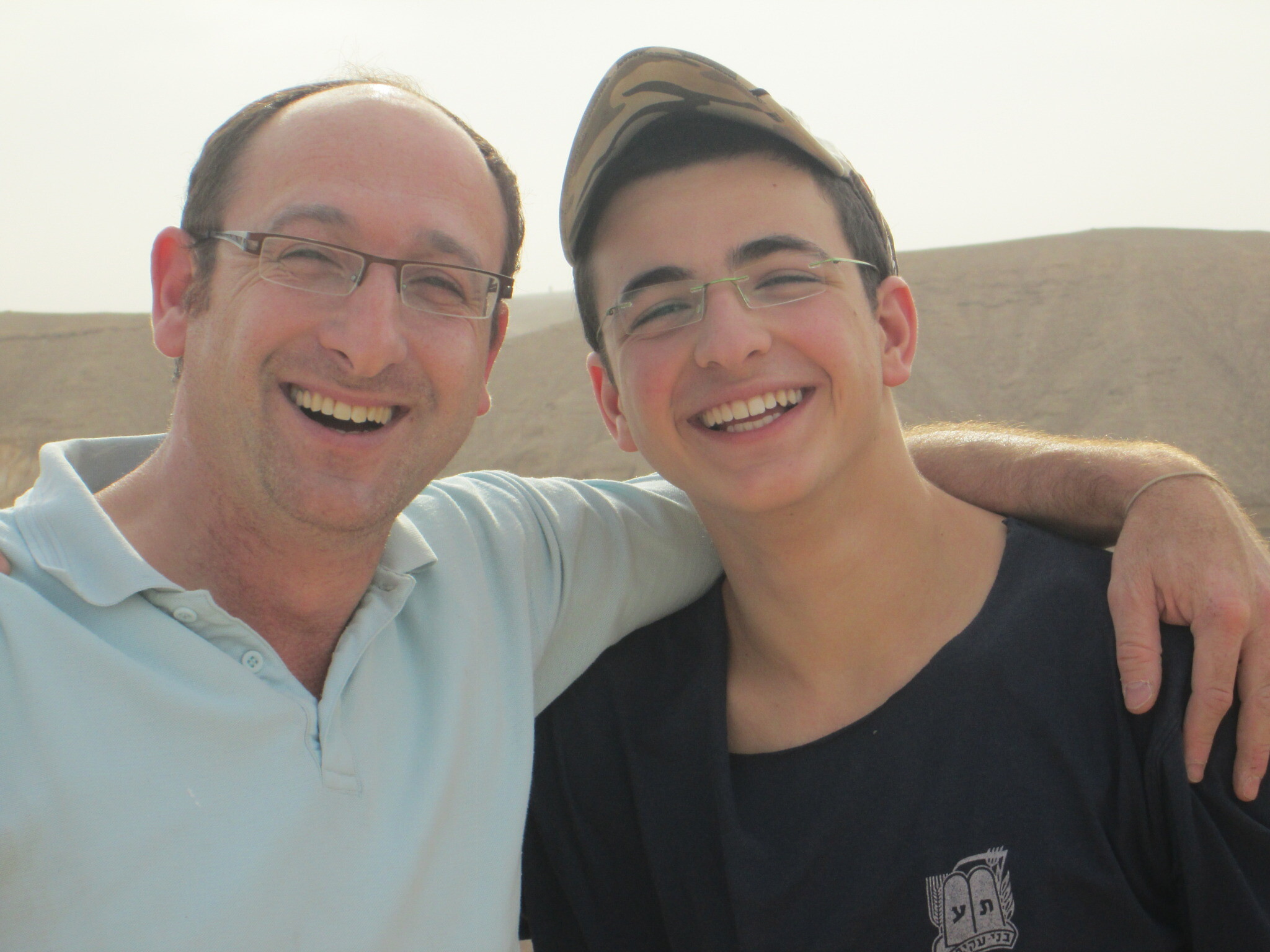
“Our girls have grown up, each in their own wonderful way. Two are married and we have two grandchildren from one of them,” Shaer reported.
“We stay busy, but the pain [of losing Gil-ad] doesn’t heal. There’s always the longing. We feel a missing out [on what he would have become] that will never go away. It’s part of us,” she said.
While her husband continues to work as a lawyer and tax specialist, Shaer sits on the board of directors of the Central Zionist Archives and returned to Bar-Ilan University to complete her doctoral dissertation in the department of formal education. She also lectures on resilience and teaches tools for coping — something much needed by Israelis today.
“We need this especially now, but even before the war it was relevant. All people are dealing with something, be it the stress of making a living, aliya [immigration to Israel], health issues, and so on. We need to know how to deal with reality, have tools, and know where to put our energy,” Shaer said.

Soon after Gil-ad was murdered, the Shaers founded a non-profit organization called Sonshine in his memory, and the memory of the other two murdered boys. The Shaers also worked with the Fraenkels and Yifrachs to establish the annual Unity Day and the Jerusalem Unity Prize, which acknowledges the efforts of organizations and individuals in Israel and the Jewish world who actively work to advance unity within Israeli society and between Israel and Jewish communities around the world.
After the past year, which saw the Israeli nation and global Jewish people almost ripped apart over the government’s judicial reform plans, Shaer said she remains positive about unity within Israeli society.
“I think we are always advancing personally and socially, even in terms of unity. It’s like a spiral rising further and further up. Many more people and organizations are concerned with unity now as compared to a decade ago. There is more talk and more action,” Shaer said.
At the same time, she acknowledged that getting every citizen to preserve unity within Israeli society and to check themselves in terms of how they interact with others is easier said than done.
“People need to understand that we have differences. That there is variety and pluralism, and that is exactly what makes us stronger. When you are open to other voices, you don’t necessarily have to change your opinion, but your mind is open to other perspectives and you grow,” Shaer said.
https://cdn.jwplayer.com/previews/DdbVtw8d-U4CTA3JQ
“All the research says that we agree on 80 percent of things, so no one needs to compromise. It’s about creating something that holds difference and variety and building something new for the unity of Israeli society and for unity between Israel and the Jewish Diaspora,” she said.
Sonshine runs a variety of programs and initiatives, and as soon as the current war broke out, it adopted the community of Kibbutz Kerem Shalom. Its residents were evacuated immediately after October 7 to Eilat, and have recently been moved to Ashalim, located 35 kilometers (22 miles) south of Beersheba.
By fundraising and support from Keren Hayesod-United Israel Appeal, Sonshine has been able to provide the Kerem Shalom families with winter clothing, school supplies, and equipment for the kibbutz’s rapid response team. Sonshine has also paid for special activities for the kids.
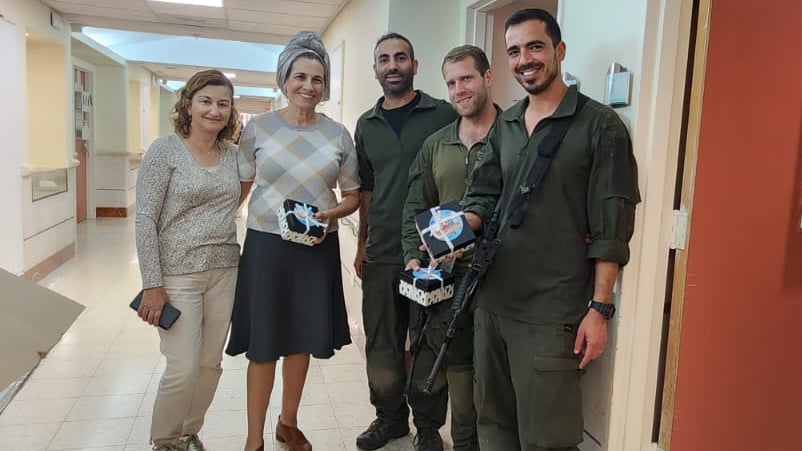
“We have given them whatever they have needed and will be with them as long as needed,” Shaer said.
The connection between Sonshine and Kerem Shalom was not coincidental, as the kibbutz is one where religiously observant and secular families live together in harmony.
“This definitely fits with our agenda of unity,” Shaer said.
She said she believes there is no point in dwelling on whether the enemy took advantage of the recent extreme rifts in Israeli society, or in appointing blame. Pointing fingers will not help as Israel fights this war, she insisted.
“Unity is not just a slogan. It is needed for our national strength and resilience always, especially now,” Shaer said.


The Times of Israel Community.