

From labor to Labor: At hospital, woman casts ballot shortly after giving birth
New mothers join other hospital patients and staff exercising civic right at Sheba Medical Center, while family members are forced to find voting solutions elsewhere
 Add ToI as a Preferred Source on Google
Carrie Keller-Lynn is a former political and legal correspondent for The Times of Israel
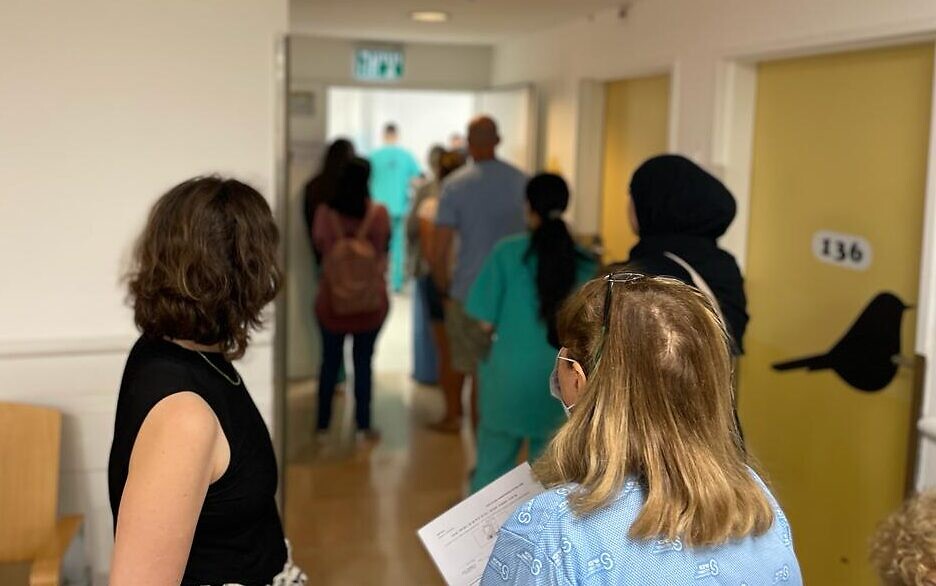
Moments after her first child was delivered on Monday, Angelina Bornshtein turned her attention to politics.
“They were still sewing me up,” the 32-year-old Beer Yaakov resident recalled at Ramat Gan’s Sheba Medical Center, where she was still hospitalized Tuesday morning. “The second I gave birth, I asked how can I vote,” she added, revealing that her party of choice, fittingly, was Labor.
Luckily for Bornshtein, 222 of this year’s 12,000-odd polling stations are deployed in hospitals. Sheba boasts six, including a mobile one that moves between the maternity and psychiatric wards, according to Esther Lavi, a Sheba administrator responsible for the hospital’s election day voting operation.
The hospital polls are part of a larger network of special voting stations, which also include deployments in assisted living facilities and prisons. There are also special polls for citizens quarantined for COVID-19, as well as accessible polls for the disabled.
While they increase access, the hospital polling stations only serve hospitalized patients and documented workers. Escorts, including Bornshtein’s husband, are barred by the Central Elections Committee from voting onsite.
Rowena Flores, 49, planned to vote on Tuesday, but was not sure she could leave the hospital and her elderly husband, Emmanuel Adiv, 87, for the amount of time required to travel and place her ballot.
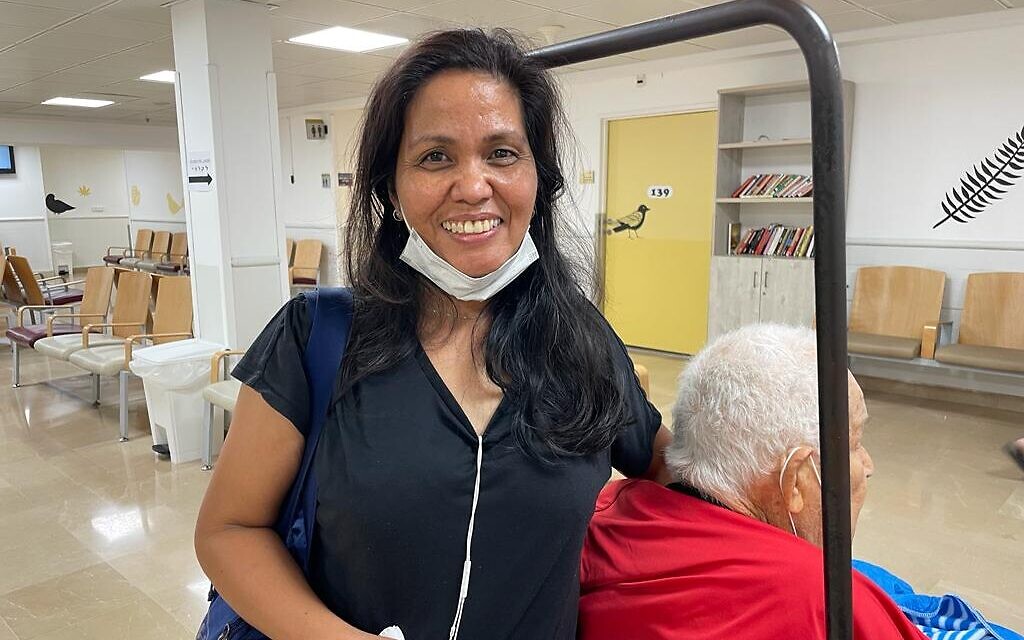
“I can’t leave him. If he votes here, I can’t leave to go elsewhere,” she said, escorting her wheelchair-bound husband Adiv as he waited in line to cast his ballot at Sheba.
While Sheba provides several shuttles to take escorts to offsite polling stations, her husband shared her discomfort.
“I need her,” Adiv said of his wife of 16 years, whom he initially met when she began caring for him.
Sheba’s shuttles deliver escorts to one of two local accessible polls, where they can cast ballots after attesting to a disability that gives them the right to vote there.
“They can’t vote in the hospital because it’s illegal,” said Lavi. “We provide this service because we care about patient experience.”
Despite being a nation famous for developing cutting-edge technology, Israel clings to its paper ballots, physical voter rolls, and manual counts. As a consequence, voters without exigent circumstances are forced to vote from their assigned polls, which are tied to their address of record.
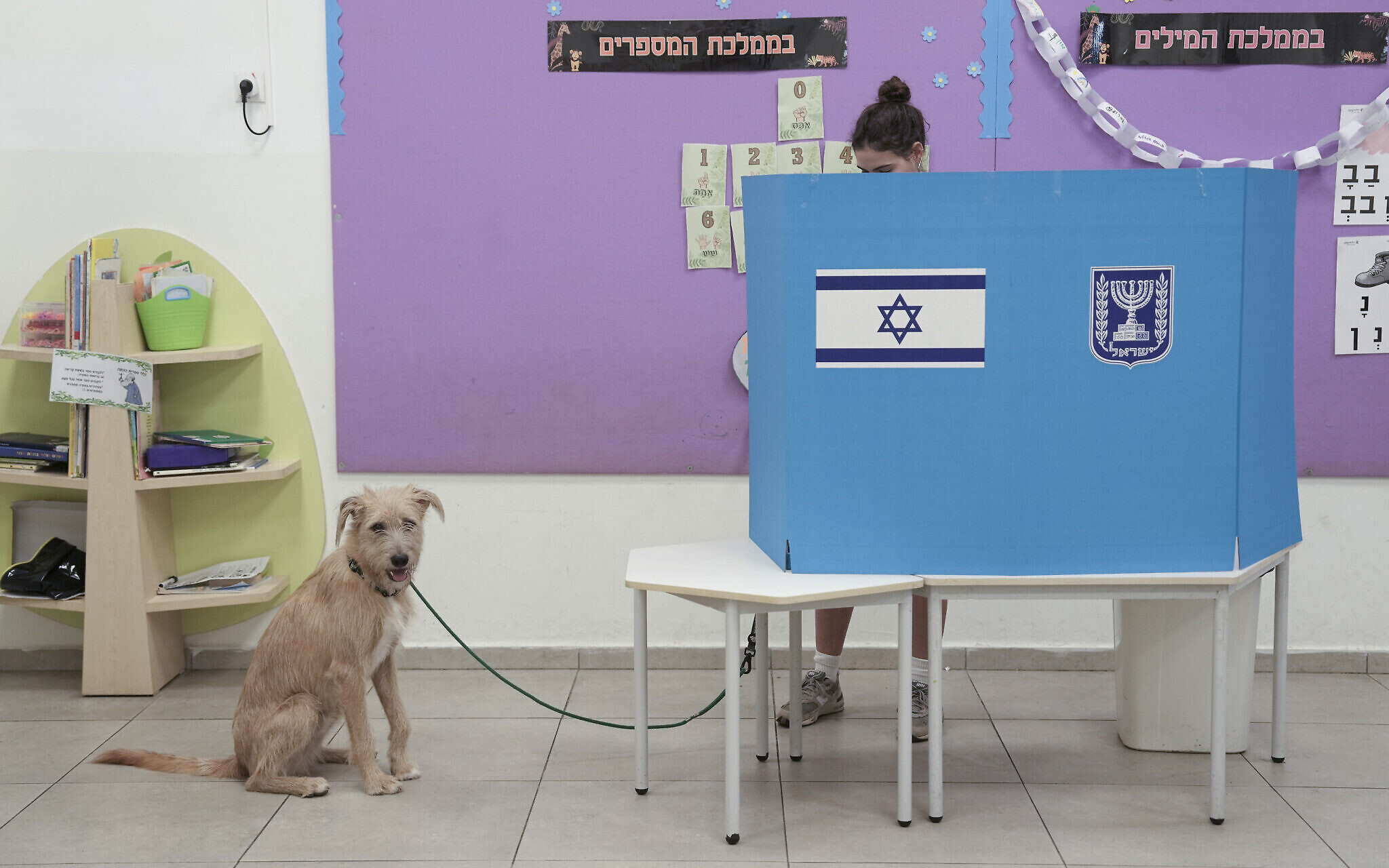
In an election likely to be determined by voter turnout, poll access is a key issue. While the state provides the polls and automatically registers its nearly 6.8 million eligible voters, the rules can chafe those who are not physically where they need to be to vote on November 1.
In the hospital on Tuesday, Orit from Hod Hasharon, who declined to share her last name, said she did not plan to use Sheba’s service to vote.
“My head isn’t in it, and I didn’t plan to vote,” said Orit, who gave birth to her second child on Sunday and was still hospitalized in the maternity ward.
“Everything was so fast, we’re still focused on this,” said her husband Matan, gesturing to their sleeping infant.








The Times of Israel Community.