

How my modest love song was sucked into a chilling machine of political propaganda
The Independence Day torch-lighting ceremony demonstrated how politicians erase the truth using fake sentimentality and turn a national event into a fawning display for Netanyahu

 Add ToI as a Preferred Source on Google
Amir Ben-David is a journalist and senior writer at Zman Israel, The Times of Israel's sister Hebrew website. He's also a musician with the Israeli rock group “Avtipus” ("prototype"), a screenwriter and a novelist.
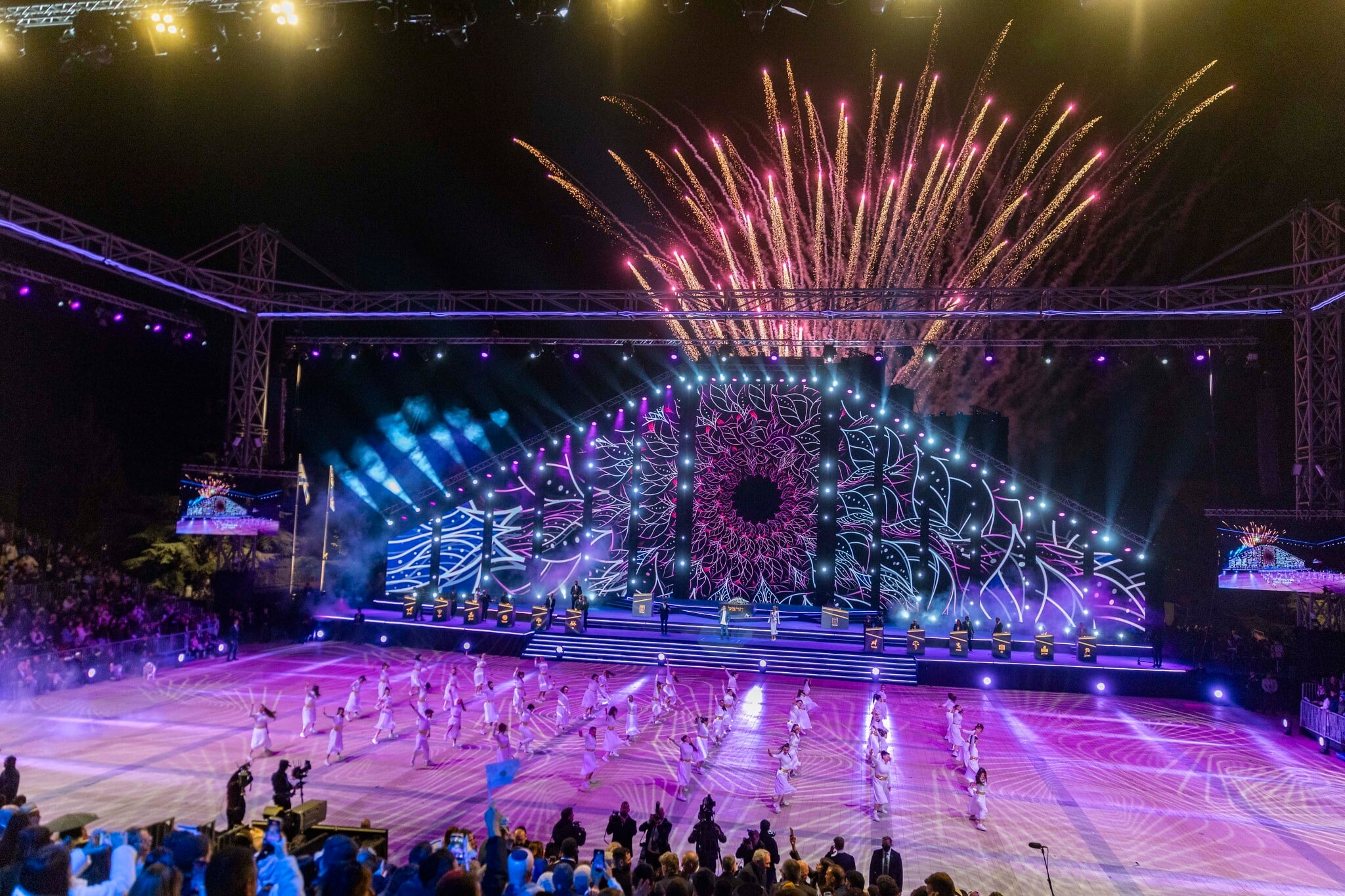
At eight o’clock on Tuesday, the eve of the 78th Independence Day, my beloved and I sat in front of the television in our living room and watched the official torch-lighting ceremony of the State of Israel. We might have even been holding hands.
On the dignitaries’ platform at Mount Herzl in Jerusalem, Prime Minister Benjamin Netanyahu and his wife Sara took their places, with Transportation Minister and master of the ceremony Miri Regev beside them in a national blue blazer.
Around them, excited citizens waved Israeli flags; some of them were later identified as prominent supporters of the prime minister on social media. It is entirely plausible that they were also the ones who, during the ceremony, occasionally broke into spontaneous chants of “Bibi! Bibi!” and disturbed the prime minister and his wife’s enjoyment of the evening.
The traditional Yizkor prayer, which distinguishes between the atmosphere of dread on Memorial Day and the first moments of joy on Independence Day, ended. A burdensome silence descended for a moment over Mount Herzl, and then the plaza in Jerusalem and our living room in Tel Aviv were filled with the sounds of dramatic piano music.
It led into the song “Leave Me Room to Hug You” – a classic 1990s Israeli hit that I composed and wrote 35 years ago for my rock band Avtipus, dedicated to the woman I loved who, astonishingly, still puts up with me after all these years.
Something strange happened to us in the living room. Instead of feeling uplifted, proud, satisfied and excited that this specific song, “our song,” which holds a special nostalgic place in our lives, had been chosen out of all the wonderful Hebrew songs to open the State of Israel’s Independence Day celebrations – and in such a grueling year at that – Yael and I stared at the screen slack-jawed. Stunned.
“Leave Me Room to Hug You” performed at the torch-lighting ceremony on Mount Herzl in Jerusalem, April 22, 2026
We could hardly believe the spectacle unfolding before our eyes as the young singer Shira Zalouf steadily carried “Leave Me Room to Hug You” toward its first chorus. Even now, as I write these words several hours after the ceremony ended, I still find it hard to process what we saw.
To be as clear as possible, I would like to dwell on a detailed and faithful description of the images:
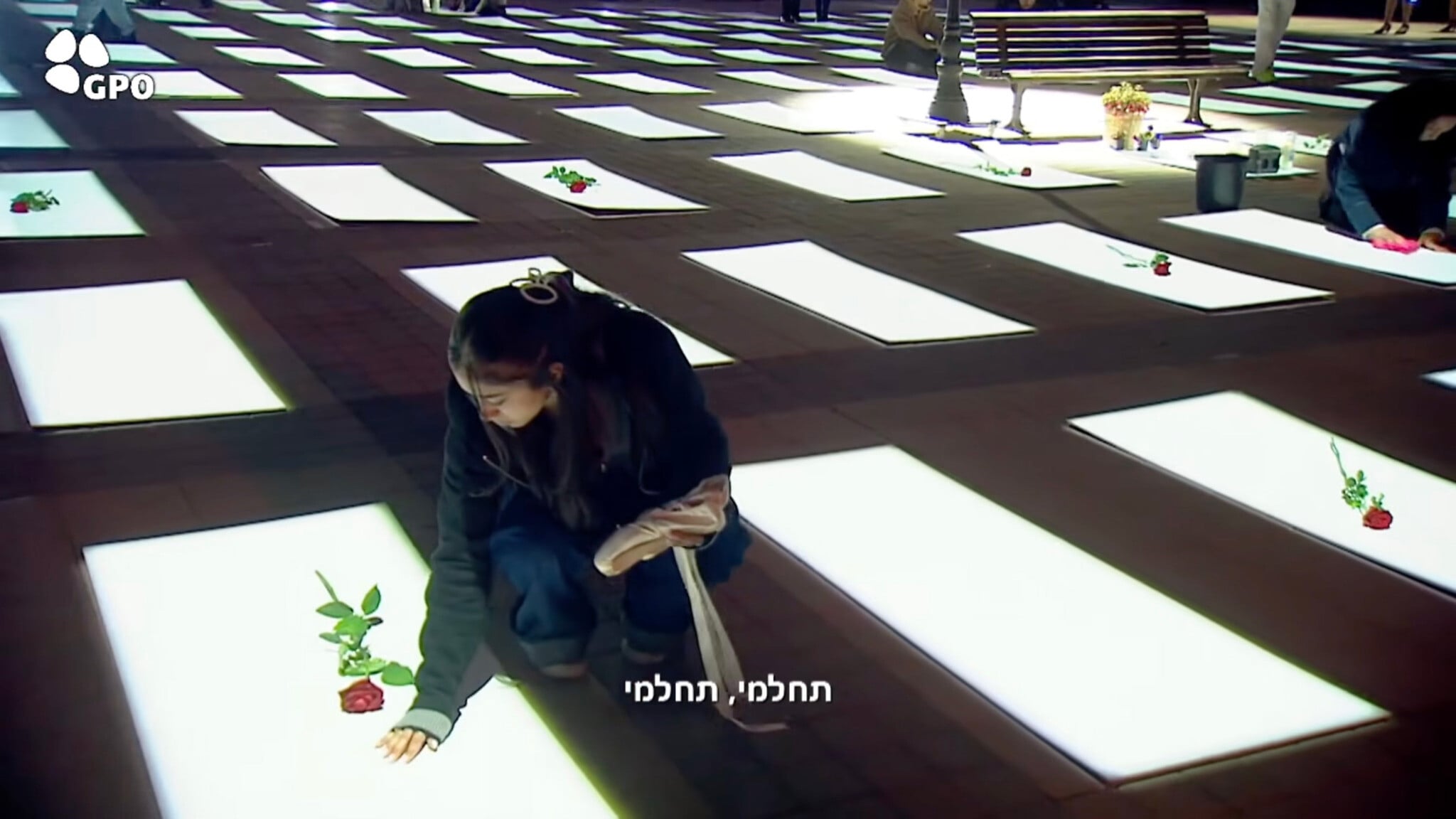
The grave of Theodor Herzl, the visionary of the state, was magnificently illuminated. Hundreds of graves were projected onto the plaza floor, some bearing the IDF emblem; a slumped, elderly man leaning on a cane shuffled grief-stricken among the graves; a woman with a vacant gaze placed a red rose on a tombstone.
A woman with a vacant gaze placed a red rose on a tombstone. Another woman, sadder than the first, wiped a tombstone with a red cloth
Another woman, sadder than the first, wiped a tombstone with a red cloth; a woman and a girl sat embracing, strengthening one another; two young men clinked beer bottles over a grave, apparently that of a friend from their unit. They set a beer bottle up for the missing friend as well and clinked it to say, “Cheers.”
The camera rose for a moment to a breathtaking bird’s-eye view of Mount Herzl, then plunged downward and focused on a girl sitting on a grave, tightly hugging a large brown teddy bear. Perhaps she hoped this would help her remember her father’s comforting embrace.
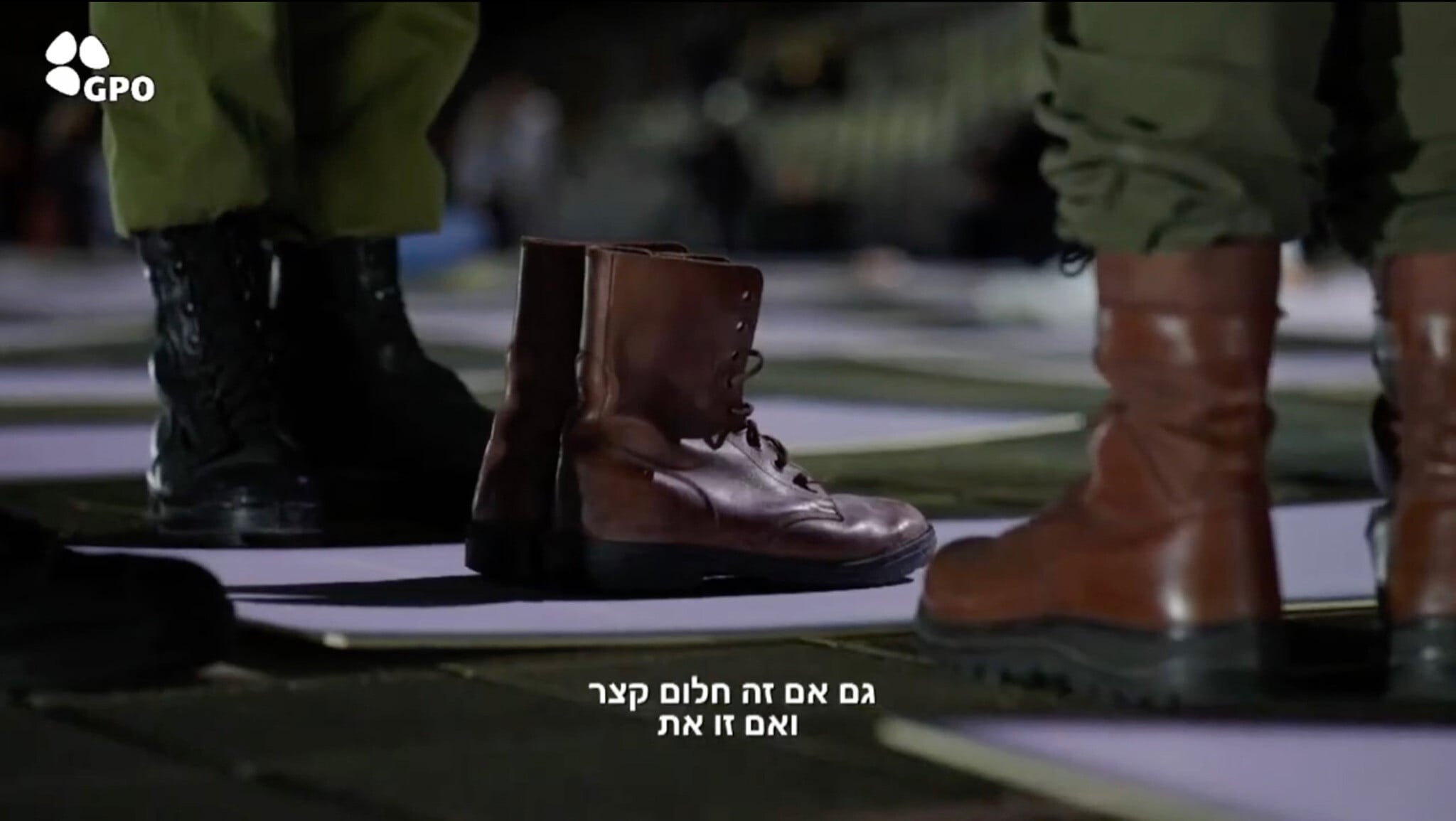
Three friends saluted a grave, with two reddish-brown paratrooper boots placed beside them, receiving a dramatic close-up. Presumably, these were the boots of the friend whose grave they had come to visit. It was admittedly hard to understand why they had actually brought the boots with them, but in the meantime, attention was diverted as a young woman in bridal clothes knelt and seemed about to burst into tears.
She would not be the only bride that evening. In just a moment, the camera would focus on a brokenhearted young woman who took a ring out of a red box and placed it on the gravestone. Perhaps this was a promise that her love would be preserved forever, much like the love of another young woman who would appear later, stroke her heavily pregnant belly, and place ultrasound images on the grave in front of her. Presumably, these were images of the fetus in her womb, who would never get to know its father.
Women in the audience wiped away tears. Four women in the plaza, embracing like mourners, sobbed aloud. Dozens of soldiers in dress uniform stood erect and presented their weapons
Women in the audience wiped away tears. Four women in the plaza, embracing like mourners, sobbed aloud. Dozens of soldiers in dress uniform stood erect and presented their weapons. A pair of parents approached one of the graves holding a balloon that read “Happy Birthday.” The camera focused on the elaborate birthday cake placed on the grave.
Shira Zalouf’s voice rose and rose, reaching a heart-rending scream of the phrase “in a dream,” and it echoed repeatedly as the birthday balloon of the soldier who would never get to taste the elaborate cake his parents had brought to his grave slowly rose into the Jerusalem sky.
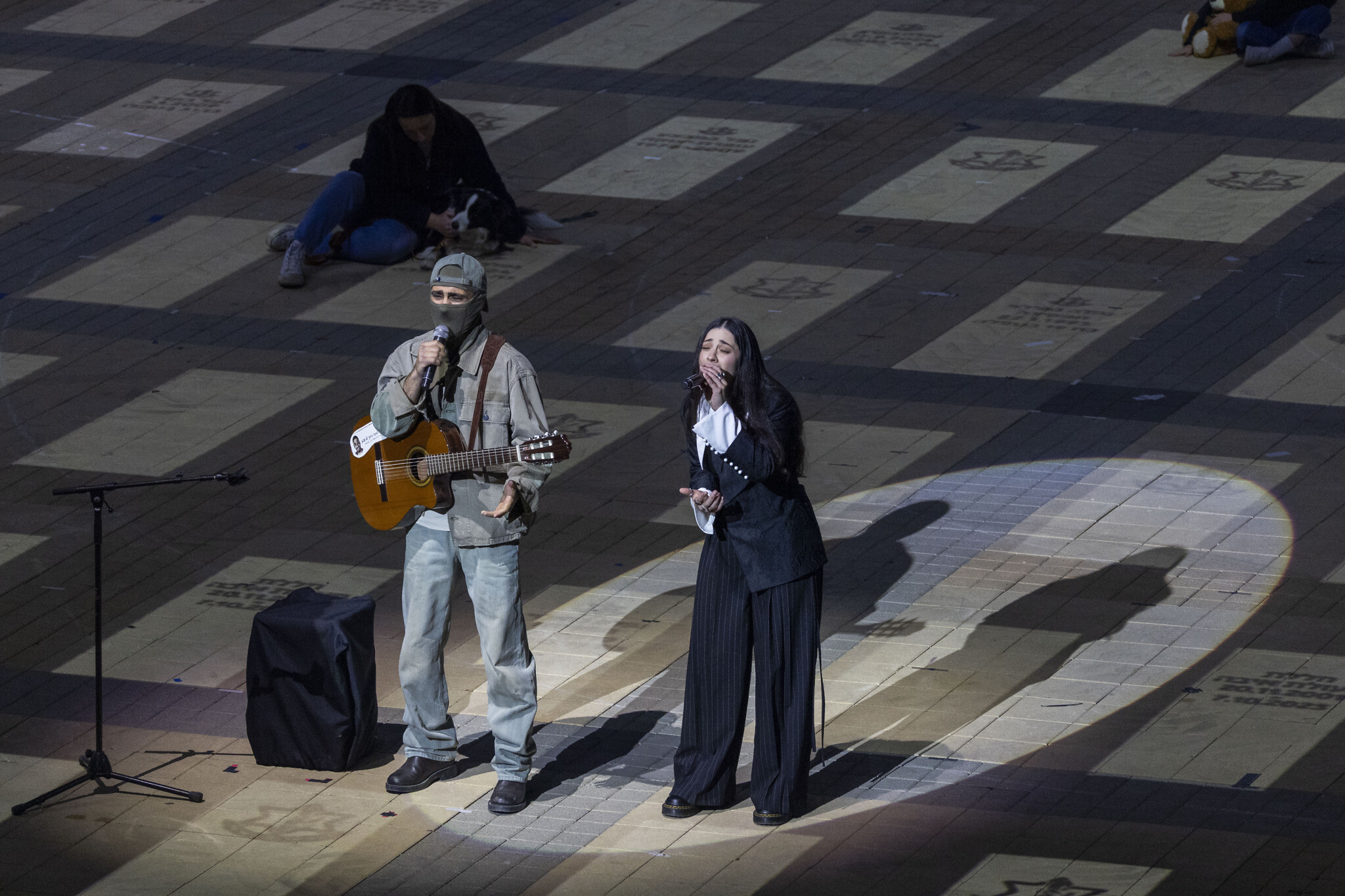
And so, the first act came to an end. This was the more restrained act. Because only now would the real drama begin, when the singer known as “M the Mista’arev” (undercover operative) entered the frame.
In a surreal blurring of reality television and actual warfare, the government brought an active-duty undercover soldier onto the national stage, dressed in full combat uniform with his face covered.
In a moment, his mighty voice and that of Zalouf would blend as giant black birds took flight on the screens toward the sky, and the soundtrack climbed from one climax to another and then, miraculously, hit the afterburners.
Disconnected from the song, from its arrangement, and from its performance, everything chosen to surround the two singers consisted of unmistakable images of kitsch and death
Disconnected from the song, from its arrangement, and from its performance, everything chosen to surround the two singers consisted of unmistakable images of kitsch and death. Death, sadly, we know very well here. And kitsch — as Milan Kundera taught us in “The Unbearable Lightness of Being” — is always the aesthetic ideal of forceful politicians.
With the help of kitsch, politicians forge a fake consensus, make people forget the facts, and erase any possibility of doubt or irony. Because kitsch, as Kundera wrote, “is the absolute denial of shit.”
We will get to the politicians soon enough. We cannot avoid it. But I want to dwell for another moment on the song.
“Leave Me Room to Hug You” is a modest love song, originally written as a letter left on the coffee table of a small ground-floor apartment in Tel Aviv. It was then set to music. And happily, it also became highly successful.
“You told me yesterday that you dreamed of me at night…”
It was a short dream. And that’s such a nice thing to know that someone dreams about you. Just nice. Deliberately nice. No hearts pounding here. No lion roaring
It was a short dream. And that’s such a nice thing to know that someone dreams about you. Just nice. Deliberately nice. No hearts pounding here. No lion roaring. There is room left for an embrace. Everything here is mundane. Intimate. Close. Very simple.
And in the second verse: “When you sleep and smile to yourself, I’m glad I’m there.” Just glad. Not fainting with happiness. Not wandering around like a sleepwalker. Not forgetting who I am, where I came from, and where I’m going. Glad I’m there. And even that is only “sometimes.” Let’s not overdo it.
The original version of Amir Ben-David’s song “Leave Me Room to Hug You”, performed by his band Avtipus in 1994
There is not much room left for feelings like these – free of pathos, intentionally modest, domestic, kept at room temperature – in a country that chooses to wallow in kitsch. Because kitsch is always excessive. And it is always a manipulation.
Kitsch always masquerades as human emotion, then drowns the world in tears, almost violently demands that we be moved, and in the end leaves us with a hollow feeling of emptiness.
This Independence Day evening was one station – indeed, a crude and noisy one – in a historic struggle being waged in Israel over the character and future of its society
This Independence Day evening was one station – indeed, a crude and noisy one – in a historic struggle being waged in Israel over the character and future of its society.
In the visible, obvious, political part of it, we are contending with a hostile takeover of Israeliness, and its total enslavement to the needs of a failed, shunned, and unrestrained leader, surrounded by fawning loyalists, convinced that there are still enough Israelis on whom a North Korean television spectacle with a South American touch will make an impression.
In a less visible, subtler part, we will later need to repair the torn muscle of matter-of-factness. To return a little to the simple directness that so many Israelis once took pride in. To find new ways to conduct public life at eye level. With honesty. Without pathos and without kitsch.
To return to dreaming short dreams at night, and the next morning be happy about them, because it is such a nice thing to know that someone dreams about you.
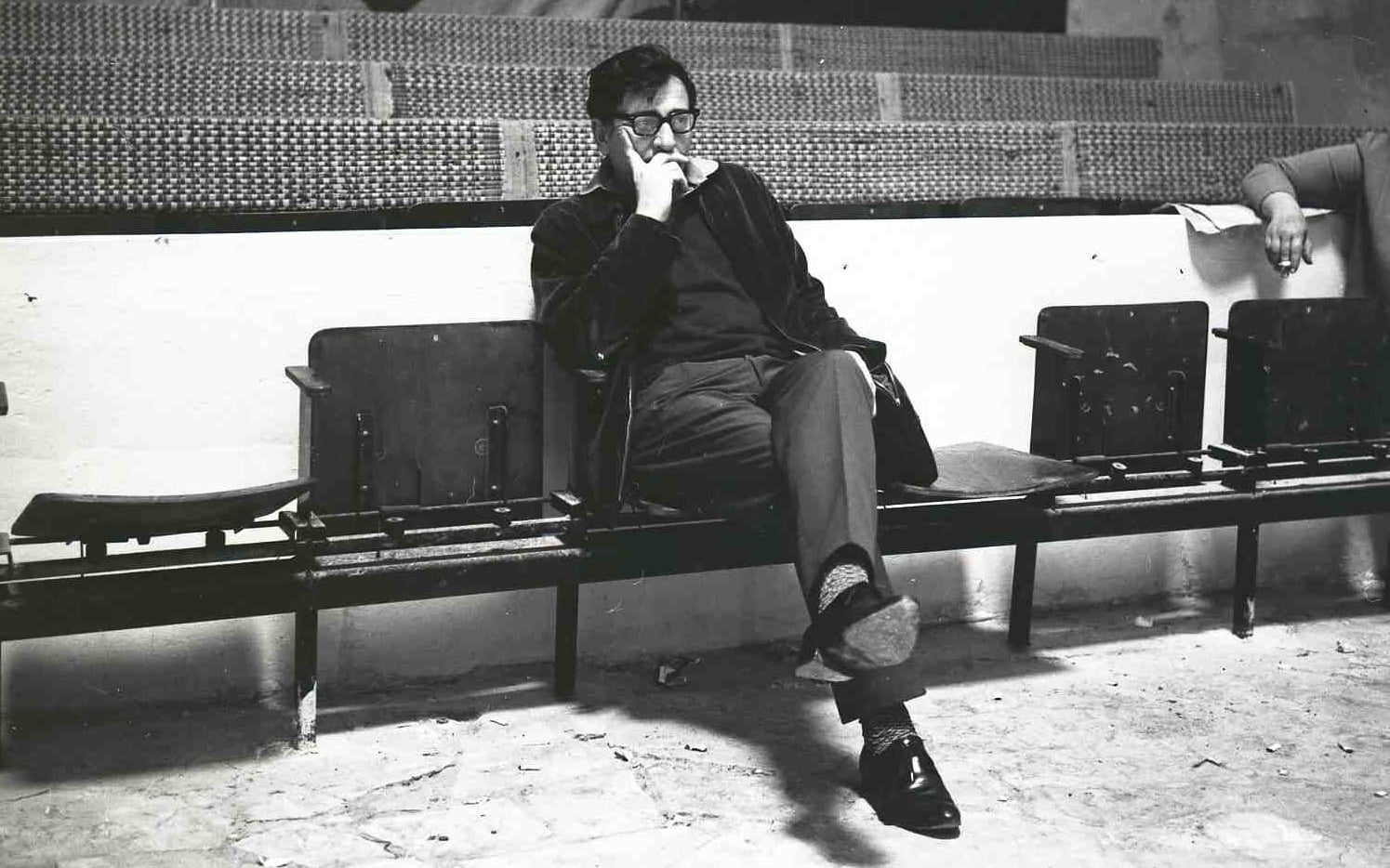
And then perhaps we will also remember “The King’s Clothes” – a satirical Hebrew take on the classic “The Emperor’s Clothes” – written by the lauded playwright and author Nisim Aloni, who defined the modern Israeli language and culture in the 20th century.
In the play’s third act , Hector Basuna – the character who cried out “The king is naked!” and was imprisoned for rebelling against the monarchy, and then himself discovered the blinding power of corruption – is led into a shrill television studio in order to be reunited with his beloved Marie, so as to move the entire nation.
“Direct from the palace – he is here – Hector Basuna!” the royal television announcer declares with pathos. “The most hated boy in the country! The heretic, ladies and gentlemen! The angry voice… Hector Basuna, the poet!”
Hector tries to approach Marie, but she stops him and says gently, “Don’t say anything, my love. They are lying in wait to hear even the beating of our hearts.”
She directs her words at the rulers and all who worship them, including in the television studios, and it seems that in this way she warns all those who understand that the king is naked.
Her words still ring true, even when the king wraps himself in royal garments made in Argentina – touting the embrace of an eccentric South American president to mask Israel’s catastrophic loss of standing in the West: “They have hearts of stone,” Marie whispers, “They have frozen eyes… they have a very heavy hand…”
Translated from the original Hebrew on The Times of Israel’s sister site Zman Yisrael.










The Times of Israel Community.