

Israel stays away from major Mideast conference in Istanbul
President, PM, ministers all skipping Erdogan’s World Economic Forum summit. Abbas and other world leaders among 1,000 participants
 Add ToI as a Preferred Source on Google
Raphael Ahren is a former diplomatic correspondent at The Times of Israel.
Israel, which has regularly sent heads of state and high-ranking representatives to World Economic Forum meetings, has not sent a single official representative to Istanbul for Monday’s WEF summit, even though the gathering is being designated as a “special meeting” on the region for the very first time.
Israel’s conspicuous absence from the forum in Turkey underlines the frosty relations between Jerusalem and Ankara.
President Shimon Peres and Turkey’s Prime Minister Recep Tayyip Erdogan had a spectacular public bust-up at a WEF meeting in Switzerland in 2009. After Peres had set out an Israeli overview at a major panel discussion, Erdogan fiercely attacked him for Israel’s incursion into Gaza, which was taking place then: “When it comes to killing, you know well how to kill,” Erdogan yelled at him, and stormed off the stage.
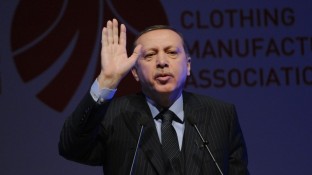
Erdogan will be opening this week’s WEF conference in Istanbul. The conference, which kicks off Monday night, marks the first time in the Forum’s 42-year history that a “special meeting” is being held on the Middle East, North Africa and Eurasia.
Palestinian Authority President Mahmoud Abbas and chief negotiator Saeb Erekat are scheduled to the attend the event, as well as Nabil Marouf, the “ambassador of the State of Palestine” in Turkey. Not a single Israeli official is registered.
According to the organizers, more than 1,000 leaders from business, civil society and government — including heads of state from Jordan, Tunisia, Turkey, Azerbaijan, Georgia, and Ukraine — will attend the two-day meet, but fewer than 10 Israelis appear on the list of participants: businessmen, NGO officials and two journalists.
Sponsored in part by the Turkish government, the conference’s theme is “Bridging Regions in Transformation.” Core issues being discussed include the Euro crisis, the uprising in Syria, youth unemployment and the aftermath of the Arab Spring.
‘The atmosphere the Turkish government has created is not propitious for visits by Israeli officials’
The Foreign Ministry explained Israel’s absence by pointing to recent negative developments in relations between Jerusalem and Ankara, which include Turkish attempts to indict Israeli military leaders and block the country’s participation in international conferences. “The atmosphere the Turkish government has created is not propitious for visits by Israeli officials. The atmosphere is unwelcoming to Israelis,” ministry spokesman Yigal Palmor told The Times of Israel on Sunday.
An official from the President’s Residence said Shimon Peres was unable to attend the forum because he was currently focusing on his upcoming flight to the United States. On Saturday night, Peres is scheduled to embark on a weeklong visit to New York and Washington, where Barack Obama will award him the Presidential Medal of Freedom.
Previously friendly relations between Ankara and Israel turned sour after Israel’s Operation Cast Lead in the Gaza Strip and have deteriorated ever since.
An even more severe diplomatic crisis started in May 2010, when Israeli naval commandos intercepted a flotilla seeking to breach the Israeli blockade of Gaza. When the commandos came under attack upon boarding one of the vessels, the Mavi Marmara, they killed nine Turkish activists.
Ankara demanded a formal apology from Israel, to which Israel principally agreed. Jerusalem was reportedly ready to pay damages to the victims. But a normalization of relations never came about because Israeli leaders asked for Turkish guarantees that the incident would not have legal repercussions and were dissatisfied with the half-hearted pledges heard from Ankara.
Their fears proved well-founded, as an Istanbul court decided last week to indict four senior Israeli military officers responsible for the flotilla raid. The court said it sought a combined 18,000 years in prison — for the nine deaths and 114 cases of torture — for Israel’s former chief of staff Lt. Gen. Gabi Ashkenazi, former Israeli Navy head Vice Admiral Eliezer Marom, former Israel Air Force intelligence chief Avishai Levy and former Military Intelligence head Amos Yadlin.
Israeli officials reacted with scorn to the news, with Foreign Ministry officials saying Erdogan wants to entirely kill off bilateral relations. Ashkenazi said he hoped that “common sense would prevail in the end,” and that if protecting Israeli soldiers and citizens prevented him from visiting Turkey, “that’s a price I’ll pay.”
Ankara has also shown Jerusalem the cold shoulder in the international arena.
Last month, Foreign Minister Ahmet Davutoğlu vetoed Israel’s participation in a NATO summit of heads of state and government in Chicago. “There will be no Israeli presence at the NATO meeting unless they issue a formal apology and pay compensation for the Turkish citizens their commandos killed in international waters,” a senior Turkish official said.
Trying to not worsen the diplomatic rift, Israel reacted with composure: “We didn’t plan on attending the summit anyway,” an Israeli diplomatic official said at the time.





The Times of Israel Community.