

Israel’s national security adviser on way to US to talk Iran policy with Bolton
Three weeks after Trump pulled out of nuclear deal, Meir Ben-Shabbat will reportedly discuss renewing ‘secret pact’ with Washington in first meeting with counterpart
 Add ToI as a Preferred Source on Google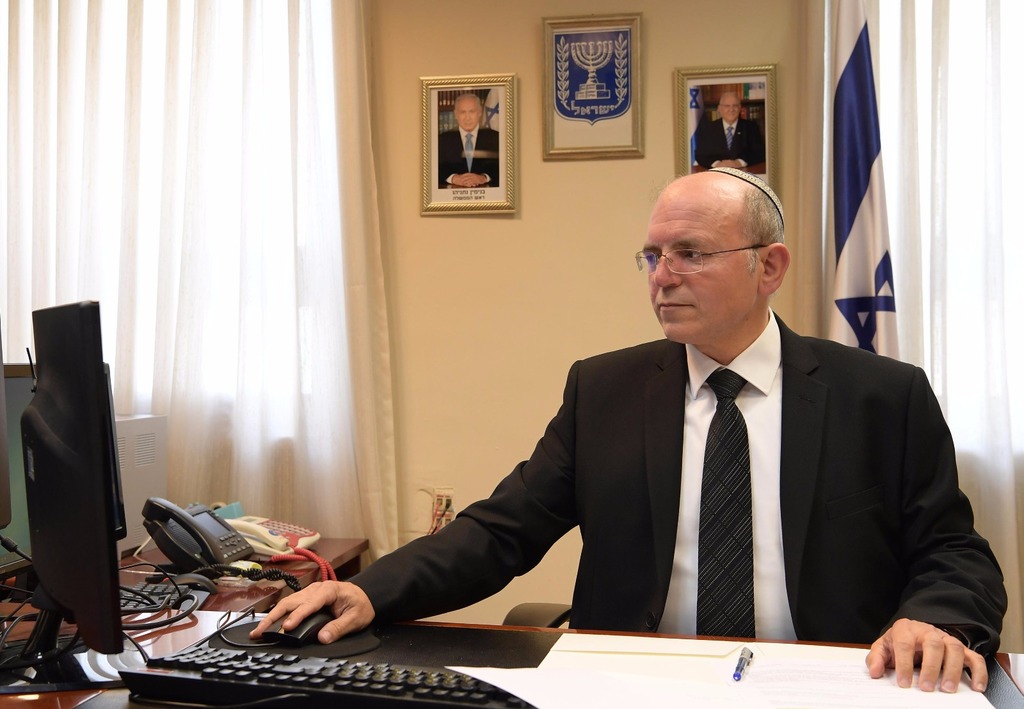
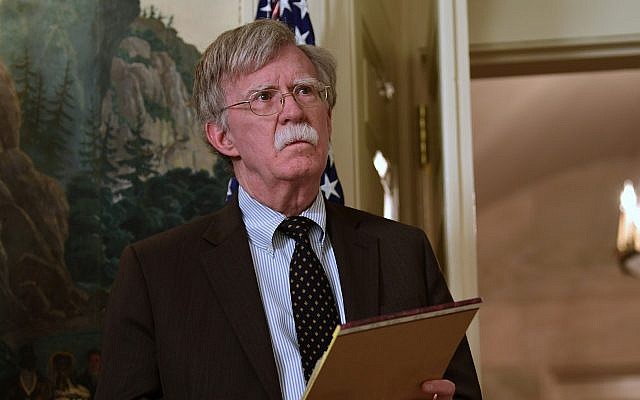
Israel’s National Security Adviser Meir Ben-Shabbat left the country Monday for Washington for talks with his newly appointed counterpart there, John Bolton, regarding policy toward Iran in the wake of US President Donald Trump’s pullout from the 2015 nuclear deal.
The discussions will specifically focus on renewing a far-reaching joint memorandum of understanding between Israel and the US providing for full cooperation to deal with Iran’s nuclear drive, its missile programs and its other threatening activities, Channel 10 news reported Monday.
That “secret pact” was signed on December 12 at the White House, culminating intensive talks between representatives of the major Israeli and American intelligence and defense hierarchies.
Specifically, they agreed to set up joint teams to handle various aspects of the Iranian threat.
One such joint team, Channel 10 reported, was to deal with Iranian activity in Syria and Tehran’s support for the Hezbollah terror organization. Another joint team would deal with both diplomatic and intelligence activities designed to grapple with Iran’s nuclear weapons ambitions. A third joint team would reportedly grapple with Iran’s ballistic missile program and its efforts to build accurate missile systems in Syria and Lebanon. Finally, a fourth team would oversee preparation for any escalation by Iran and/or Hezbollah.
Ben-Shababat and Bolton have discussed the cooperation by phone a number of times since the former UN ambassador was appointed as Trump’s national security adviser last month, the report said, but this will be their first face-to-face meeting.
Last week, Prime Minister Benjamin Netanyahu applauded the US for its pledge to impose “the strongest sanctions in history” on Iran, unless the regime changes its ways, while calling on other countries to follow Washington’s lead.
His comments came in response to a speech by US Secretary of State Mike Pompeo, laying down a laundry list of American demands for a new Iran nuclear deal, in his first major speech outlining Washington’s strategy for curtailing the Islamic Republic’s nuclear ambitions and its “malign” regional behavior.
Pompeo said a stronger pact should require that Iran stop enrichment of uranium, which was allowed within strict limitations under the previous deal. Iran would also have to walk away from core pillars of its foreign policy, including its involvement in Syria, Yemen, Lebanon and Afghanistan.
The US demands would fix what Israel said was a major shortcoming of the 2015 deal, namely linking Iran’s other activities, including support for terror and threats against the Jewish state, with its nuclear program.
Immediately after Trump announced his decision to pull out of the deal, Bolton warned that Tehran was in “clear violation of the pact” but said that the withdrawal was not a prelude to a military confrontation with Iran.
Known as a hawkish proponent of American military confrontation, Bolton has previously urged an attack on Tehran’s nuclear facilities.






The Times of Israel Community.