

Believing in miracles, Israel’s ‘Walt Disney’ survived Holocaust by the sleight of his talented hands
Artist and early animator Joseph Bau was a ‘Schindler Jew’ who saved hundreds of other Jewish lives, forging documents in the Krakow ghetto
 Add ToI as a Preferred Source on Google
Jessica Steinberg, The Times of Israel's culture and lifestyles editor, covers the Sabra scene from south to north and back to the center
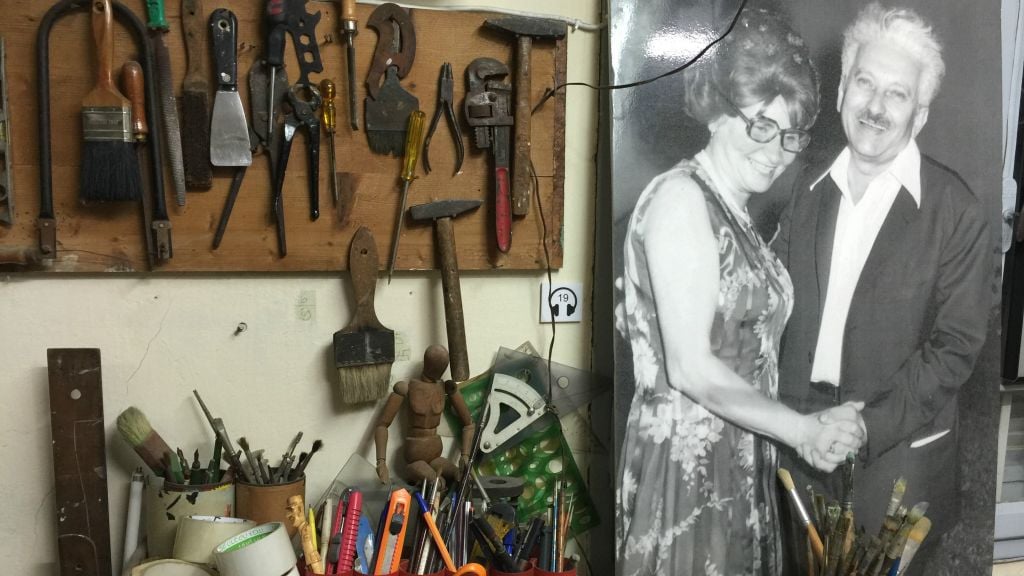
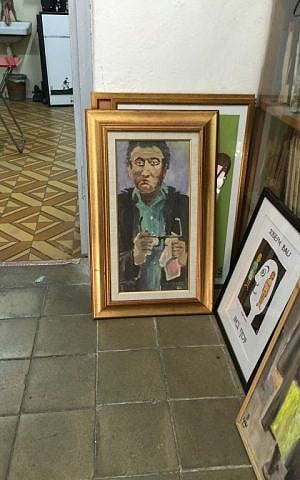
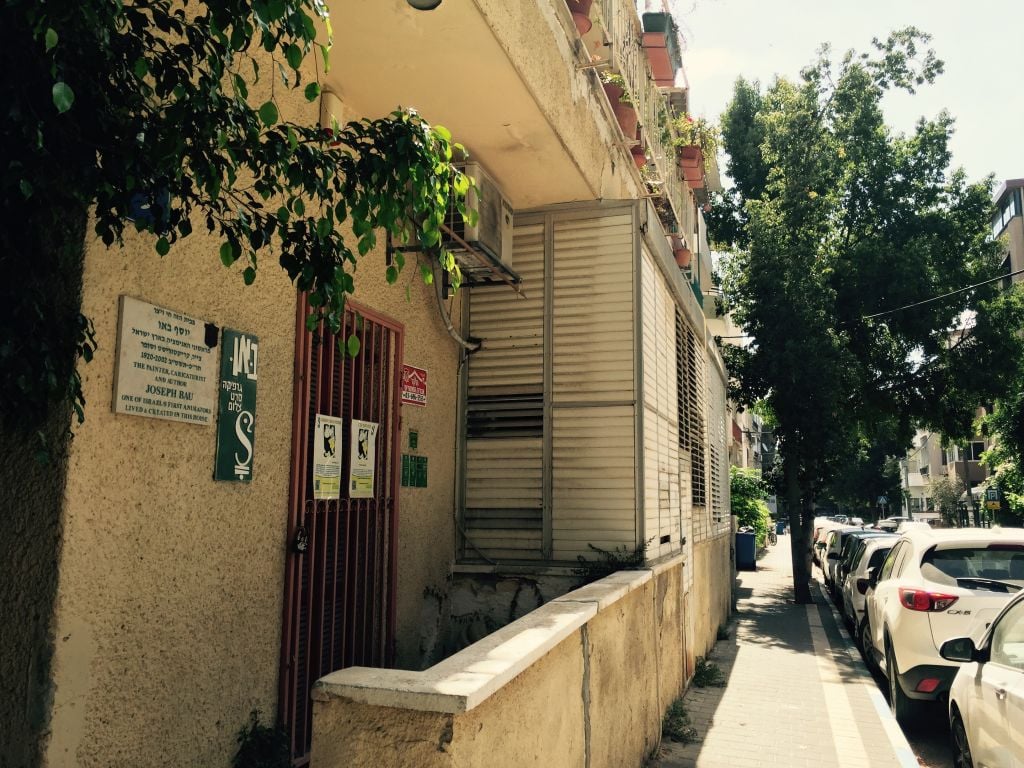
The two-room, high-ceilinged studio where illustrator and animator Joseph Bau worked for much of his adult life appears mostly unchanged on Holocaust Remembrance Day 2016, his drafting table still laid with containers of brushes and pens, the walls hung with his characteristic broad-stroked caricatures, the original tiled floors and walls cracked and chipped in places.
His daughters, Clila and Hadassah Bau, wouldn’t have it any other way.
Their father’s workplace, where the Holocaust survivor created his original paintings, illustrations, animations and top-secret forgeries for the Mossad — a fact they only learned after his death — is where the two sisters, now both in their 60s, pay homage to their parents’ Holocaust history, offering a piece of Bau performance art to whomever has an hour to spare.
“It’s the smallest museum in the world,” Hadassah Bau likes to say. “He built it all himself.”
Their father, said the sisters repeatedly, was one of a kind. A humorous, loving, creative “startup-ist,” said Hadassah Bau, using the popular term for Israeli high-tech entrepreneurs, “he was always trying something different, always creating something new.”
He had a penchant for invention, and it was a skill set that probably saved him more than once during the Holocaust. He and his wife, Rebecca Tannenbaum — whom he met when the two were imprisoned in the Plaszow concentration camp outside Krakow, before Bau was sent to Oskar Schindler’s factory and his wife to Auschwitz — believed in miracles, and often told their daughters that miracles happened everywhere, all the time.
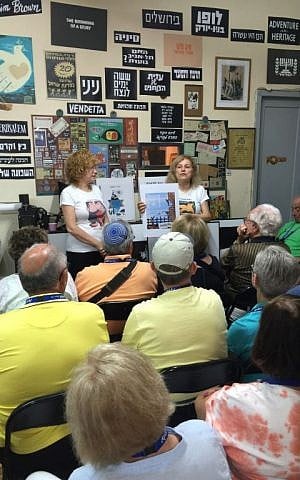
The sisters, each dressed in a T-shirt bearing a reproduction of their father’s art, told parts of their parents’ story in English on this particular Holocaust Remembrance Day to a group of American tourists from Florida and Minnesota, seated on black folding chairs in the main room of the studio.
In September 1938, Joseph Bau was about to start his second year at Poland’s Krakow University as an art major when the German troops invaded Poland and sent Krakow’s Jews into the walled ghetto.
Every Jew in the ghetto needed some kind of job, said Hadassah Bau. Her father had been the only student in his major to study calligraphy, the art of Gothic lettering, which were ancient German letters.
“He fell in love with it,” she said.
The only thing he had brought with him to the ghetto was his case of pens and brushes, a prescient choice, said Hadassah Bau. He drew a sign, in Gothic lettering, announcing himself as an artist and calligrapher, and the Nazis came looking for him to draft maps and signs for the ghetto.
“He always said that art saved his life,” continued Hadassah Bau.
Bau’s art saved others as well. He became known as a master forger, faking documents and papers that allowed hundreds of Jews to escape the ghetto and the Plaszow concentration camp, where he and others were sent from the Krakow ghetto.
In the labor camp, Bau continued working for the Nazis as a draughtsman. When he was commanded one day to create a blueprint — a complicated task in those years requiring natural sunlight to reproduce the technical drawing on light-sensitive sheets — he panicked, knowing there wasn’t enough sunlight on that particular day to reproduce the negative of the original drawing.
He headed outdoors, knowing he would be shot if he didn’t fulfill the task, and was holding up the technical drawing, hoping for a miracle, when a young woman passed by. In a moment of concentration-camp flirtation, Bau held the drawing up to her face, and when he returned to the office, found that the negative had succeeded, and he had the necessary blueprint.
That crisis averted, he sought out the young woman, Rebecca Tannenbaum, and the two conducted a clandestine courtship in the camp, knowing that if they were caught, both would be shot. Their relationship culminated in a secret wedding ceremony held in the dark of night in one of the women’s barracks, where more than a thousand women could be housed at a time, said Clila Bau.
Bau’s mother performed the ceremony, using silver rings that a jeweler in the camp’s watchmaker shop had made from a silver spoon. Bau traded the ring for weeks of his daily bread ration. The two consummated their marriage on the third row of wooden beds, sharing the space with the other women who slept there. When the horn was blown the next morning for roll call, the women all laid on top of Bau in order to hide him from the Nazi officers.
The Bau wedding was immortalized in the film Schindler’s List, fictionalizing some of the details, said Hadassah Bau — “My mother always said they didn’t have a chuppah like that, because who had cloth just lying around?” — and creating a strange kind of celebrity for the family.
The pair became known for their attempts to bring humor and joy to their fellow inmates. Bau made a deck of playing cards that he called “Hope” cards, featuring images of people during more normal times. He would pull them out when someone was losing hope, said Hadassah Bau, showing them that they could look like that again, with worries as mundane as professional goals or family arguments.
He also created a book of poems, written on small squares of cardboard paper collected from the Nazis’ discarded cigarette boxes. The book, which contained a small, pressed flower he had given to his wife, was kept inside the case of artists’ tools he had managed to keep hidden in the camp.
The case was taken from Bau while he was still in the camp, but miraculously turned up at Schindler’s factory when Bau was moved there.
“From then on, for the rest of his life,” said Hadassah Bau, “he kept it with him at all times.”
It was only in 1993 on the couple’s 50th wedding anniversary — when Schindler’s List was being screened in Israel and reporters came to interview the couple — that Joseph Bau found out that it was his wife who had worked to get his name on Schindler’s list.
The Baus found each other after the war — “another story of miracles,” Hadassah Bau said — got married again in Krakow, where she, their older daughter, was born, and made their way to Israel in 1950.
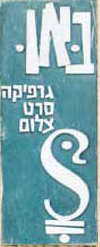
In Israel, Bau devoted himself to learning Hebrew, turning to illustration, movies and animation with time, and working as a master forger for the Mossad. Known as the Israeli ‘Walt Disney,’ he produced animated shorts for movie theaters and television, and created the opening and closing titles and credits for nearly every Israeli movie made from the 1950s though the 1970s.
Their family, said Hadassah Bau, was a happy one, where jokes, comical songs and humor were valued above all else.
The artistic gene was also passed on to his children and grandchildren, all of whom work in the creative arts.
“Art, for us, is everything,” said Hadassah Bau.
She and her sister have run the nonprofit museum for the last 19 years, touring the world to tell their parents’ story, and are now raising money to publish their father’s concentration camp book of poems, The World and I and their mother’s diary, In The Name of God! and translate his memoir, Dear God! Have You Ever Gone Hungry? into English.
When their mother died in 1997, said Hadassah Bau, it was nearly impossible for their father to find the will to live. But the museum was his idea, and when he died in 2002, it was already up and running.
Their family history is crucial, said the sisters, a piece of the Holocaust that can never be forgotten. It’s a sentiment they’ve passed on to their children as well — successfully, it seems, as Hadassah Bau’s son married his own wife in the same place where his grandparents got married: on the grounds of the Plaszow concentration camp.




The Times of Israel Community.