

Levin resigns as Knesset speaker to take up Justice post; vote Thursday on successor
After a tumultuous two weeks shepherding critical legislation through most of its process, Likud MK quits so he can be sworn in as a minister with the new government
 Add ToI as a Preferred Source on Google
Carrie Keller-Lynn is a former political and legal correspondent for The Times of Israel
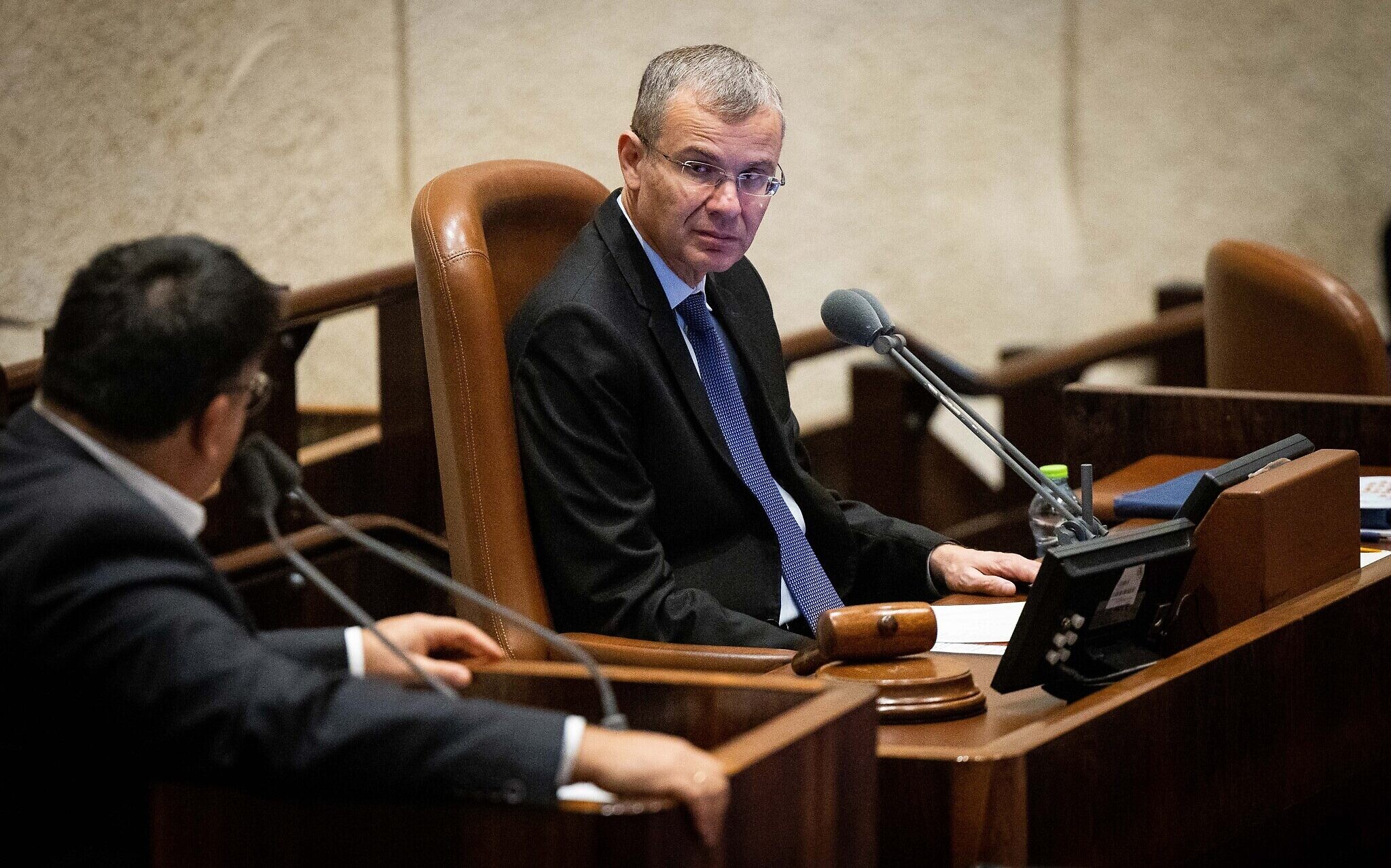
The influential post of Knesset speaker position was again put up for grabs Tuesday, when the current speaker resigned in order to clear his path to becoming a minister when the Likud-led government is sworn in on Thursday.
Elected only two weeks ago in order to oversee the incoming coalition’s pre-formation legislative blitz, Knesset Speaker Yariv Levin, a senior Likud member, tendered his resignation on Tuesday morning, minutes after the Knesset passed the second of three bills whose path he has smoothed.
Levin’s resignation will enter into effect in 48 hours, giving him time to push over the finish line the third bill, which aims to expand political authority over police leadership and policy.
His successor as Knesset speaker is expected to be chosen by MKs on Thursday, before that day’s government swear-in, although the Knesset’s Arrangements Committee has yet to meet and set Thursday’s legislative agenda.
Putting experienced hand Levin into the speakership, a post he previously held in 2020-2021, was meant from the start to be what incoming prime minister Benjamin Netanyahu called a “very temporary” move. While he has finalized the next coalition’s job divisions with his five allied parties, two days out from launching the next government, Netanyahu has yet to inform members of his own Likud party of their roles.
Levin’s vacancy reopens the contest for the influential position, whose holder plays an important role in setting and controlling the pace of the legislative agenda.
Leading Likud candidates for the role include Netanyahu loyalists Ofir Akunis, Yoav Kisch, and Amir Ohana, as well as David Amsalem. Amsalem has waged a media campaign for the job, but being on the outs with Netanyahu, is not expected to be appointed.

Levin is expected to take up the role of justice minister, although the appointment is not yet finalized. A staunch supporter of judicial reform, Levin is said to have demanded wide latitude to enact a comprehensive overhaul of judicial appointments as well as pass an override clause that would let the Knesset reinstate laws invalidated by the court.
While Likud has inserted a clause into coalition deals that demands partners’ fealty to its judicial reform agenda, Netanyahu is said to want to slow the pace of the process. With only three months before the Knesset breaks for its Passover recess, pushing a judicial reform agenda now may not give the new government time to pass its full platform before a lengthy break.
The platform, which places political control firmly on top of the judiciary, has been criticized as a danger to democracy by the attorney general, as well as incoming opposition leaders and academics. Others have said it is a needed fix to reduce activist court power.
Since establishing its own right to substantive judicial review in 1995, the Israeli Supreme Court has struck down 22 laws.










The Times of Israel Community.