

 From the Liveblog of
Thursday, November 26, 2026
Eisenkot-led bloc said planning to pare down cabinet to thinnest in decades
 Add ToI as a Preferred Source on Google
Ariela Karmel is a political correspondent at The Times of Israel. She previously reported for Calcalist and Haaretz. She holds an MA in Middle Eastern and African History from Tel Aviv University and a BA in Political Science from the University of British Columbia.
The bloc led by Yashar chairman Gadi Eisenkot is seeking to reduce the number of government ministries from 31 to 24 or fewer, abolishing several smaller ministries or merging their responsibilities into larger ones, according to Hebrew media reports. The bloc’s leaders are aiming for a ratio of one minister for every three Knesset seats.
This would be the smallest number of ministries in an Israeli government in two decades, since Ehud Olmert in 2006 had 22 ministries. No government formed since Prime Minister Benjamin Netanyahu returned to power in 2009 has had fewer than 28.
Among the ministries being considered for closure or consolidation are the Strategic Affairs Ministry, the Heritage Ministry, the Settlements Ministry, the Jerusalem Affairs and Jewish Tradition Ministry, the Regional Cooperation Ministry and the Diaspora Affairs and Combating Antisemitism Ministry. The bloc is also considering merging the Labor and Welfare ministries and consolidating portfolios traditionally held together, such as culture and sports.
Several of these were among superfluous ministries the Finance Ministry recommended shuttering in December 2023 to offset the financial burden of the war against Hamas in Gaza.
Former state comptroller Matanyahu Englman warned in a May report that Israel had up to three times as many ministries as comparable European countries, which undermined government effectiveness, disrupted public services and wasted millions in taxpayer funds.
Despite repeated recommendations dating back to 2011 to reduce the number of ministries, successive governments have largely continued to expand.
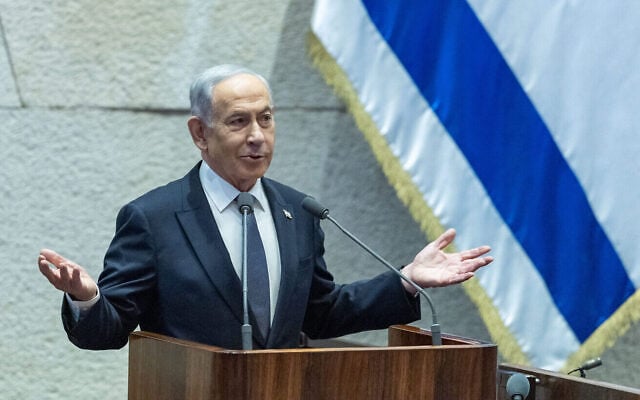
Critics have long accused the premier of creating unnecessary ministries to reward political allies with cabinet positions and secure their support at the expense of government efficiency and public funds.
“Political considerations and constraints ultimately outweigh the need” to streamline government operations, Englman chided in May.
The number of government ministries has ballooned since Netanyahu returned to power in 2009, hitting a record 35 under his short-lived unity government with Benny Gantz in 2020, according to the State Comptroller’s Office.
More recently, Netanyahu’s current outgoing government set another record with 39 ministers, according to the Israel Democracy Institute.






The Times of Israel Community.