

 From the Liveblog of
Monday, February 16, 2026
From the Liveblog of
Monday, February 16, 2026
Israeli envoy to US claims Israel’s F35I jets now have range-extending fuel tanks
 Add ToI as a Preferred Source on Google
Emanuel (Mannie) Fabian is The Times of Israel's military correspondent
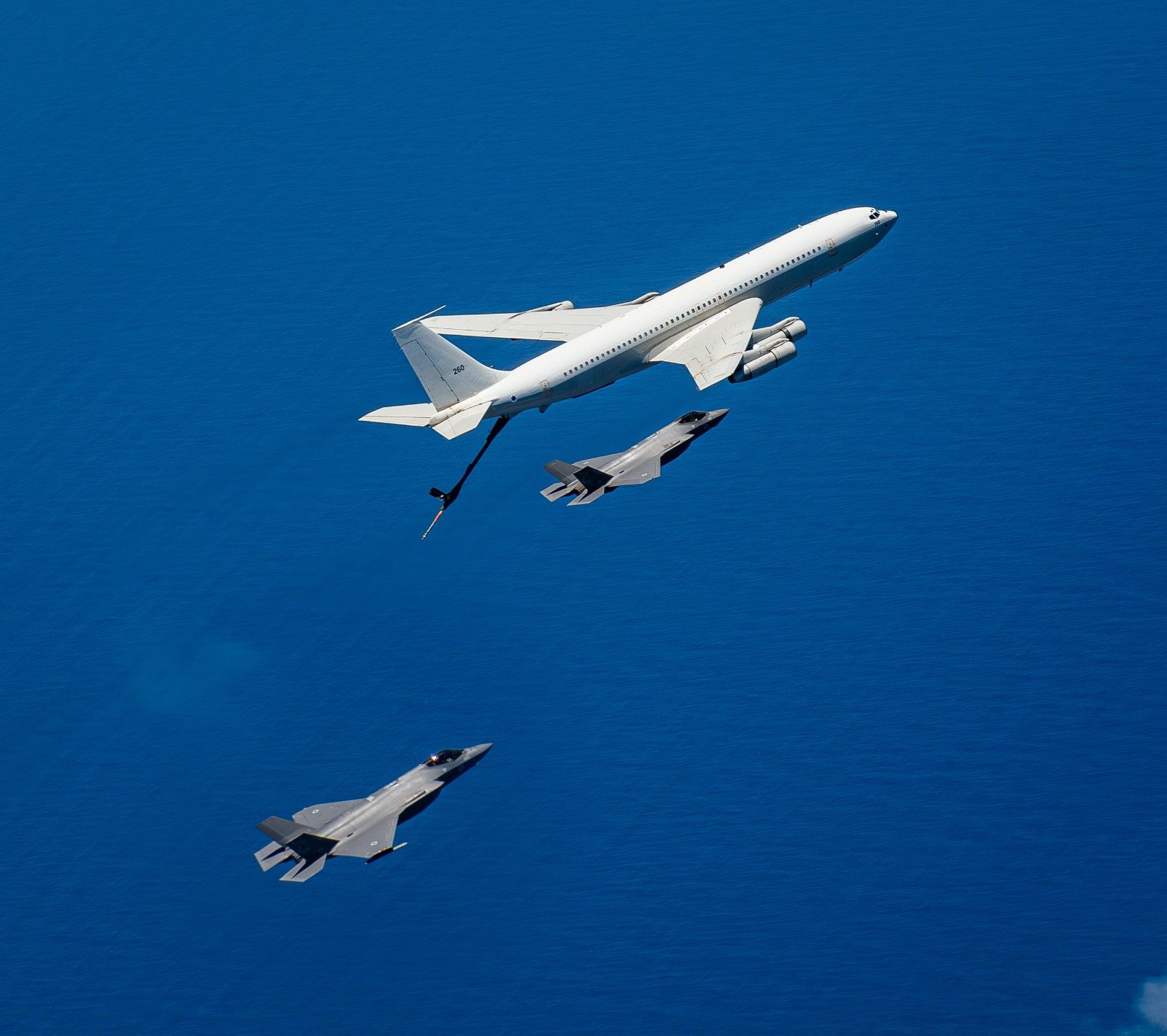
Israel has modified its F-35I fighter jets to have extended range capabilities through additional fuel tanks, “without compromising stealth,” Yechiel Leiter, Israel’s ambassador to the United States, claims in an interview with the Israel Hayom daily.
“We developed fuel tanks that extend the aircraft’s range without compromising stealth, and we added four missiles on the wings,” Leiter says.
It has been reported for several years that the Israeli Air Force has been developing range-extending fuel tanks for the F-35s, enabling strikes in distant locations such as Iran without the need for aerial refueling.
While extra fuel tanks can increase the range of the aircraft, they would likely negate its stealth qualities as they would significantly increase the jet’s radar signature, unless jettisoned before approaching enemy airspace.
Leiter’s mention of placing missiles on the wings of the F-35 is also not a new development, but rather known as “beast mode” configuration, whereby the stealth qualities of the fighter jet are forgone for extra firepower.
A year ago, the Israeli Air Force said that it had developed — alongside the F-35 manufacturer Lockheed Martin and the Pentagon’s F-35 program — a capability to carry missiles on the fighter jets’ wings, saying that its aircraft are the “only F-35 to conduct strikes with this design.” Images published by the IAF during the June 2025 war with Iran showed missiles attached to the wings of Israeli F-35I jets.
The “Adir” was originally designed to carry munitions internally. Flight Test Center, in collaboration with @LockheedMartin and the Pentagon’s F-35 program, developed a capability for external JDAM carriage. Israel’s “Adir” is the only F-35 to conduct strikes with this design. pic.twitter.com/l3RyFhGXnX
— Israeli Air Force (@IAFsite) March 16, 2025
“The number of flight hours our pilots have on the F-35 is greater than that of all the pilots of the other foreign countries that were partners in developing the aircraft,” Leiter says in the interview. “The feedback from our pilots reaches Lockheed Martin. When I visited there a few weeks ago, their CEO told me that Israel’s information and developments ‘are worth many billions to my company.'”










The Times of Israel Community.