

 From the Liveblog of
Wednesday, January 15, 2025
From the Liveblog of
Wednesday, January 15, 2025
Oil pipeline operator to pay just NIS 1.5 million in compensation for country’s worst spill
 Add ToI as a Preferred Source on Google
Sue Surkes is The Times of Israel's environment reporter
The controversial Europe Asia Pipeline Company will pay just over NIS 1.5 million ($429,000) for causing the worst oil spill in Israel’s history, following an Ashkelon court’s approval of a plea deal.
Shlomi Levy, who served as EAPC deputy director of operations at the time, will be fined NIS 35,000 ($9,620), according to the deal.
Haim Bar Sela, who served as the field operations manager and was ultimately not convicted, will pay NIS 30,000 ($8,250) and perform 360 hours of community service.
The environmental advocacy group Adam Teva V’Din slams the decision by Judge Zohar Dolev Lehmann as inappropriate given the “magnitude of the damage that has been caused and continues to be caused to the environment, nature and health, as described in detail in the verdict.”
Two other defendants decided not to join the plea agreement and to be judged on their own defense.
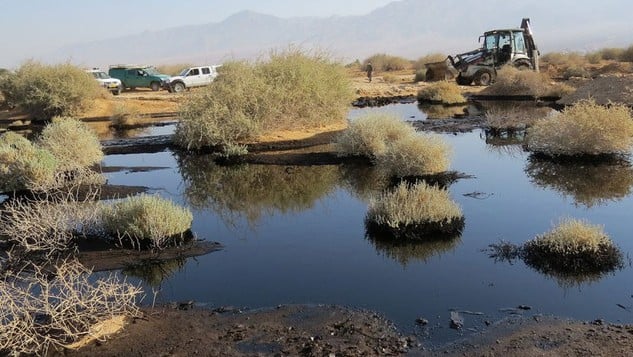
On December 3, 2014, some 5 million liters (1.32 million US gallons) of crude oil poured out of a pipe owned by the EAPC into the Evrona Nature Reserve in the Arava Desert.
The spill took place near Be’er Ora, some 20 kilometers (12.5 miles) north of Eilat, during maintenance work prior to the construction of a new airport in Timna.
Initial operations to pump oil and evacuate it from the reserve greatly reduced the environmental damage, but left about 145 dunams (36 acres) of land soaked in black oil, which has not recovered to this day.
In 2018, the Environmental Protection Ministry assessed the damage in Evrona at NIS 281 million ($77 million at today’s rates). In 2019, it reached a deal in a civil class action suit it had joined whereby EAPC would pay NIS 100 million ($28 million) in compensation.
The case brought to a conclusion today was a separate criminal case brought against the EAPC by the state.
The Eilat Ashkelon Pipeline Company was initially established in 1968 as a joint Israeli-Iranian venture to carry Asian oil from Eilat to Europe via a network of pipelines that reach from Eilat to Ashkelon and up the length of Israel to Haifa.








The Times of Israel Community.