

 From the Liveblog of
Monday, July 21, 2025
From the Liveblog of
Monday, July 21, 2025
US envoy doubles down on criticism of Israel’s intervention in Syria, says it ‘came at a very bad time’
 Add ToI as a Preferred Source on Google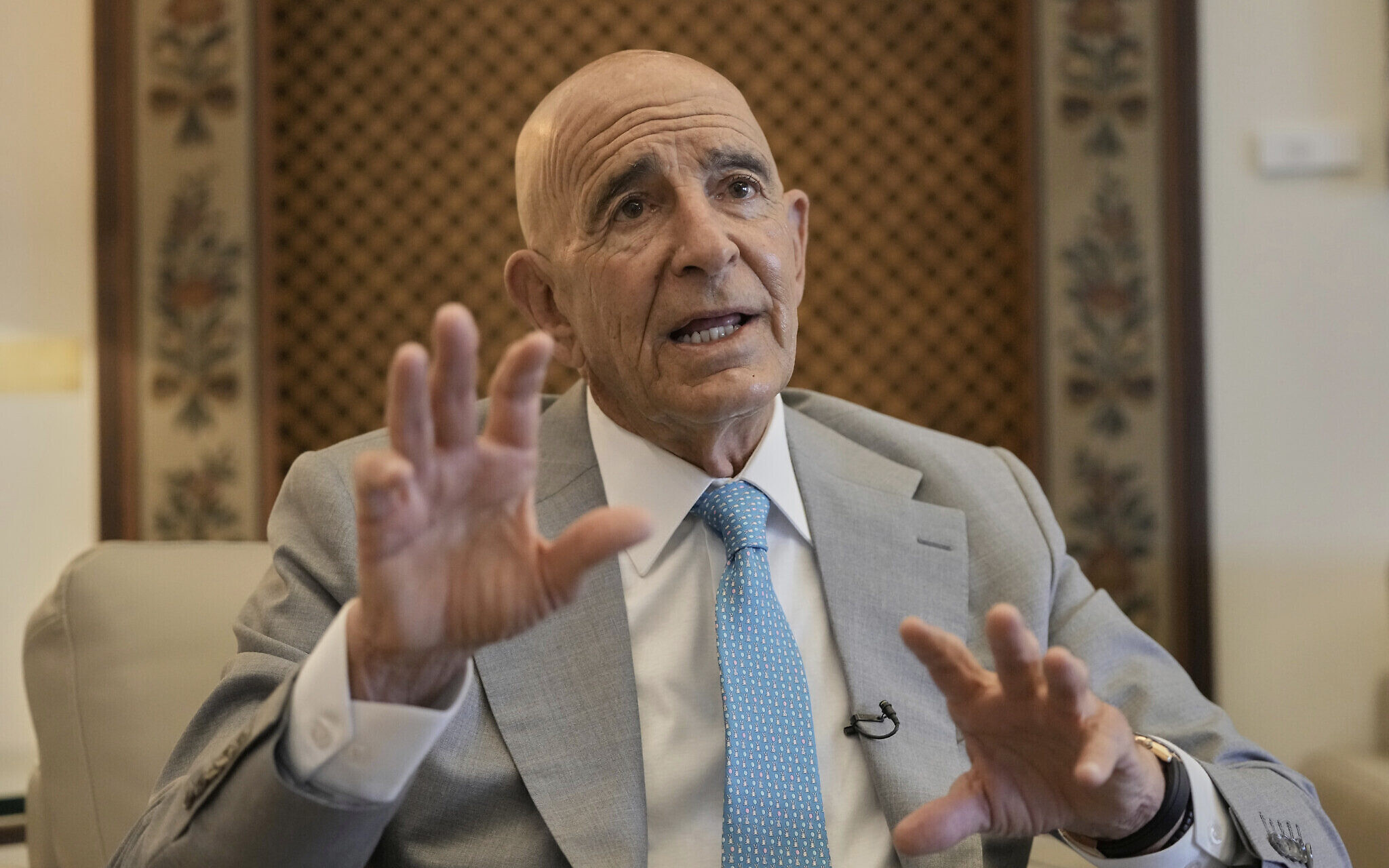
US ambassador to Turkey Thomas Barrack, who also serves as a special envoy on Syria, says there is “no plan B” to working with current Syrian authorities to unite the country still reeling from a nearly 14-year civil war and now wracked by clashes between Druze and Bedouin militias in the southern city of Sweida.
“The killing, the revenge, the massacres on both sides” are “intolerable,” but “the current government of Syria, in my opinion, has conducted themselves as best they can as a nascent government with very few resources to address the multiplicity of issues that arise in trying to bring a diverse society together,” he tells the Associated Press.
Regarding Israel’s strikes on Syrian military forces and targets in Damascus, he says: “The United States was not asked, nor did they participate in that decision, nor was it the United States’ responsibility in matters that Israel feels is for its own self-defense.”
However, Barrack says Israel’s intervention “creates another very confusing chapter” and “came at a very bad time.”
Israel says it targeted government forces who were reportedly massacring Druze alongside Bedouin militiamen. Hundreds of Israeli Druze also rushed across the border to fight, leading Israeli security forces to pursue them to bring them back.
Separately, Barrack tells Reuters that Washington will not compel Israel to do anything with regard to the steps it takes against Hezbollah in Lebanon, even as he expresses opposition to Israel’s recent strikes in Syria and doubles down on support for the new Syrian government.
“The US has no business in trying to compel Israel to do anything… America could only influence,” he says in a press conference in Beirut following meetings with Lebanese President Joseph Aoun and Prime Minister Nawaf Salam.
He appears to be referring to Beirut’s demand for Israel to withdraw from the five remaining locations it has held onto along the Lebanon-Israel border.
Lebanon has previously appealed for the US to pressure Israel into withdrawing.
According to Lebanese outlet LBCI, Barrack also says the disarmament of Hezbollah is an internal Lebanese issue on which Washington would only serve as a mediator and adviser.
“We are not going to have more boots on the ground in an adversarial nature anywhere,” adds Barrack.
Aoun has vowed to maintain a state monopoly on arms — a veiled threat against the extensively armed Iran-backed terror group Hezbollah, which emerged weakened militarily and politically after a 13-month war with Israel that ended with a November 27 ceasefire agreement.
Since the agreement came into effect, the IDF has maintained a presence at five strategic points in Lebanon and occasionally struck Hezbollah targets it said were violating the conditions of the ceasefire.




The Times of Israel Community.