

Plan to rename war memorial for slain minister nixed
Independence War soldiers say Rehavam Ze‘evi, controversial general turned MK, was not part of 1948 battle for Jerusalem
 Add ToI as a Preferred Source on Google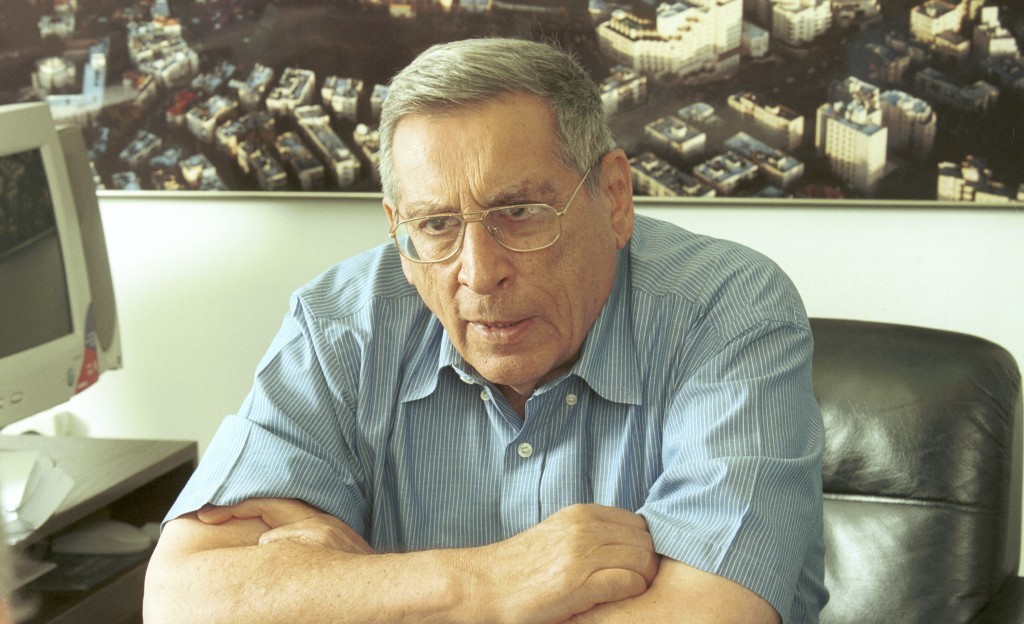
A group of octogenarian veterans who fought to hold open the road to Jerusalem during the War of Independence have successfully reversed a cabinet decision to rename a memorial along the road for a controversial far-right ex-general and politician who they say had nothing to do with the 1948 offensive.
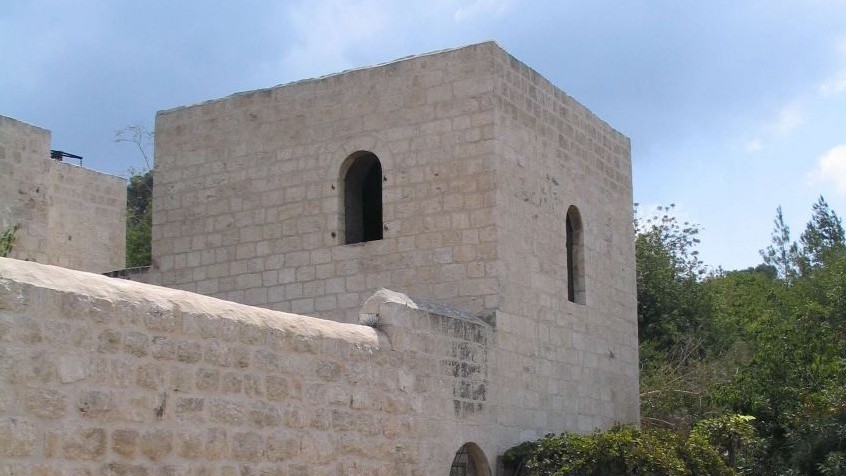
The Prime Minister’s Office on Tuesday said that an Ottoman-era inn along the Route 1 highway at the Sha’ar Hagai interchange would not be renamed to memorialize Rehavam Ze’evi, Israel Radio reported on Tuesday.
The radio station said a memorial for Ze’evi, who was a commander in the Palmach pre-state militia in the 1948 war, would be erected elsewhere, likely in the Gush Etzion bloc of the West Bank.
The announcement was praised by the Palmach Veterans Association, who called the decision “an important step in redressing the historical injustice surrounding the actions of the fighters who connected Jerusalem to the State of Israel during the War of Independence.”
In the statement, the veterans stressed that their efforts were “not against Ze’evi, but he simply did not fight here.”
Last September, the cabinet voted to name the Sha’ar Hagai site, currently called “Bab el-Wad” in Arabic, for Ze’evi. Both names translate to “gate of the valley.”
Known by the nickname “Gandhi,” Ze’evi was an IDF general turned politician for the far-right Moledet party, and had advocated the voluntary transfer of millions of Palestinians out of the West Bank and Gaza to neighboring Arab states.
In 2001, he was shot dead by Palestinian gunmen from the Popular Front for the Liberation of Palestine terror group at Jerusalem’s Hyatt Hotel.
The veterans’ campaign against renaming the Sha’ar Hagai inn for Ze’evi began in earnest in early 2016 after an investigative TV report published allegations of rape and intimidation against the former general.
Among the accusations published in Channel 2’s investigative show “Uvda” (“Fact”) last April were that Ze’evi had raped a female ex-soldier and that he conspired with a known crime boss in 1974 to set off a bomb outside the home of a journalist who had written critically about him.
After the report aired, a number of politicians joined the veterans’ efforts to prevent the site from being altered.
On Tuesday, several opposition lawmakers welcomed the decision not to rename the site after Ze’evi.
“The decision is the right one, and will prevent further harm to the Palmach fighters at Sha’ar Hagai, and the women that have been hurt by Ze’evi,” a statement from the Zionist Union faction said.
Zionist Union chairwoman Merav Michaeli added that naming the site after Ze’evi was “inappropriate” given his controversial legacy, while faction MK Miki Rosenthal praised the decision as “an important battle won for [our] heritage.”
Sha’ar Hagai is located at the ancient opening to the steep mountain road that leads up from the coastal plain toward mountainous Jerusalem.
The current memorial there commemorates the efforts in 1948-9 of the Palmach’s Harel Brigade, then commanded by Lt. Col. Yitzhak Rabin, who would go on to become Israel’s prime minister.
The Ottoman-era inn was renovated several years ago and forms part of a park commemorating Rabin, who was assassinated by a Jewish extremist in November 1995 during his second stint as prime minister.
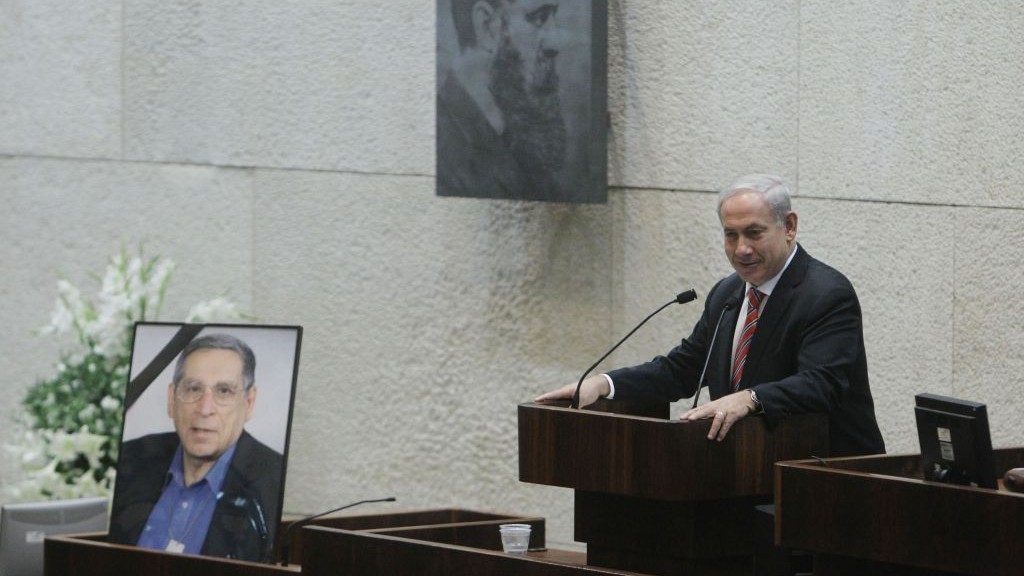
On Wednesday, Ze’evi’s son Palmach told the Yedioth Ahronoth daily that his family was working with the Prime Minister’s Office to find an alternate location to commemorate his father’s “glorious heritage.”
“Some people think it’s a worthy thing, but there are other who believe it to be inappropriate,” Ze’evi acknowledged.
“If it’s at another respectable location, we will be able to [commemorate Ze’evi] there,” he said, adding that “everything will fine.”
Sue Surkes contributed to this report.






The Times of Israel Community.