

Rabbinate said to double its rejections of wedding applicants’ Jewishness
Spokesman for rabbinic court rejects allegations, says 2010-2017 data was ‘manipulated’ and Jewish status is affirmed in 97% of cases
 Add ToI as a Preferred Source on Google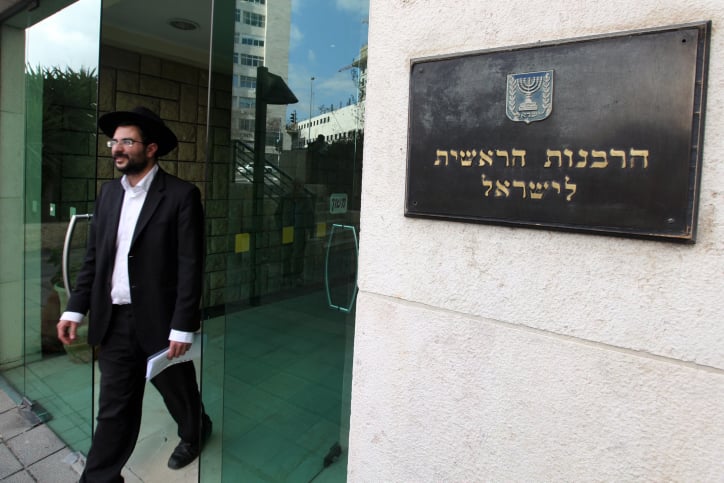
The number of people whose marriage plans were disrupted annually when their Jewish status was rejected by Israel’s rabbinate has doubled since 2010, an advocacy group claimed this week.
The Itim organization, a nonprofit that guides Israelis through the country’s religious bureaucracy, said Monday that “from 2010 until 2017, the number of people rejected by the Israeli rabbinical courts during the process of clarifying their Jewish status has more than doubled.”
In 2010, the number of Jews who registered to marry in Israel and were unable to because of doubts over their Jewish status was 103, or 3.1 percent of all Israelis who registered to marry that year. In 2017, some 231 of those registering to marry, or some 6.7%, were unable to prove to the rabbinate that they were Jewish, according to data presented at a Knesset hearing.
During the same years, the number of people on a list of Israelis whose Jewish status is “pending clarification” rose from 90 in 2010 to 175 in 2017.
Up to 20% of Israeli couples are required to undergo background checks, most of them Russian speakers who immigrated under the Law of Return, which allows anyone with at least one Jewish grandparent to become a citizen.
The figures appear in a report prepared by the Knesset Research and Information Center ahead of a meeting held Tuesday by the Committee on Immigration, Absorption, and Diaspora Affairs. Tuesday’s hearing dealt with the large number of Israelis deemed not Jewish for the purpose of marriage by the Chief Rabbinate.
In Israel marriage and divorce is handled only through religious courts, so a Jewish couple must prove to the rabbinate that they are Jewish according to Orthodox Jewish law. If one half of a couple is not acknowledged as Jewish the couple have no legal way of marrying in Israel.
For purposes of marriage the rabbinate automatically accepts individuals as Jewish if their parents were married by a rabbinate in Israel or by a recognized rabbinate outside of Israel. In some cases it will also quickly accept those with a first-degree relative who has already been vetted. Any individual who does not have the required paperwork is added to a list of those “pending clarification.”
Itim pointed out that in 2010 only 103 applicants, 3.1%, were rejected and unable to marry whereas by 2017 that number had more than doubled to 231, or 6.7%. Similarly, the number of applicants whose files were sent for further clarification increased from 90 in 2010 to 175 by 2017.
Rabbi Seth Farber, chairman of Itim, said in a statement that this approach of investigating Jewish status contradicts Jewish law.
“According to Jewish law, when a person comes and says that he is Jewish, he is to be believed,” he said. “Furthermore, if a clarification is needed, it is customary to do everything possible in order to approve the person’s Jewish status, and not the opposite.”
Farber said the rabbinical courts act “without basic morals or standards.”
“The rabbinate has raised the bar to a level where most people who are Jewish wouldn’t be able to prove it. Moreover, they are invalidating Jewishness retroactively, which is unprecedented in Jewish history,” he said. “Any person who cares about the future of Judaism or Israel should recognize the danger in this phenomenon.”
A spokesman for the rabbinate rejected Farber’s accusations and said that the numbers told a very different story.
He told The Times of Israel that “an overwhelming majority of 97% of applicants for clarification of Jewish status are confirmed as Jews. In only 3% of cases, despite the best efforts of the rabbinate to help them, is it impossible to prove their Jewish status. And this appears to be because in those cases they really are not Jews.”
The spokesman added that there has been no increase in the number of applicants for Jewish status who were rejected, and said that anyone who claimed otherwise had not analyzed the data correctly.
“We are very troubled that there are parties with vested interests who make manipulative and incorrect use of the data,” he said.
One of the ways the rabbinate confirms Jewish identity of applicants is through a letter from a rabbi in their home community.
In July 2017, JTA published an internal rabbinate “blacklist” of some 160 rabbis, including several prominent American Orthodox leaders, whom the Chief Rabbinate does not trust to confirm the Jewish identities of immigrants.
Rabbis from 24 countries, including the United States and Canada, were on the list. In addition to Reform and Conservative rabbis, the list includes Orthodox leaders like Avi Weiss, father of the Open Orthodoxy movement from the Riverdale section of New York.
The Chief Rabbinate later said the list was misconstrued and was not a blacklist.






The Times of Israel Community.