

South Africa’s chief rabbi lauds Trump but calls his Afrikaner refugee policy a ‘mistake’
As the US turns away all refugees aside from white South Africans, calling their persecution at home a ‘genocide,’ Warren Goldstein says the portrayal is a mischaracterization
 Add ToI as a Preferred Source on Google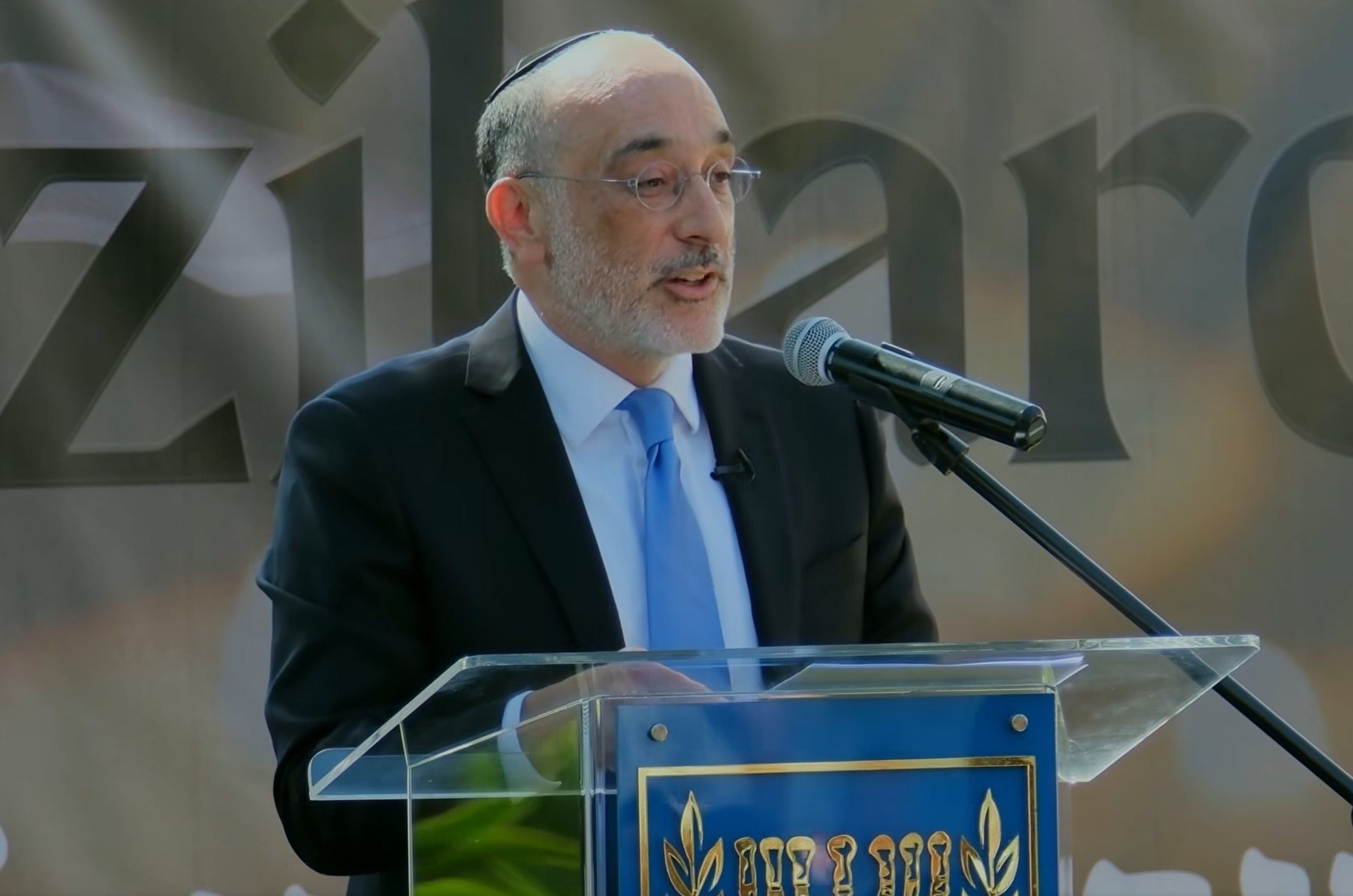
JTA — When Donald Trump entered his second term as United States president, he found a full-throated supporter in South Africa’s chief rabbi.
Chief Rabbi Warren Goldstein said in February that South Africans “should welcome the Trump administration’s interventions” in the country’s affairs, praising the president in a widely distributed video message.
A vocal critic of the South African government, Goldstein backed Trump’s opposition to South Africa for its cooperation with Iran and its new land expropriation law, which Goldstein believes will slow the country’s already sluggish economy.
But since Trump decided to admit some white South Africans into the United States as refugees — the only refugees he is letting in — Goldstein has changed his tone. He told the Jewish Telegraphic Agency that he sees the move as a “mistake.”
“It is wrong to think that the problems that saw white South Africans take up residence in the US are unique to the white community,” said Goldstein. He challenged the Trump administration’s contention that the Afrikaners — a minority that arrived in South Africa in the 17th century, whose members led the country’s system of apartheid until its end in 1994 — are being singled out for persecution and what Trump called “genocide” because of their identity.
Like Jewish leaders in the United States and elsewhere, Goldstein finds himself walking a tightrope when it comes to a US president whose pro-Israel and philosemitic rhetoric is often matched by policies that many Jews oppose. Some American Jews have welcomed the attention the administration has paid to campus antisemitism, for example, but many have worried that his attack on universities has been too harsh, blunt and undemocratic.
In South Africa, where Jews strongly identify with Israel, Trump’s general pro-Israel stance is welcome. But there too, that stance has clashed with local politics.
Milton Shain, an emeritus professor of South African Jewish history at the University of Cape Town, said the overwhelming majority of South Africans — Jews and non-Jews alike — were perplexed by the idea of some Afrikaners receiving refugee status. He called the rhetoric about a genocide against Afrikaners “absurd,” and speculated that there could be a connection between Trump’s policy and South Africa’s decision to file genocide charges against Israel at the International Court of Justice.
“It seems to me that the Trump regime wants to target South Africa for taking Israel to the ICJ,” Shain said. “That is the only reason I can think of for such an odd and sustained initiative.”
But even before the war in Gaza that led to South Africa’s genocide case against Israel, both Trump and his South Africa-born advisor, Elon Musk, hurled accusations of “genocide” and “the large-scale killing of farmers” at South Africa. Their claims are based on documented attacks against white farmers and the complaints echo a subset of South African white nationalists. Although the farm attacks have persisted for years, they represent a small percentage of the country’s high violent crime rate, which affects all parts of the population.

Goldstein said Trump has wrongly framed South Africa’s economic, social and political challenges in racial terms. He pointed to a poll by the Social Research Foundation, which found that 67% of Black South Africans wanted their children to live and work abroad for a better future.
The first group of 59 Afrikaner refugees arrived at Dulles International Airport on Monday. They were greeted with fanfare by Trump officials, including the Jewish deputy secretary of state Christopher Landau, who compared their journey to his father’s escape from Nazi-annexed Austria in 1938.
In the United States, some migration aid groups have said they are morally opposed to resettling the newly arrived Afrikaners. The Episcopal Church said on Monday that it was ending its decades-long partnership with the federal government to resettle refugees, citing its “steadfast commitment to racial justice and reconciliation” and “historic ties with the Anglican Church of Southern Africa.”
The US-based Jewish refugee aid organization HIAS said it would support Afrikaners in their new home. But HIAS’s president, Mark Hetfield, told The New York Times it was “not right” that this group was singled out for admission.
“We are profoundly disturbed that the administration has slammed the door in the face of thousands of other refugees approved by DHS months ago, notwithstanding courts ordering the White House to let many of them in,” said Hetfield.
White South Africans, of whom about half are Afrikaners, comprise some 7 percent of the country’s population and own about 78% of private farmland. Research shows white South Africans collectively have roughly 20 times the wealth of Black South Africans.
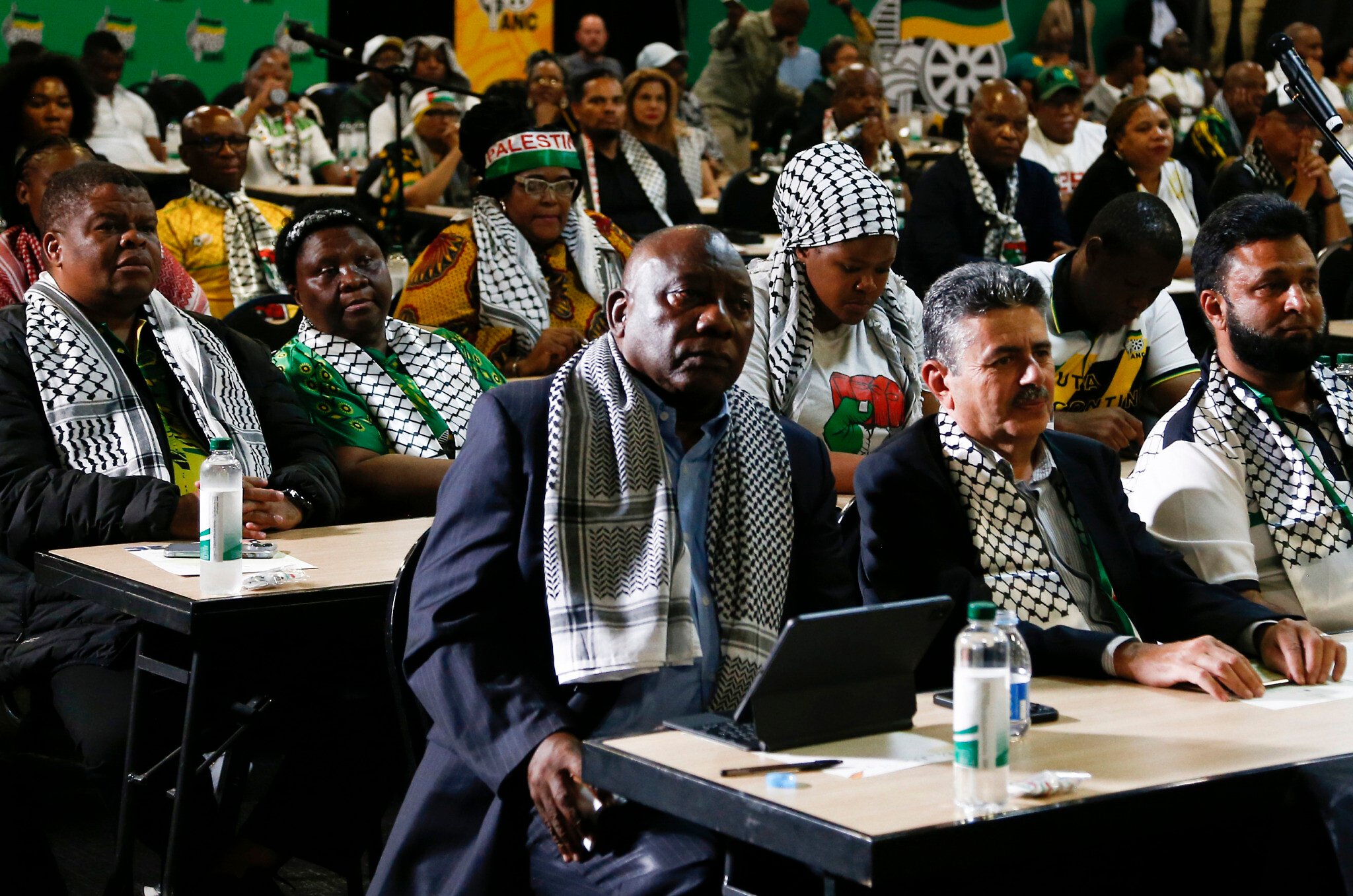
South African Jews are a small minority within the white minority, and their ranks are shrinking — after peaking at 120,000 in 1970, the population has declined to less than 50,000. Many Jews have connections to Israel and feel isolated by the frayed relations between Israel and South Africa. Some, said Shain, worry about being identified by their government as allies to its foreign adversaries.
“I believe Rabbi Goldstein’s supportive comments [of Trump] are problematic,” said Shain. “Jews are rapidly being identified as a fifth column, like the far-right Afrikaners, working against the interests of the country by cozying up to the Trump administration.”
Goldstein’s support for Trump drew criticism from other members of the local community. Journalist Anton Harber wrote an essay in February titled “The Chief Rabbi who lost his soul,” writing, “Something is very wrong when a Chief Rabbi sings the praises of political and business figures without mentioning their neo-Nazi affiliations.” Harber referenced a gesture by Musk that drew comparisons to a Nazi salute and his ringing support for Germany’s far-right AfD party, as well as Trump’s past socializing with antisemitic conspiracy theorists.
However, Shain and Goldstein agreed that Jewish South Africans have the same concerns as most South Africans as a whole — violence, corruption, poverty and high unemployment. Many young Jews are leaving South Africa for opportunities elsewhere.
“The challenges facing the community are the same as those facing the country,” Goldstein said. “The more that South Africa as a country will achieve economic growth and thrive, the more the Jewish community will.”



The Times of Israel Community.