

Tel Aviv’s LGBTs map history through city landmarks ahead of parade
Life in the country’s cultural center has for decades offered a largely safe bubble for the gay community
 Add ToI as a Preferred Source on Google
Jessica Steinberg, The Times of Israel's culture and lifestyles editor, covers the Sabra scene from south to north and back to the center
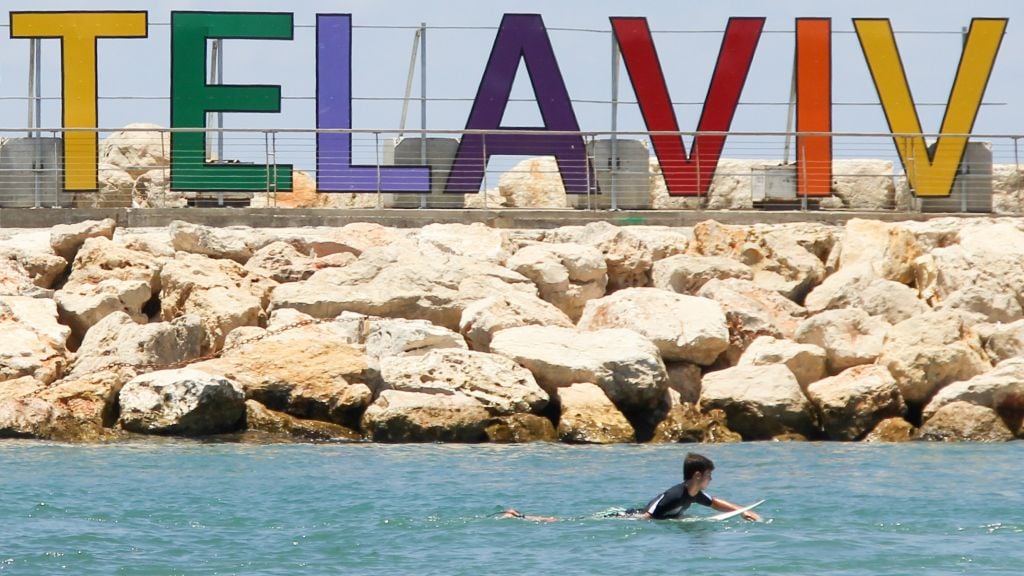
For Shai Doitsh, former chairman of the Aguda, Israel’s National LGBT Taskforce, nearly every block in Tel Aviv forms a piece of the country’s gay and lesbian history.
And that’s not even counting Hilton Beach, one of the LGBT hangouts, where the city will focus some of its celebrations for the 18th Gay Pride Parade being held this Friday, June 3.
There’s Rothschild Boulevard, a wide, park-bisected north-south street that is home to so many gay bars at its southern end that it’s “almost weird to see hetero couples kissing at night,” said Doitsh.
Sheinkin Park, a small, cement playground in the middle of a shopping street, was once the site of “the closet,” a temporary structure set up one Friday in the late 1990s to allow people to “come out of the closet.”
And 28 Nahmani Street, a small, somewhat rundown apartment building, in 1975 became the home of the Aguda, Israel’s National LGBT Task Force, where gay-friendly Shabbat dinners, parties and meetings were held until a 2009 shooting that killed two changed the look and feel of the gay community in Israel.
“You can’t imagine the courage they had,” said Doitsh of the six men and women who decided “to emerge from the basement” and set up that first LGBT association. “They had only one mission, which was beautifully naive: to change Israeli law and legalize gays.”
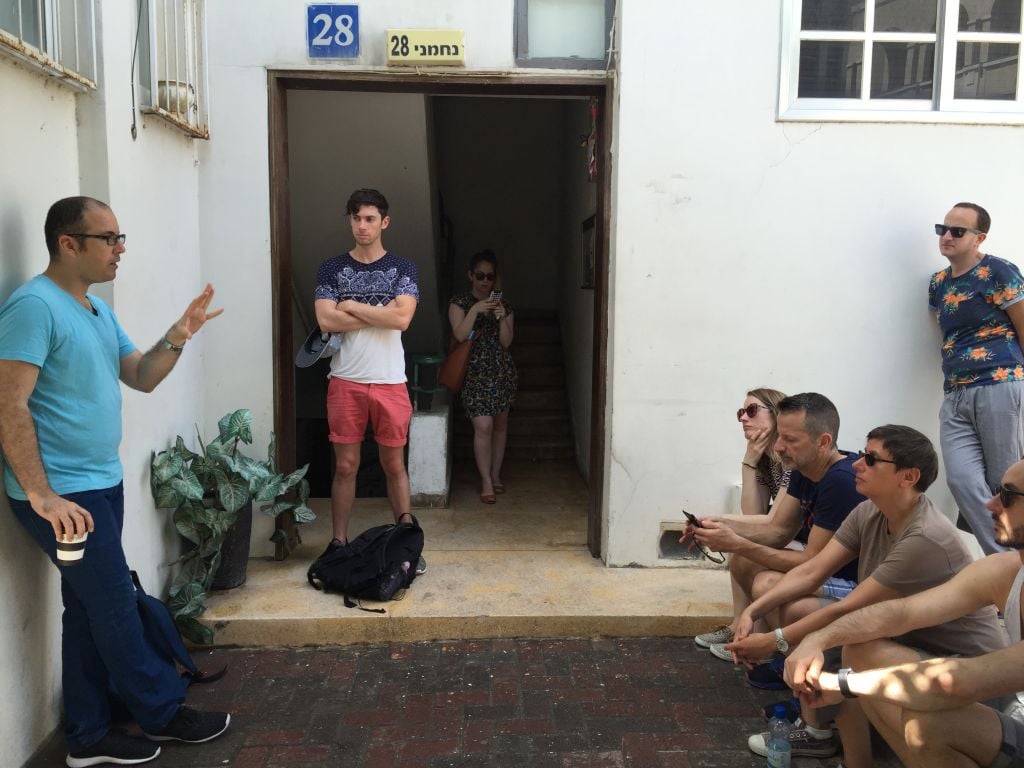
Doitsh, chairman of the Aguda since 2012, was playing the role of tour guide this morning, showing a group of visiting journalists the Gay Pride sites in Tel Aviv, ahead of the Friday, June 3, Gay Pride parade.
The city, said Doitsh, has always had a strong gay population, which has grown to approximately 25 percent of the estimated 420,000 residents.
But back in 1948, when the state was established, said Doitsh, standing on Rothschild Boulevard in front of Independence Hall, the country took many of the pre-state British laws as their own, including one that outlawed homosexuality.
Nothing changed that status for nearly thirty years, said Doitsh, leading the group down Rothschild Boulevard and turning left onto Nahmani, until the group of six formed the Aguda.
The association’s board members used to sign documents with their initials only in order to conceal their identities. And while their mission was to change the law, they first focused on creating a community, holding Shabbat and holiday dinners and gay parties.
“In 1975, they didn’t have parties or apps or Grindr,” said Doitsh, referring to the popular networking app for gay and bisexual men. “You couldn’t host anything for gays at restaurants or clubs.”
It took time, patience and jumping through legal loopholes for Israel’s LGBT community to find their legal status in Israel, said Doitsh, attempting to explain the complicated legalese that ultimately changed the law.
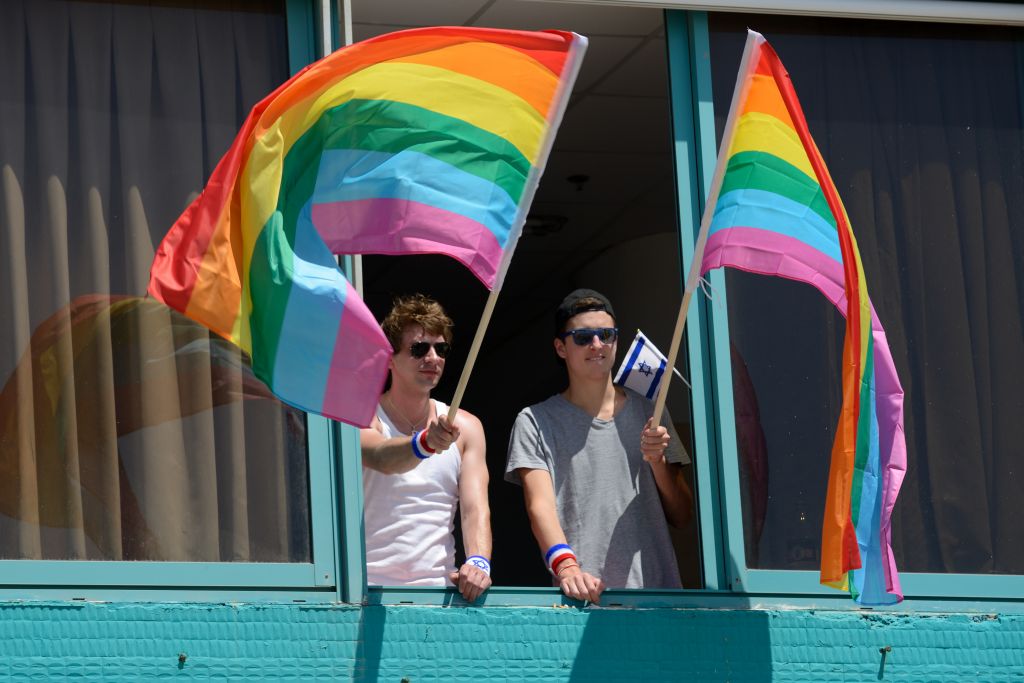
Even when the law was changed, gay Israelis weren’t completely accepted in society, although “living in Tel Aviv was like heaven,” he said. “It was a bubble.”
It was the 2009 shooting at the Aguda that shifted society’s attitude toward the gay community, said Doitsh. At the time, members of the Aguda marched to the city’s center, accompanied by the prime minister and president, who came to offer their condolences.
Prior to 2009, however, other changes took place. Doitsh talked about the decisions made in the Israel Defense Forces in the mid-1990s, allowing anyone of any gender to serve equally in any position in the army, an “equalizing” move for the gay community.
The 1998 Eurovision, when transgender singer Dana International won the song contest for Israel, was another moment of acceptance for the gay community, said Doitsh.
The Eurovision celebration also involved another Tel Aviv landmark, he said, as when Tel Aviv’s entire LGBT community converged on the fountain at Rabin Square — the site of many political and social gatherings — Jerusalem Beitar soccer fans, known for their macho attitudes, were also celebrating a win at the same place and found themselves surrounded by hordes of gay men.
“That night was about acceptance in the hard core,” said Doitsh.
“Now it’s all about recognition,” he continued, as he led the group to Gan Meir, a city-center park named for the city’s first mayor, Meir Dizengoff, but now called the “Gay Garden” for housing the Gay Center, a community center.
The Gay Center hosts activities for the local LGBT and straight communities, from ballet classes to reading groups, with a cafe at the entrance serving espressos and iced coffees.
On Wednesday night before Friday’s Gay Pride Parade, the group of journalists was planning on seeing Wigstock Tel Aviv, a drag performance of Eurovision songs, in Gan Meir.
Just outside the center is another first, a memorial placed in 2013 for the homosexual victims of the Holocaust. It’s a triangle of pink concrete, reminiscent of the triangular badges the Nazis forced homosexuals to wear.
Having a memorial for the gay victims of the Holocaust is significant, said Doitsh.
“We started to feel free to talk about the LGBT in the Holocaust,” he said, a subject that was previously felt to be taboo. “We don’t have to decide anymore if we’re Jewish or gay, we taught society that we can be both.”






The Times of Israel Community.