

UK police wrongly told MPs Jewish community supported Maccabi Tel Aviv ban – report
Senior West Midlands officer sends apology letter to Birmingham community after incorrectly assuring lawmakers that local Jews were consulted and backed banning Israeli fans
 Add ToI as a Preferred Source on Google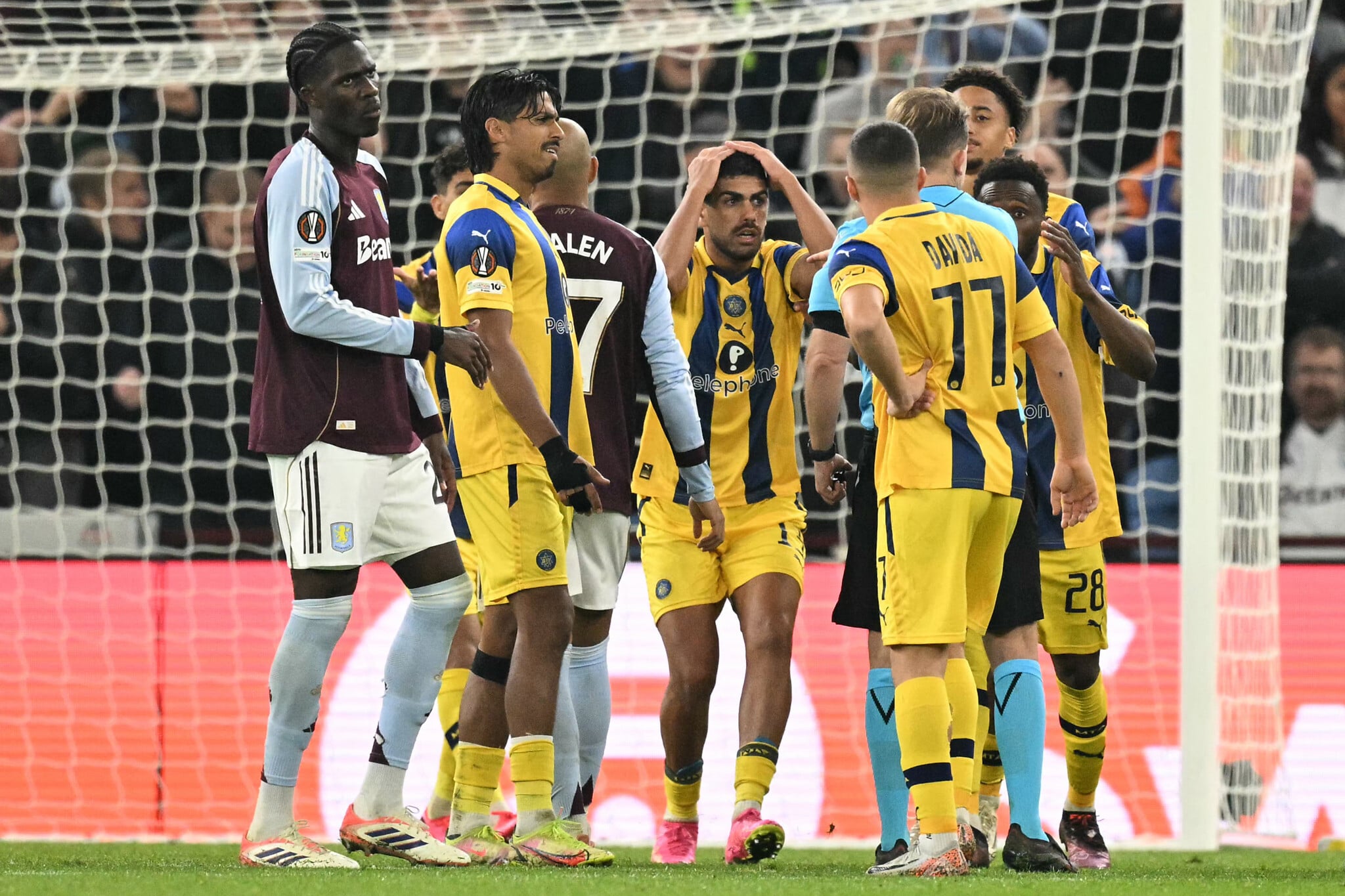
The UK’s West Midlands Police has admitted it wrongly told members of parliament that the Birmingham Jewish community had been consulted and supported the banning of fans of Israeli soccer team Maccabi Tel Aviv from attending a match in the city, London’s Sunday Times newspaper reported.
The testifying assistant chief constable sent an apology letter to the Jewish community, saying he did not intend to give lawmakers the impression that its members backed the ban.
The controversial ban led to a follow-up parliamentary committee meeting last week, where police were challenged over alleged discrepancies in key information on a past Maccabi game in Europe, and admitted that a risk assessment included another game that was fictitious.
“Please can I apologise and make very clear that it was not my intention to imply that there were members of the Jewish community who had explicitly expressed support for the exclusion of Maccabi fans,” West Midlands assistant chief constable Mike O’Hara reportedly wrote in the letter.
He also said he would tell MPs about the situation.
The Aston Villa soccer club announced in October that no Maccabi fans would be allowed at the November match following a police assessment that classified the event as “high risk” and suggested banning Israeli fans from the stadium.
The decision to ban Israeli fans from the game sparked criticism, including from Prime Minister Keir Starmer, who set about trying to reverse the move, though Maccabi Tel Aviv later announced it would decline tickets for its fans anyway, citing safety concerns.

Last week, a home affairs select committee grilled Chief Constable Craig Guildford and O’Hara about the ban.
MPs asked O’Hara about the “community impact assessment,” which determined the risk of Maccabi fans to groups in Birmingham. He said the report was compiled “to capture the views of the local population and local interest groups, both Jewish and Muslim.”
Asked if Jewish representatives said they did not want Maccabi fans in the city, O’Hara answered “yes.”
Committee chair Karen Bradley asked to clarify “if there were Jewish community representatives who said that they did not want the Maccabi fans there?”
O’Hara replied that “a range of faiths, backgrounds and ethnicities” were concerned, and when asked again if that included Jews, he reportedly said “Yes” and noted it was in the risk assessment.
However, Jewish community sources told The Sunday Times that there was no real consultation and that the only formal meeting with representatives was held after police had already decided to ban the Maccabi fans.
“I am aware that there is some consternation within the local Jewish community about what I presented on Monday,” O’Hara wrote in his letter.
“Having re-watched the footage, I am sorry if my response has created confusion by suggesting members of the Jewish community had expressed support for the ban. From my perspective, that is not the case, and I will ensure this is clearly articulated when I respond to the further written questions we are anticipating,” he reportedly said.
A police spokesman told the newspaper: “We recognize that this has been a difficult time for our local Jewish community; we therefore have and continue to actively engage.”
The spokesman said the force was anticipating subsequent contact with MPs and “we will ensure this is clearly articulated as it has been with representatives of the Jewish community.”
“This is another way in which we now know that the evidence given by the police to the committee was incorrect and serious questions about the accuracy of the West Midlands police intelligence police report and about the intent that lay behind it remain unanswered,” Nick Timothy, an opposition Conservative MP, told The Sunday Times.
The police risk assessment also cited “violent clashes and hate crime offenses” by Israeli fans during a Europa League match in Amsterdam between Maccabi and local team Ajax last November.
However, Dutch law enforcement sources said in response that the examples used by British police to justify the ban were false.
At the time of the incident, Dutch and Israeli officials said that Maccabi fans were deliberately targeted by roving gangs of Muslims, calling the incident an antisemitic “pogrom.”
Guilford also conceded to MPs that police presented fictitious information about a 2023 match between Maccabi and West Ham, which the report said was the Israeli club’s “last appearance on UK soil to date.”
However, no such match was played, and Maccabi has never faced off against the East London club.
And Guildford and O’Hara admitted in the committee that they had met with Independent MP Ayoub Khan, an outspoken anti-Israel figure, while authoring the report that suggested banning Israeli fans from the November match.
The admission appeared to contradict their earlier claims that there was “no political pressure” to ban Maccabi supporters, as Khan had previously contacted Aston Villa to voice his strong opposition to allowing Israeli fans at the event, arguing that they were a security risk.
The match was played on November 6 without Maccabi fans in attendance, with the Premier League side defeating the Israeli squad 2-0.
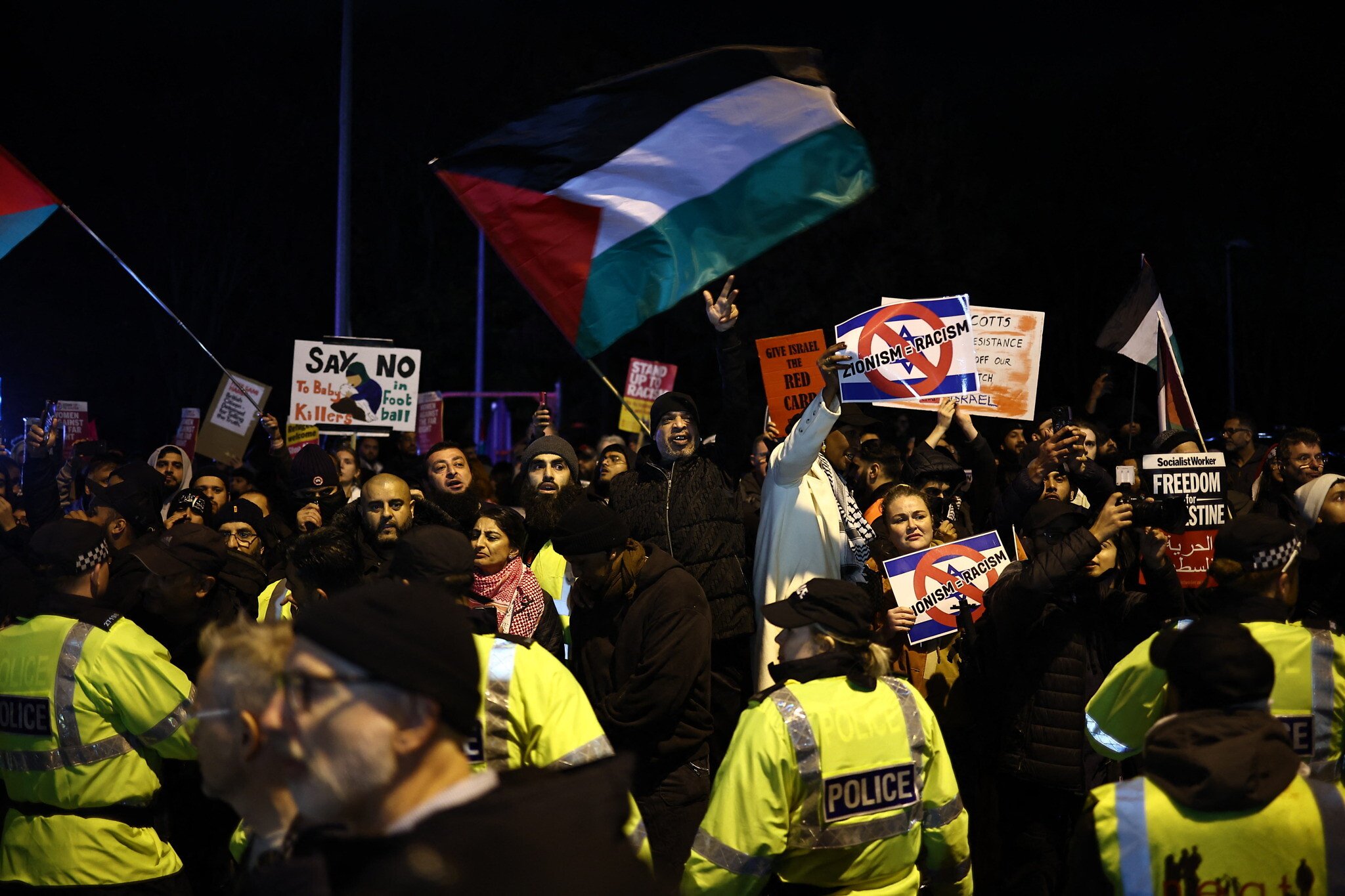
More than 700 police were deployed across Birmingham as some 200 pro-Palestinian and a few dozen pro-Israel protesters held separate demonstrations outside Villa Park stadium in the run-up to kickoff.






The Times of Israel Community.