

Wartime mystery on display with new portrait trove of Dutch Jews
San Francisco show focuses on work by forgotten German refugee photographer Annemarie Wolff, who kept 100 film rolls from 1943 a secret
 Add ToI as a Preferred Source on Google
Renee Ghert-Zand is the health reporter and a feature writer for The Times of Israel.
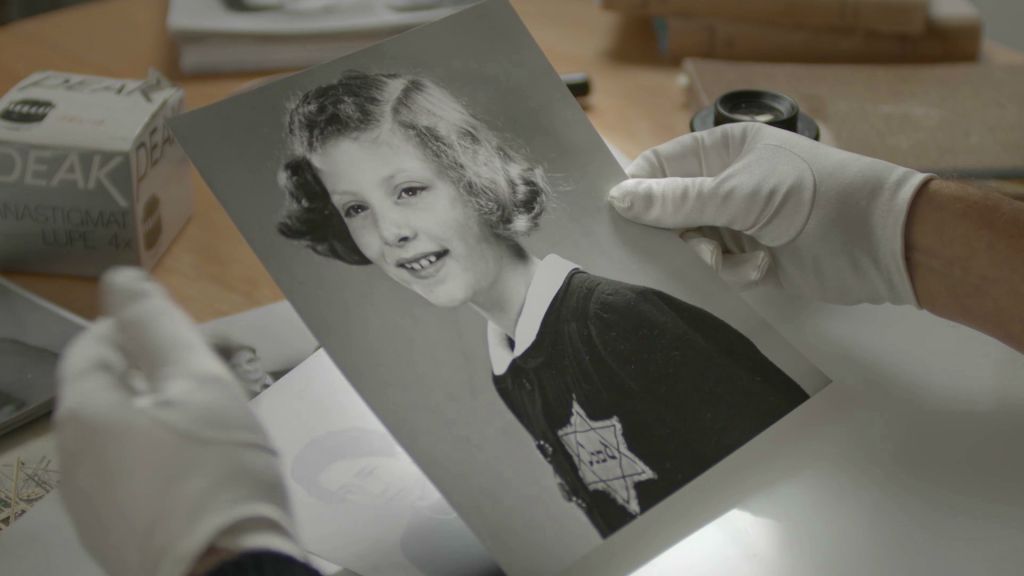
In November 2012 Jacqueline Shelton-Miller of San Francisco received an email from Holland asking if she was prepared to look at a photo that was believed to be of her father in Amsterdam in 1943. She knew that her father, a German Jew who survived the Holocaust, had been in Amsterdam at some point during WW II, but he had never mentioned sitting for a portrait.
Shelton-Miller agreed to look at the photograph, and indeed, it was of her father, then a handsome, sandy-haired young man with a yellow star on his suit jacket. The daughter learned that the portrait had been taken by a photographer named Annemie Wolff (also known as Annemie Wolff-Koller), and that it was one of hundreds that had been discovered stashed away among belongings left behind after her death in 1994.
Wolff had told no one about the portraits, more than half of them of Jews who up till then had managed to avoid deportation by the Nazis.
Twenty-six of these photos, along with biographies of their subjects, are on display at the Goethe Institut in San Francisco until April 17 in an exhibition titled, “Lost Stories, Found Portraits: Portraits of Jews in Wartime Amsterdam.” The exhibition, organized by the Jewish Community Federation Endowment Fund in cooperation with the Goethe Institut and the Wolff Foundation, was instigated by Shelton-Miller, who felt compelled to act after seeing the photo of her father and finding out more about how it had been discovered.
“It’s not just about my father and me. It’s about these people and the courageous photographer who took the photos,” said Shelton-Miller. “I feel very passionate about this. It’s an honor and a privilege to bring these stories to life.”
“For those who lived, this photo is a moment in time. For the others, it’s their last trace on earth,” she said.
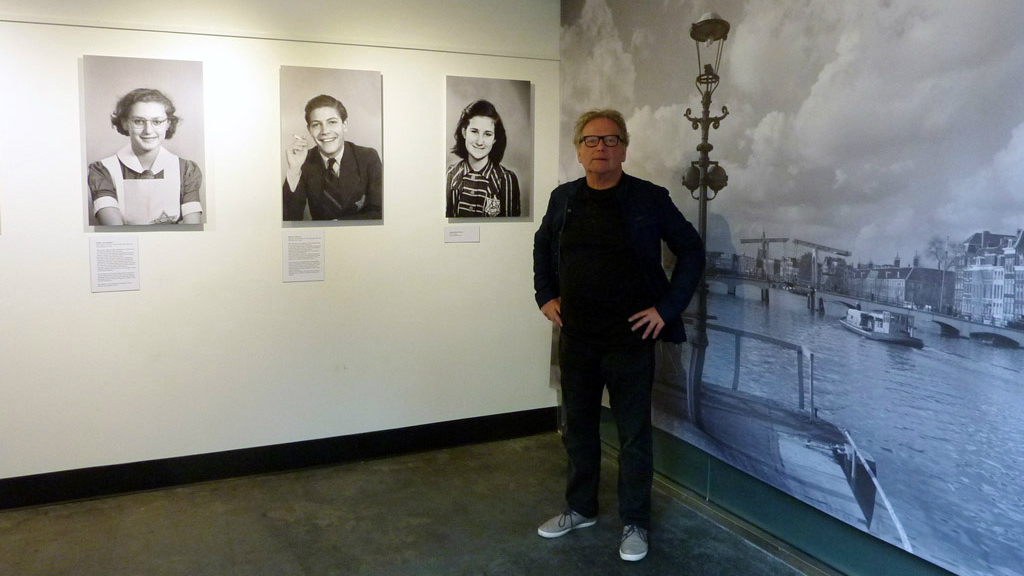
Seven years ago, Dutch photography curator Simon B. Kool discovered a wooden box with 100 rolls of film with portraits of 440 individuals in the Haarlem home of Monica Kaltenschnee, the granddaughter of a neighbor and friend of Wolff. Since Wolff had no descendents, Kaltenschnee became her heir and received whatever photographs and negatives she had left behind.
Kool had been combing already for several years through the 50,000 pictures (by Wolff and also by her husband Helmuth Wolff) in the archive, looking for photos of the Amsterdam harbor and airport before finding the box with the rolls of film, along with a cash book containing the names and addresses of the people who sat for the portraits.
‘I saw the yellow stars and I wanted to know what had happened to those people’
“Monica had never looked inside the box, or read through the cash book with the names and addresses of the people who sat for the portraits,” Kool told The Times of Israel.
“I saw the yellow stars and I wanted to know what had happened to those people,” said Kool, who immediately recognized that the names in the notebook were mainly of German and Eastern European origin.
It took four years, but eventually Kool and researcher An Huitzing were able to set up the Annemie and Helmuth Wolff Foundation and began trying to find out the stories of the people in the photographs taken between January and September 1943.
According to Kool, the biographies of more than 230 of the individuals have been pieced together, and more people in the photos — or, in many cases their descendants — are being located daily.
Two-thirds of the people whose stories are known survived the war, either in hiding or having escaped with the help of the Dutch resistance. Those who are still alive were quite young at the time, and most do not remember sitting for the portraits. Because of this, it has been difficult to determine the purpose of the photographs.
Were they for false papers? Were they mementos to send to family members incarcerated in the Westerbork transit camp? The answer has not yet been definitively determined, and it is doubtful that it ever will be.
“Two years ago I went to the national archive in The Hague. There is evidence that Wolff was in the resistance, but I couldn’t find a single one of these photos on a false document produced during that period,” said Kool.
‘Why did she do it? Why did she never talk about it? I am searching for the secret’
“I think most were made for keepsakes to be sent to family at Westerbork. In three cases, the people in the photos, who were children at the time, remember that the photos were for their grandparents, who had been taken away. The camp was open in that you could send or bring stuff in for the inmates,” he said.
Kool is fascinated by the question of why so many of the Jews photographed wore their yellow stars as they sat for Wolff. However, he did notice that many of them wore them lower down on their clothing so that they were only halfway in sight in the portraits.
“If we had started this project earlier, we would have been able to speak to more people. But on the other hand, now we have the Internet, which has been great for research,” Kool said.
Kool is preparing a more extensive exhibition of the photographs to be shown at the Jewish Historical Museum in Amsterdam in 2016. He is also writing a book about Wolff and her husband Helmuth, who fled to Amsterdam from Munich, Germany in 1933. In Germany, the Jewish Helmuth has been a successful architect. Annemie, who was not Jewish, had begun her photography career there.
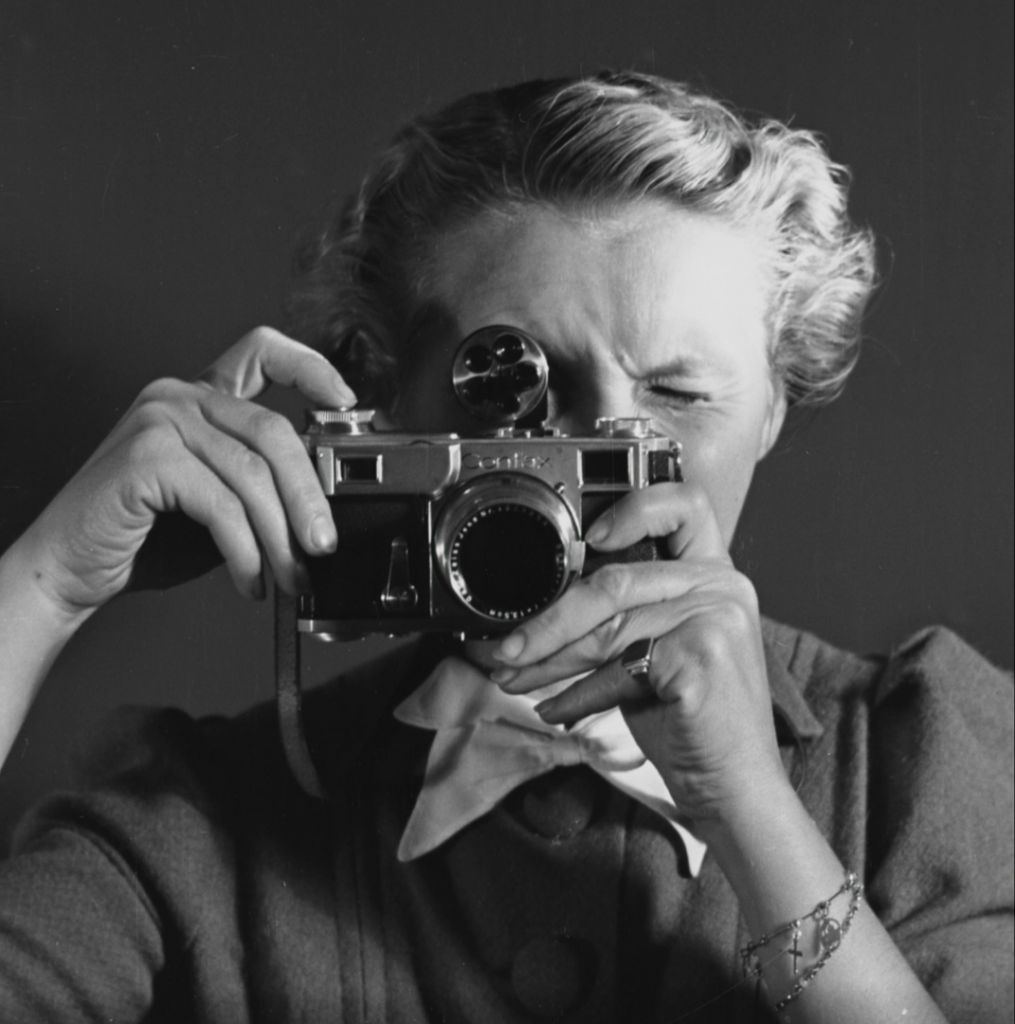
After arriving in Amsterdam, they worked together in photography, setting up a studio in the southern part of the city, where many Jewish refugees from Germany had settled. They did publicity photography for the city of Amsterdam, especially of the harbor and Schiphol Airport. In addition, they began a photography magazine and organized an exhibition of photographs by the magazine’s readers, including Prince Bernhard, husband to Queen Juliana of the Netherlands.
When the Nazis occupied Holland in May 1940, the Wolffs attempted suicide. Helmuth succeeded, but Annemie survived.
“She was not a sad woman, but she was a widow at 34,” said Kool. “It took her two to three years to recover from her husband’s suicide and then she got back to work at her studio.”
After the war, Wolff continued to work as a photographer, mainly for industrial clients and for the city of Amsterdam, until her retirement at age 65. She died in her late 80s, having told people that she had destroyed much of her work, and also having never spoken of the 1943 portraits or of the people in them.
“Why did she do it? Why did she never talk about it?” asked Kool. “I am searching for the secret.”
“Last Portraits,” a film about Annemie Wolff and the photographs from 1943, has been made by filmmaker Rudi Boon and produced by Selfmade Films.







The Times of Israel Community.