

With echoes of Book of Ruth, author chronicles 7 women’s remarkable journeys to faith
This Shavuot, read Kelsey Osgood’s ‘Godstruck,’ a reflection on her own unexpected Orthodox conversion to Judaism as well as the conversions of six others to a diverse array of religions
 Add ToI as a Preferred Source on Google
Reporter at The Times of Israel
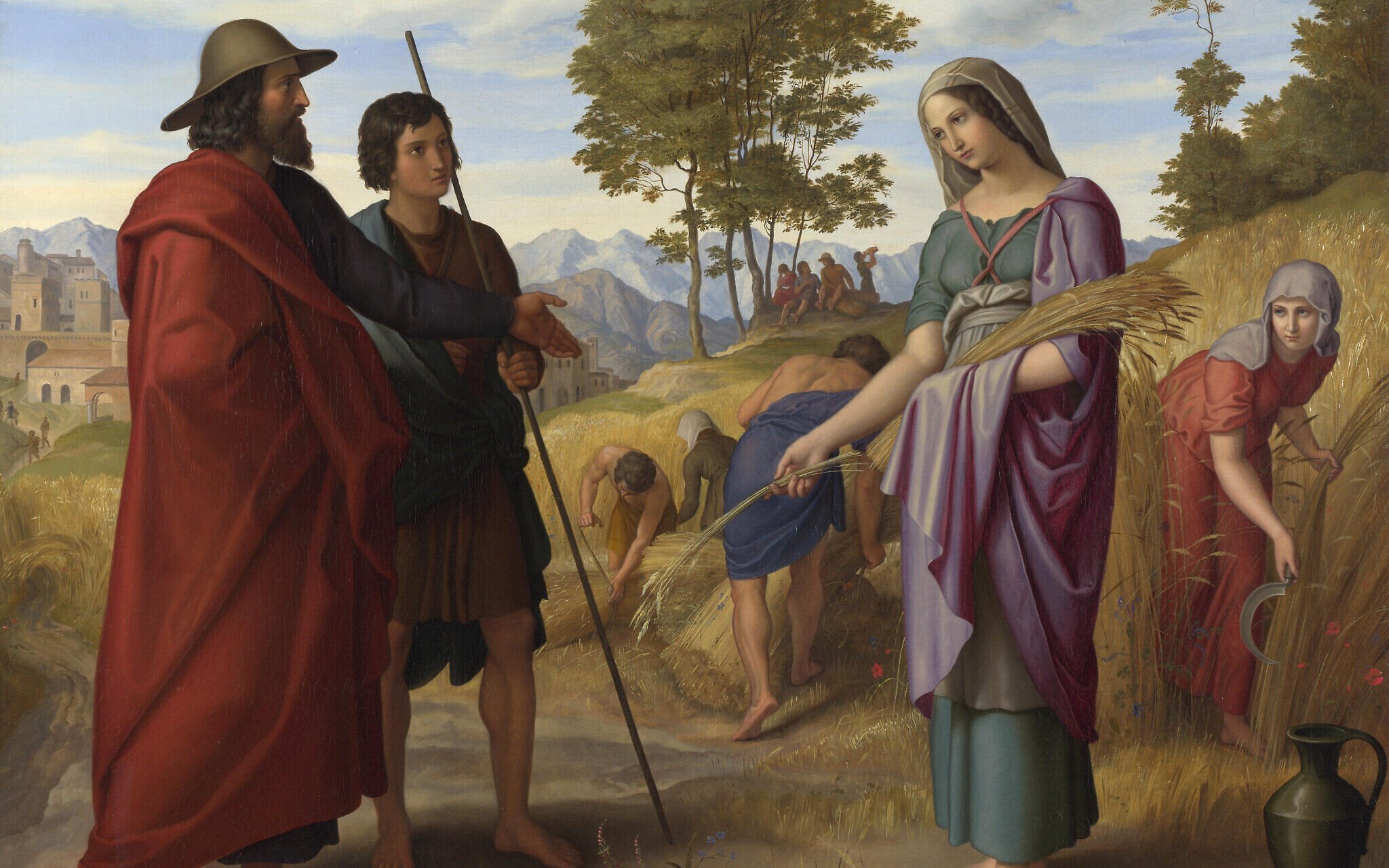
When author Kelsey Osgood listens to the Book of Ruth on Shavuot, the biblical narrative has a special resonance for her.
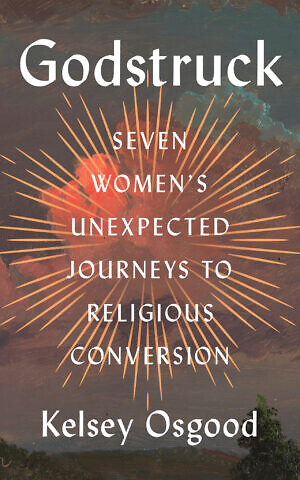
Osgood, like Ruth, is a convert to Judaism — and like her ancient predecessor, Osgood’s decision to adopt the Jewish faith makes for a great story, which she recounts along with six other narratives in her new book, “Godstruck: Seven Women’s Unexpected Journeys to Religious Conversion.”
“Especially in my late 20s, in the lead-up to my conversion, I maintained a very romantic view of Ruth’s choice to pledge fealty to Naomi and to journey to Israel; this seemed to me to embody faith in its purest form,” Osgood told The Times of Israel, referring to the famous lines from Ruth 1:16, “Wherever you go, I will follow; wherever you dwell, I will reside. Your people will be my people and your God, my God.”
“But,” she added, “at the same time, I am now and have always been able to read this text with critical/historical perspectives, too, and to imagine the challenges Ruth must have faced as a woman in the ancient world and as a non-Israelite trying to assimilate into her new culture.”
The millennial women profiled in the book have defied common characterizations of their generation as increasingly secular, adopting a diverse array of faiths, including Catholicism and Islam, Quakerism, and the Church of Jesus Christ of Latter-day Saints. In the final chapter, Osgood discusses her own conversion to Orthodox Judaism a decade ago.
The women’s motivations were complex, even to them. As the author sought to find a parallel to their experiences, she found it in the biblical phrase “Na’aseh v’nishma,” which she translates as “We will do and we will listen,” a leap-of-faith statement uttered by the Israelites receiving the Ten Commandments at the foot of Mount Sinai.
“I’m pretty sure all of them had heard echoes of this in their own religious vision,” Osgood said. “They were drawn to something, felt meaning in something, and they couldn’t always explain why.”
She cited a consequence of this: “They care so much about a broader project, their relationship to God, that they do things that are even difficult or look weird to other people.” Yet, she continued, it was “important for them to connect in this way, to move forward in this. It’s a fair statement that they all have had that experience.”
As Osgood explains in the book’s introduction, she chose to highlight women’s experiences in part because “most religious converts are women.” Osgood devotes each chapter to one of the seven women while bringing in reflections from her own narrative. Throughout, she incorporates insights from historical thinkers such as Rabbi Nachman of Breslov and William James.
Osgood grew up in what she described as a secular Christian family. Her early years were marked by both a skepticism about God and battles with anorexia. She chronicled the latter in her previous book, “How to Disappear Completely: On Modern Anorexia.”
A chance conversation with a doctor helped Osgood reconsider how she felt about God.
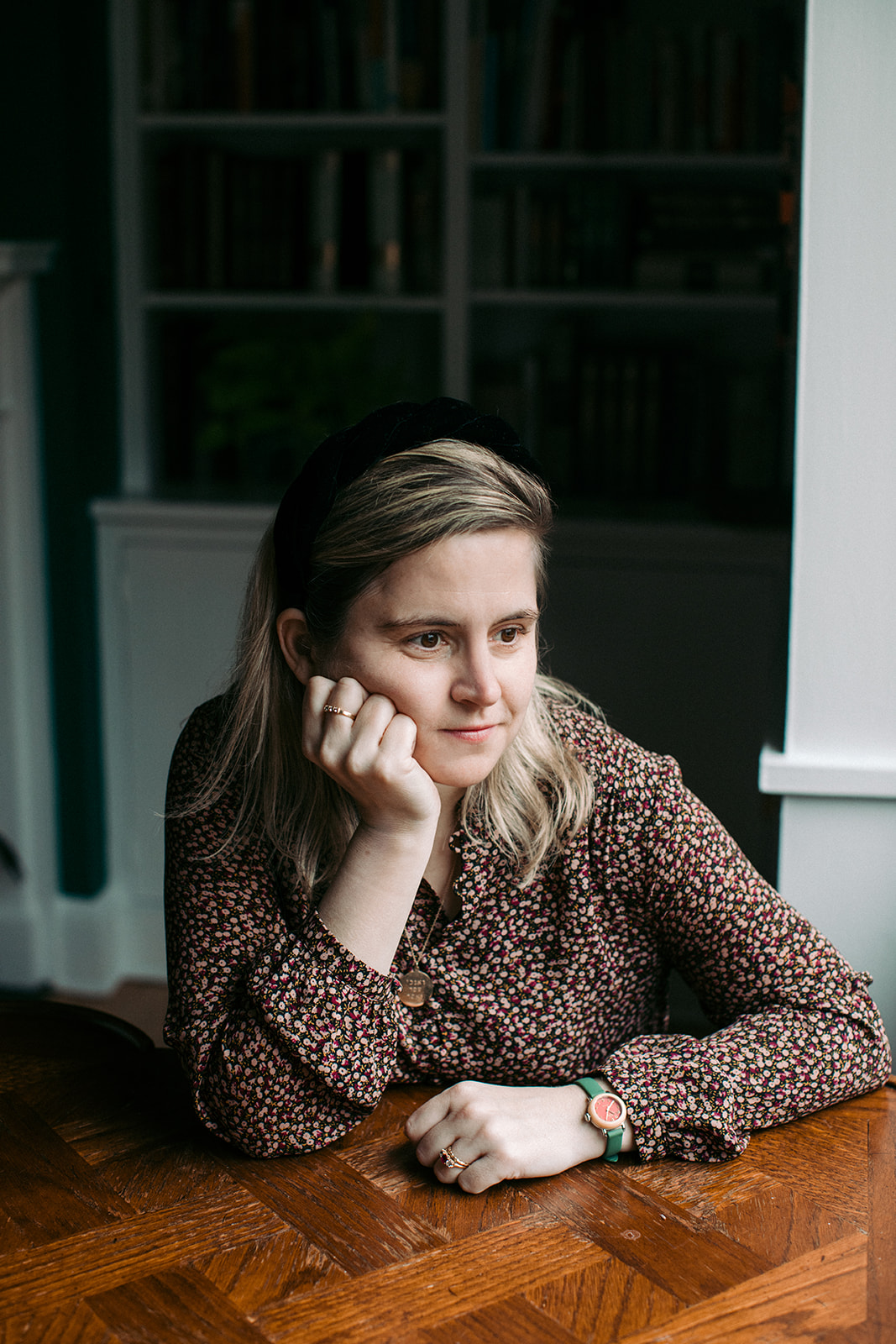
That reconsideration led Osgood toward Judaism. She was dating a man from a Reform background. They got married and are now raising a family of three children in the Bronx. She likes their neighborhood: It’s filled with other young Jewish families, including Israeli expats, with plenty of possibilities for Shabbat visits, more so than in Osgood’s previous stops in Brooklyn and the UK. Yet complications remain.
“There is a part of me that feels I don’t know how to explain to my kids the kind of world they’re going to grow up in,” she said. “The necessity of Israel, the depth of antisemitism … I did not experience antisemitism as a child. Part of me feels ill-equipped to explain these things to them.”
When clothing makes the woman
In discussing her decision to pursue an Orthodox conversion instead of a Conservative or Reform one, Osgood said, “It made me feel the best, I wanted to know the most about [it], I wanted to spend the most time with [it].”
She remembers how it felt to wear a skirt instead of more casual attire, and her husband telling her she looked religious. Her response to him: “I think I want to do an Orthodox conversion or do nothing. He was like, ‘What?’”
Some of Osgood’s six peers also made outward expressions of their changing faith. One example is Hana, who converted to Islam and was featured on a reality show on the Oxygen network, discussing what it was like to wear an Islamic full-body covering for females called an abaya, as well as her plans to move to Saudi Arabia.
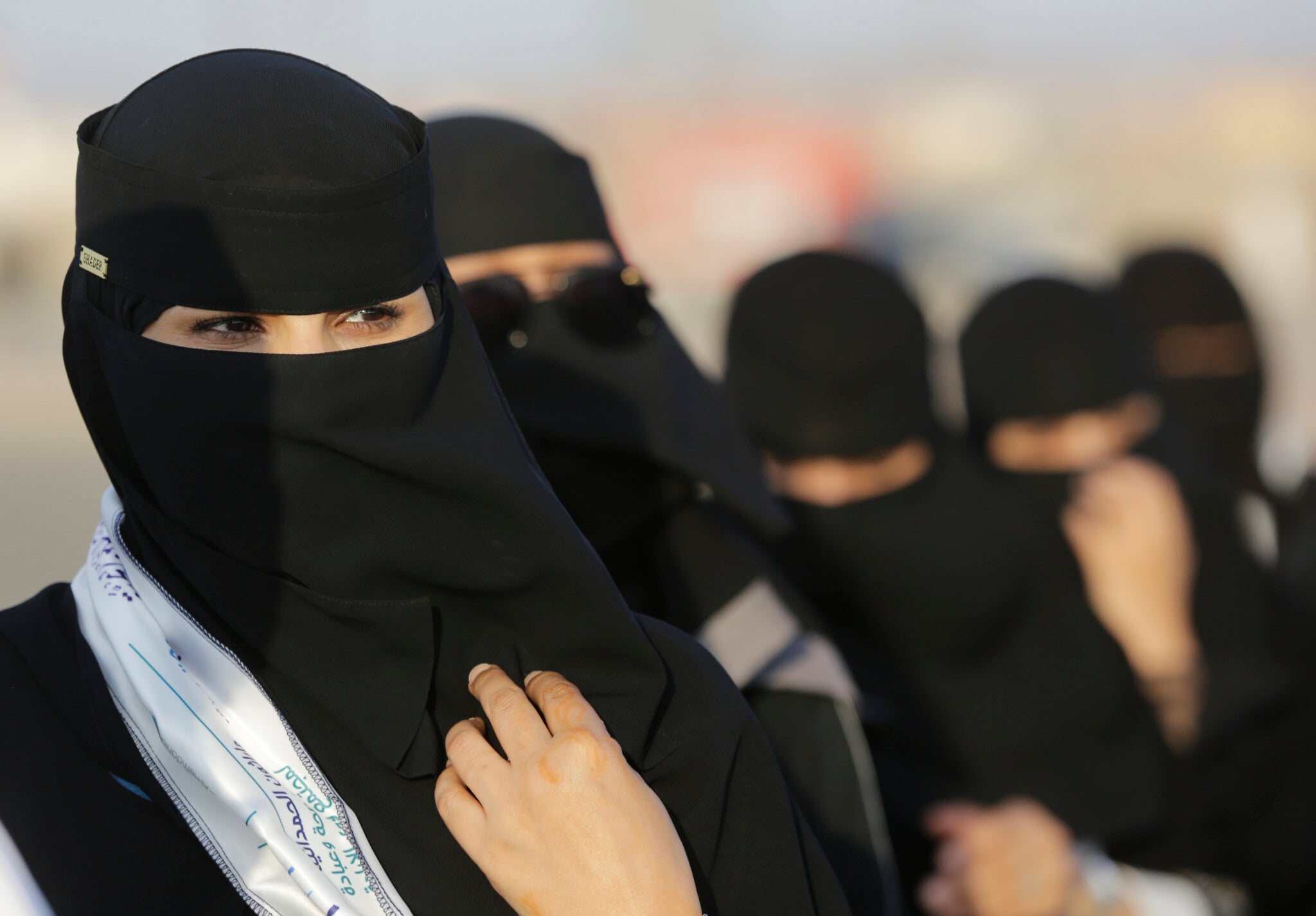
As Hana’s chapter shows, her early life was difficult: When she was in high school, her Czech American mother died, and her father did not support her afterward, according to the book. In college, Hana found unexpected comfort from a verse of the Quran, and this, together with interactions with Muslims on campus, led her toward conversion in 2011. For five years, she wore a niqab — a garment that covers not only a woman’s hair, as a hijab does, but her entire face except the eyes.
Meanwhile, after graduating and moving to California, Hana felt a particular bond with Muslims in the area who were from Saudi Arabia, including a Saudi native who became her best friend. In addition to adopting practices from the country’s traditional form of Islam, she even fulfilled her dream to move there. Ironically, she ended up rejecting a job with a Saudi millionaire philanthropist who deemed her niqab out of sync with a modernizing kingdom.
Hana’s search for love in the Middle East came with further complications, Osgood said: “She happened to be more regularly attracted to men from a particular area of Saudi Arabia that is known to be more conservative,” where romantic matches tend to be made through “older tribal allegiances [rather] than religion.”
Not converting for marriage
Overall, Osgood said of the conversions chronicled in the book, “It’s fair to assume in these women’s cases that their reasons had nothing to do with a potential romantic partner. In some cases, it ended up hurting their chances for finding a romantic partner.”
One of the book’s subjects, Orianne, forsook marriage entirely. Born in Canada to a Mennonite father and a Lebanese Druze mother, Orianne not only joined the Catholic faith but also became a nun through the Daughters of Saint Paul. Now she’s known as Sister Orianne and prays five times daily with fellow sisters in a convent.
Osgood said that Orianne’s narrative exemplifies “things that … are central to the Catholic tradition — solitude, silence, contemplation.” Orianne communicated these centuries-old concepts to the world via a modern format: Instagram, where she has 100,000-plus followers. “I looked her up, reached out to her,” Osgood recalled.
Within many faith communities, men and women live lifestyles that mainstream American society might consider traditional or conservative. The book examines the decision of women to join religious communities that encourage — or even mandate — traditional gender roles.
“I remember, when I was converting, there were a lot of assumptions or speculation that, as a woman, if I was joining a more ‘conservative’ iteration of a faith, isn’t there tension there?” Osgood said. “Don’t you feel you’re hitching your wagon to a star that … does not really have your best interests in mind? Are you undermining your own freedom? This was 2015, when the idea of the girlboss was ascendant.”
Yet she also noted a counterargument: “Women should be more open to filling … conservative roles,” although “not like a tradwife.”
A new rhythm of life
Osgood noted a pull between the technological comforts of the modern world, available around the clock, and the timeless appeal of religion, with its inextricable links to the natural world — including the cycles of day and night, the changing seasons, and the possibility of solitude.
“I feel, inside of myself, a very strong desire to have a more private or intimate relationship with Hashem, with God, and at the same time, much of my life feels infused with a kind of modern, even secular orientation towards the world,” Osgood said. “I drive to the grocery store to buy my food, order lunch on my phone, get annoyed when the train doesn’t run on time.”
Once finding herself bored on Saturday afternoons, now she’s grateful for the 24-hour respite of Shabbat.
“Like any other thing or skill, if you do it for a while, it becomes easier,” Osgood said. “I started to see the value in this idleness I once found really irritating. Doing something because it’s nice, enjoyable, we’re all together, it’s fun, but it does not seem to have a measurable outcome.”
Taking the leap — without completely understanding why — is exactly what the author and her six peers do throughout the pages of the book. Although it may sound counterintuitive, it’s actually consistent with individuals and groups throughout history.
One such example, as Osgood writes in the book, was “a group of hungry, irritable, awestruck Jews, standing at the base of a mountain, telling a divine voice na’aseh v’nishmah: ‘We will do and we will listen.’”
“It was pretty revolutionary to me to hear that and think about it,” Osgood said. “It flies in the face of … sort-of bedrock understanding of American individualism … the idea you just do things because you’re supposed to do them.”
“Of course, it’s great if you do them and also want to do them and feel fulfilled doing them,” she reflected. “But even if the latter doesn’t happen, sometimes you just have to do them anyway. That was sort of the lightbulb moment for me, this lesson.”
Godstruck: Seven Women’s Unexpected Journeys to Religious Conversion Hardcover by Kelsey Osgood
This article contains affiliate links. If you use these links to make a purchase, The Times of Israel may earn a commission at no additional cost to you.






The Times of Israel Community.