

Assad relies on foreign fighters in bid to take Aleppo
The strange alliance poised to recapture city includes Russian soldiers, Palestinian gunmen and Shiite fighters from Iran, Lebanon, Iraq and Afghanistan
 Add ToI as a Preferred Source on Google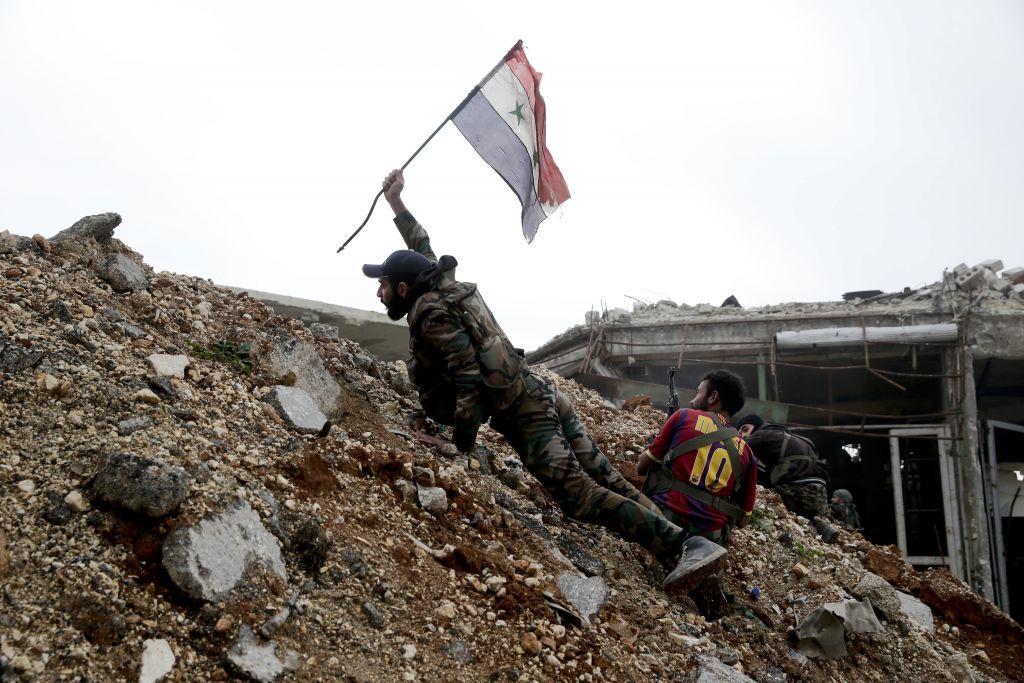
ALEPPO, Syria (AP) — Syria’s President Bashar Assad is on the verge of recapturing all of Aleppo from rebels, but the victory won’t be his alone. The battle for Syria’s largest city has attracted thousands of foreign forces backing Assad — including Russian soldiers and Shiite fighters from Iran, Lebanon, Iraq and Afghanistan.
The remarkable political and sectarian alignment underscores Aleppo’s symbolic and strategic importance, which goes beyond the confines of Syria’s civil war. Syria’s former commercial center has long been regarded as a major gateway between Turkey and Syria.
Assad has sent some of his most elite forces to take part in the offensive on eastern Aleppo neighborhoods, held by the rebels since 2012. They include the Republican Guards, the 4th Division and the special forces. Syria’s powerful paramilitary Desert Hawks and naval commandos have also joined the fight.
But after more than five years of war, even the best Syrian forces have been severely depleted. The pro-government side has cast the fight as a sectarian one in order to rally support, particularly in the Aleppo battle.
“We, the Shiites, are fighting to defend our ideology, religion, holy places and the state against terrorists,” said a Shiite cleric in Beirut. He would only give his first name, Mohsen, because he did not want to appear as if he was inciting violence.
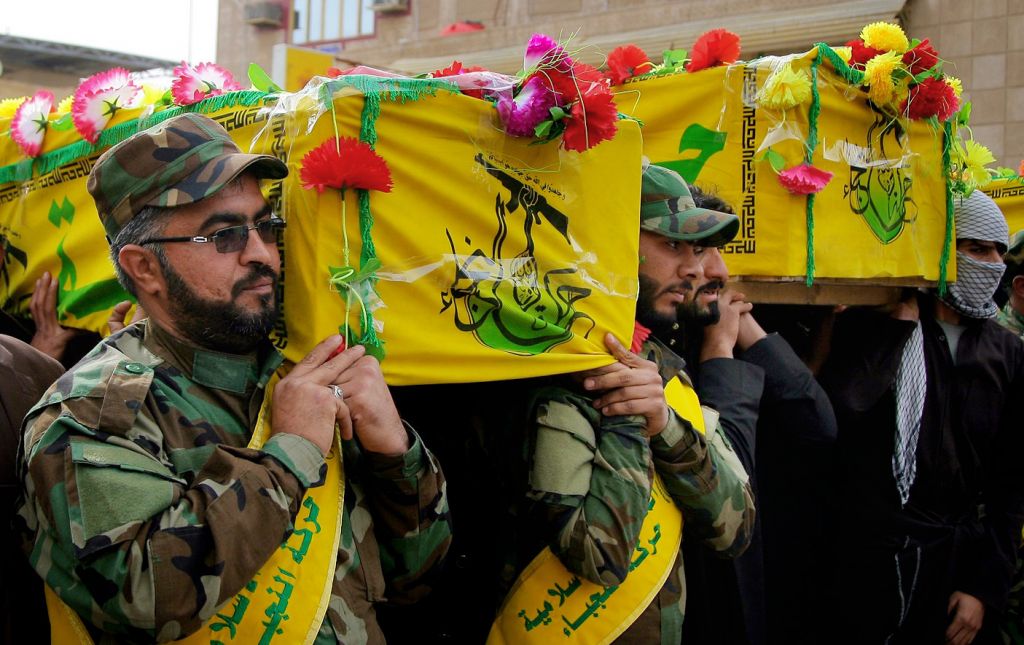
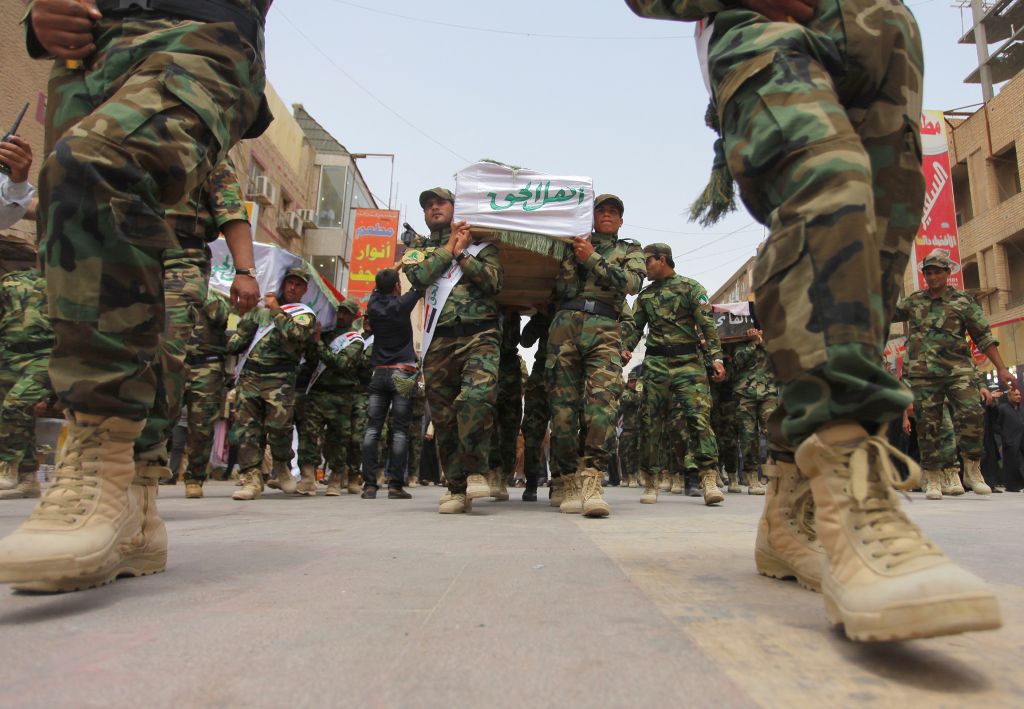
There are no exact numbers for the foreign fighters backing the Syrian government in Aleppo, but they are estimated to be in the thousands. And while thousands of Sunni volunteers from around the world have come to fight against Assad in Syria, the Shiite militiamen and foreign fighters — as well as the Russians — have been critical for his battlefield successes.
An Associated Press team that toured the government-held part of Aleppo this month saw Shiite religious banners, mostly in areas on the city’s southern edge. In the southeastern Nairab neighborhood, near the closed international airport, Palestinian gunmen with red headbands that read “Quds Brigade” were seen in the streets and directing traffic.
Nearby, an office for Iraq’s Kataib Hezbollah, or the Hezbollah Brigades, was decorated with the group’s yellow flags and Shiite religious banners.

In western Aleppo hotels, plainclothes Russian advisers come and go carrying their flak jackets, helmets and Kalashnikov automatic rifles. It’s an odd mix of forces, including Sunni Palestinian factions, which are often referred to by government supporters simply as “the friends.”
In the town of Safira, just south of Aleppo, a small hut with a coffee machine stands in the middle of a street, surrounded by a scene of destruction. Few civilians remain in the area but Shiite fighters from Iraq’s al-Nujaba militia have a center nearby. “The Friends Cafe,” reads a plastic banner on top of the kiosk, which sells bottled water and coffee.
The so-called friends were also seen along the desert road leading to Damascus, which was opened after rebels cut the main highway linking Syria’s two largest cities. Volunteer Fatimiyoun militiamen from Afghanistan and al-Nujaba fighters have posts on hills overlooking the desert beyond the road.
The fighters protect the road, which has been attacked by the Islamic State group and which was cut several times in the past before troops fortified their positions.
Shiite volunteers have been going to Syria with the blessing of Shiite power Iran — Assad’s key ally since the early days of the Syrian conflict in 2011. Tehran, which also backs armed groups in Lebanon, Iraq and Afghanistan, has been sending military advisers to Assad’s forces for years, including several senior officers who were killed in the conflict.
Pressure mounted on Assad last year when rebels captured the northwestern province of Idlib, which borders the coastal province of Latakia, a government stronghold and the heartland of Syria’s Alawites, a Shiite offshoot to which the Assad family also belongs. Then, Russia joined the war in September 2015, tipping the balance of power in the favor of the Syrian president.
The Lebanese Hezbollah, also a Shiite group, is believed to have sent hundreds of its fighters to Aleppo. Hezbollah leader Hassan Nasrallah has described the fight in Syria as “‘the mother of all battles” and said the road to Palestine passes through Syrian cities, including Aleppo.
An official with the Iraqi al-Nujaba militia told the AP in October that the group had sent some 4,000 of its fighters in preparation for the battle to storm Aleppo.
Syrian government supporters say the nearby town of al-Bab, now controlled by the Islamic State group, is likely to be the next target, and suggest Iran seeks to expand its influence through a contiguous land corridor from Tehran to the Mediterranean Sea, through Iraq and Syria.
Also among the foreign fighters backing Assad’s forces are Afghani refugees from Iran, who have reportedly been promised Iranian citizenship.
“As early as 2012, Iran took it upon itself to prevent the collapse of the Syrian regime,” said Hilal Khashan, professor of political science at the American University of Beirut. “When the tide of the battle did not favor the Syrian regime and its allies, the Russians stepped into the battle and made sure that the regime would prevail.”
“Without these fighters it would have been impossible for the (Syrian) army to make a breakthrough” in Aleppo, Khashan said.
Copyright 2016 The Associated Press.






The Times of Israel Community.