

Could a Donald Trump happen in Israel?
A rich newcomer shaking up elections is nothing new for the Jewish state; just look at Lapid and Bennett
 Add ToI as a Preferred Source on Google
Ben Sales is a news editor at The Times of Israel
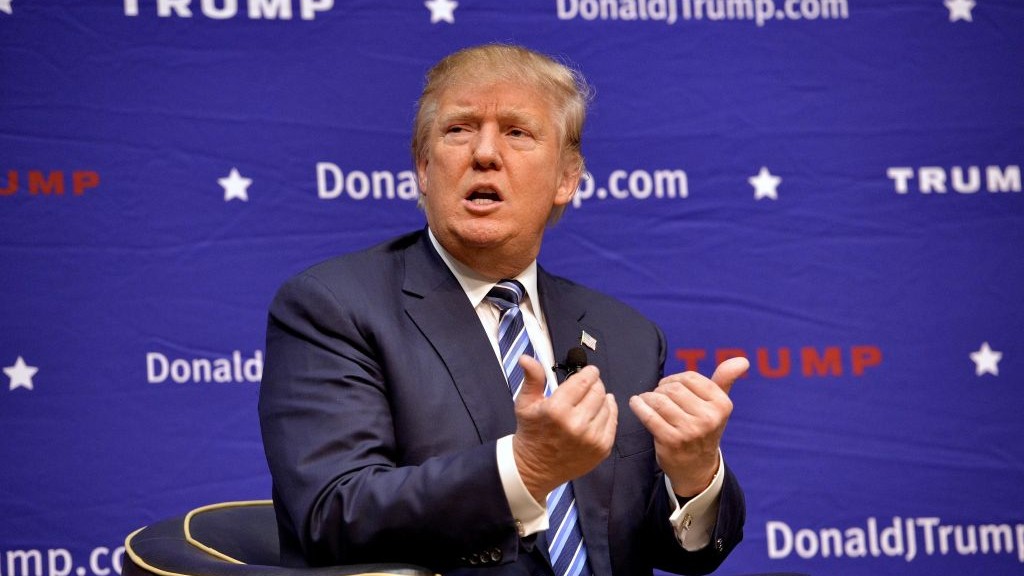
JTA — Months ahead of Israel’s elections, a rich celebrity who’s never held elected office announces he will run for prime minister. He attacks the current leadership as weak and ineffective. He vows to wield a stronger hand against terror, to shut out Israel’s enemies and to realize the country’s untapped potential.
His poll numbers shoot up, shocking the political establishment. Thousands mass to cheer for his charismatic speeches, and he’s adept at social media. Critics lambast his campaign as one of image, not substance. They predict he’ll fade as fast as he’s risen.
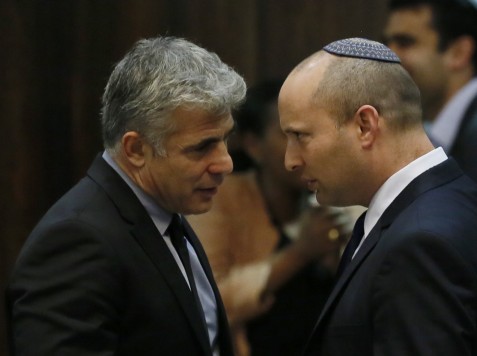
Sound familiar? It should. Something similar happened in 2012, when two political neophytes — Naftali Bennett and Yair Lapid — shook up Israel’s politics in a raucous election campaign. Lapid, a popular news anchor and author, founded a new party claiming to represent Israel’s political center. Bennett, a high-tech mogul, became chair of the religious Zionist Jewish Home party and attracted throngs of new supporters, focusing on hawkish politics and housing reform.
If Donald Trump were to run for office in Israel, he’d probably follow in their footsteps.
In the US, the open primaries give celebrities like Trump an opportunity to gain a following and (possibly) capture the mantle of a major party. Winning the nomination, in turn, would give Trump a reasonable shot at winning the presidency.
But in Israel, voters cast ballots for a party, not a person. And only three Israeli parties — Likud, Labor and Jewish Home — have open, American-style primaries where ordinary Israelis can vote directly for candidates. You can vote in the primaries only if you’re a card-carrying member of one of those parties. Out of nearly 6 million eligible Israeli voters in 2015, just 125,000 voted in primaries.
And primaries in Israel aren’t the free-for-all they are in the US In Israel’s political culture, career politicians like Prime Minister Benjamin Netanyahu and Opposition Leader Isaac Herzog tend to stick around, win or lose.
Unlike Mitt Romney or John Kerry, there’s no expectation that party leaders will step aside following a loss. Shimon Peres stayed atop Labor for 15 years despite failing to win four straight elections. When Herzog lost the election in March, he remained Labor chairman and hoped for a better result next time.
That’s why an Israeli Trump would have a hard time becoming prime minister. No one has ever captured a major party’s top spot without prior political experience.
Instead, he might turn to another venerated Israeli tradition: founding your own party. Israel’s parliamentary system means that third, fourth, and even tenth parties can make it into Knesset. Just like leaders from David Ben-Gurion to current Finance Minister Moshe Kachlon, an Israeli Trump could announce the creation of his own faction.
The Trump party — let’s call it “Make Israel Great Again” — could be formed without primaries. But he’d almost definitely not win the prime ministership.
In America, commanding 30 percent of Republican primary voters can catapult you to winning the nomination and having the support of nearly half the country. In Israel, leaders of new parties rarely gain more than 15 percent of voters. If Trump were polling in Israel like he is in America, he’d expect to win 18 seats — good enough to make his party the third-largest in Knesset.
Would Trump be satisfied with winning third place? Or would that make him, dare we say, a loser?







The Times of Israel Community.