

Kerry: Even IDF chief says Iran deal boosts Israeli security
At Senate hearing, US secretary of state insists nuclear accord has made world a safer place
 Add ToI as a Preferred Source on Google
Adiv Sterman is a breaking news editor at The Times of Israel.
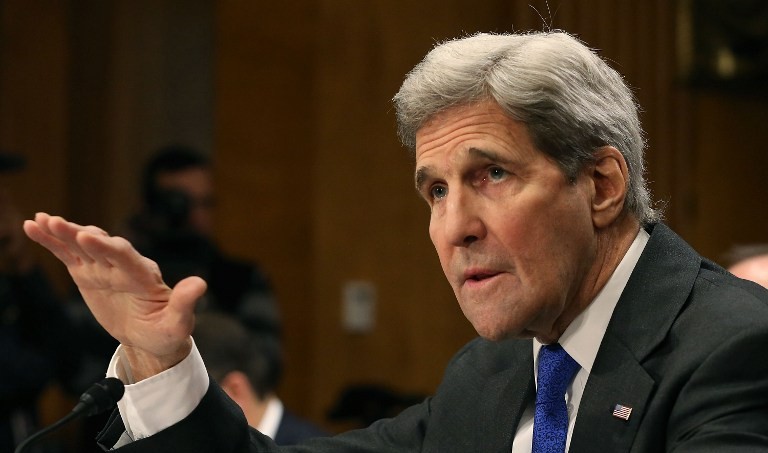
US Secretary of State John Kerry on Tuesday touted last year’s nuclear agreement between Iran and the P5+1 world powers as having effectively curbed the Islamic Republic’s capability to acquire atomic weapons, adding that even IDF Chief of Staff Gadi Eisenkot now believed the deal had boosted Israel’s overall security.
“[The nuclear deal with Iran] has cut off the country’s pathways to a nuclear weapon, thereby making the world safer for us and our allies,” Kerry said during a hearing at the Senate Foreign Relations Committee. “If you doubt that, read the speech by General Eisenkot, the head of the IDF forces in Israel, who recently, at a security conference in Israel said that now, because of this agreement, there is no longer an existential threat to Israel from Iran with respect to the nuclear threat. That’s from their security in Israel.”
The US Secretary of State was apparently referring to a January speech by Eisenkot at the annual Institute for National Security Studies conference in Tel Aviv, where the IDF leader asserted that Iran will likely honor the nuclear deal reached with world powers in the coming years.
Speaking only two days after the implementation of the nuclear accord struck last summer between Tehran and world powers, and the lifting of American and European nuclear sanctions against the Islamic Republic, Eisenkot said the landmark agreement could even present Israel with opportunities in the future. He did not elaborate on what the opportunities could be, but Israeli officials in the past have pointed to an opening for increased cooperation with Sunni Gulf states also opposed to Iranian hegemony in the wake of the agreement.
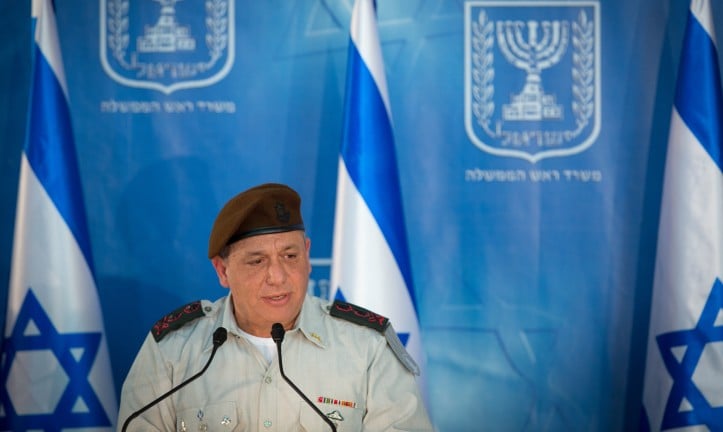
Still, the IDF head noted in his speech that despite short term adherence to the protocols of the nuclear deal, Iran will nonetheless likely work toward obtaining nuclear arms in the next 15 years — the amount of time the country agreed not to enrich uranium beyond low levels. He also said that Iran would most probably intensify its proxy war with Israel through the Lebanese Shiite group Hezbollah and other armed groups, and anticipated that the Islamic Republic would start allocating increased funds to terror groups.
The landmark nuclear agreement between Iran and the permanent five members of the UN Security Council plus Germany (P5+1) reached last July determined that longstanding sanctions against Tehran would be lifted in exchange for curbs on its nuclear program.
Israel strongly opposed the nuclear deal, with Prime Minister Benjamin Netanyahu warning it would not block Iran’s path to nuclear weapons. He also said that lifting sanctions would allow Iran to increase its support to proxy militias in the region, including terror groups such as Hezbollah.
Judah Ari Gross and Ilan Ben Zion contributed to this report.


The Times of Israel Community.