

IDF dismantles West Bank protest tent erected by Diaspora Jews again
Canadian activist briefly held, but let go after protesters agree not to erect structures outside cave village in South Hebron Hills
 Add ToI as a Preferred Source on Google
Jacob Magid is The Times of Israel's US bureau chief
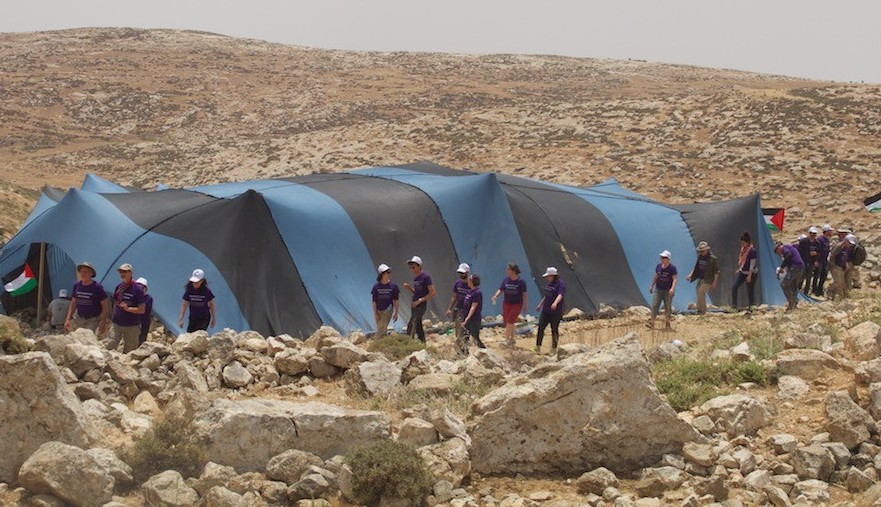
Israeli security forces dismantled a protest encampment built by Diaspora Jewish activists in the southern West Bank Thursday, detaining a Canadian national.
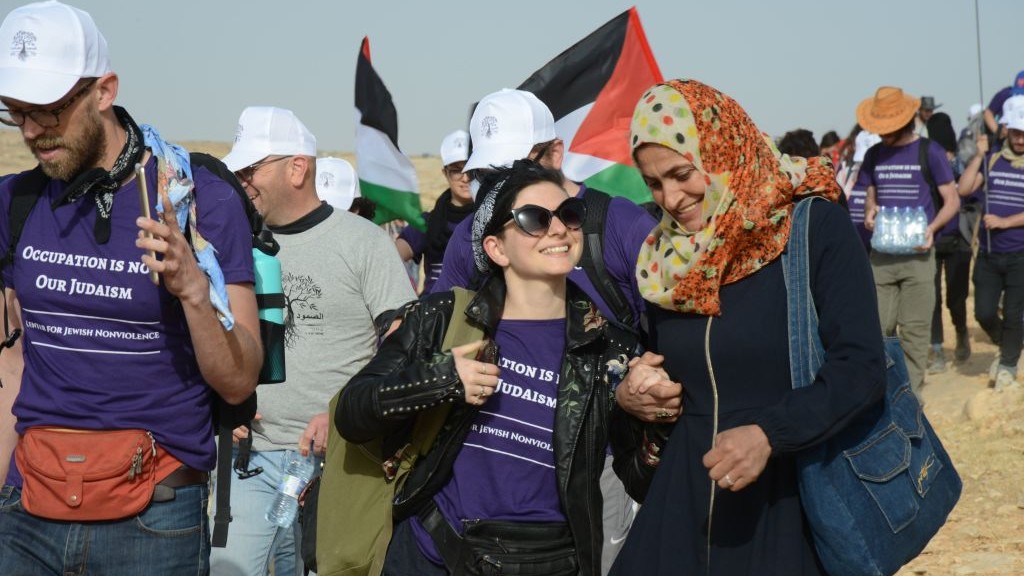
An official from the Center for Jewish Nonviolence, which was among a coalition of organizations that helped build the camp, said forces arrived at the camp near the Israeli outpost of Havat Ma’on in the South Hebron Hills at around 9 a.m.
The army said that the protest camp was ” illegally built” and that this was the second time this week that the activists had tried to erect it.
“We would like to emphasize that the land in question is a military firing zone, where entry is forbidden,” a spokesperson for the Coordinator of Government Activities in the Territories.
The soldiers began tearing down the large tent that had been providing shade to the activists that have been there since last Friday.
About 300 participants, including Israelis, Palestinians and Diaspora Jews built the protest camp early Friday morning last week, and roughly 30 were present during the army raid on Thursday.
The tents were part of the “Sumud Freedom Camp,” which the activists had set up with the goal of reestablishing the Palestinian cave village of Sarura, which Israeli authorities say was located in an IDF firing zone.
[mappress mapid=”6181″]
The activists arrived last week to where the village once stood in an effort to refurbish the caves that once served as homes. The tent structures were erected to provide shade while they worked.
Footage from the incident shows demonstrators pleading with the soldiers to not take down a second tent structure as a number of Palestinian children were still on the roof.
WeAreSumud army arriving to the camp location
Posted by Antwan I. Saca on Wednesday, May 24, 2017
A scuffle broke out as forces dismantled the second tent and Fadel Aamer, who says he was one of the hamlet’s original residents, fell and suffered a head injury, according to activists. He was treated at the scene.
During the melee, forces briefly detained Canadian activist Isaac Kates-Rose, though he told The Times of Israel he was given no reason for being detained.
A military source said that the protesters “arrived to the scene and tried to create physical conflict with the forces in order to disrupt the enforcement.”
“The forces acted in accordance to protocol,” the source said.
To avoid the arrest, the activists struck a deal with soldiers agreeing to take down the second structure in exchange for Freeing Kates-Rose, he said. The soldiers returned the first tent they had dismantled, and the activists agreed not to build structures outside of the caves.
The Israeli forces left the scene shortly thereafter at around 1:30 p.m., while the Palestinian Sarura residents and activists remained.
A similar incident between soldiers and activists took place on Saturday night. Then, forces dismantled the tents, but the demonstrators re-erected them shortly after the soldiers left.
When asked how long the activists intended to stay, Kates-Rose said “until Sarura is reestablished. We’re not defining what that means, but we won’t leave until the families are back in the caves from which they were evicted.”
On Saturday, the activists along with all of the former residents of Sarura plan to gather at the Sumud camp to share an Iftar break-fast together after the first day of Ramadan.
“We will continue to be steadfast in our efforts,” Kates-Rose said. “That’s what ‘Sumud’ means.”




The Times of Israel Community.