

Iranian negotiator says country sticking to guns in nuke talks
In seeming bid to quiet hard-line opposition, Abbas Araqchi says negotiators in lockstep with supreme leader
 Add ToI as a Preferred Source on Google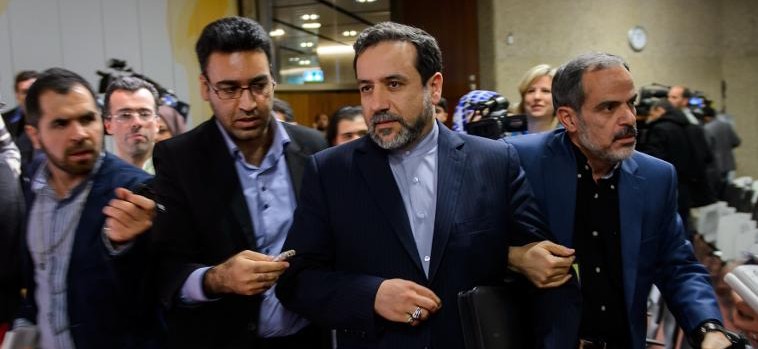
A top Iranian official involved in high stakes nuclear talks said Tehran was remaining firm in its “red lines,” in an apparent bid to calm hardliners amid reports he had said Iran would allow inspectors some access to military installations.
Iran Deputy Foreign Minister Abbas Araqchi also suggested officials were willing to extend a June 30 deadline to clinch a highly sought pact with Western powers, the semi-official Iranian news agency Tasnim reported Tuesday.
Araqchi said that the country’s negotiating team was strictly adhering to the “instructions, frameworks and red lines” set down by the country’s Supreme Leader Ayatollah Ali Khamenei.
The comments seemed designed to put to rest concerns expressed by Iranian hardliners in recent days that Tehran had become too flexible in its drive to reach a deal with six world powers to lift sanctions in return for curbs on nuclear enrichment.
His comments came on the heels of reports that he had agreed to “managed access” to the country’s nuclear sites despite public assurances to the contrary by the supreme leader.
He later denied making such comments.
During a closed session in parliament on Sunday, ultraconservative lawmakers strongly criticized Foreign Minister Mohammad Javad Zarif and Araqchi.
Khamenei said late last week that he would not allow the “interrogation” of the country’s leading nuclear scientists, according to Tasnim.
Araqchi added that Iran would not “sacrifice ‘quality’ for speed,” suggesting that Tehran would push to extend negotiations if they were under pressure to hastily sign a final agreement before the June 30 deadline, moving forward only cautiously in the wake of what he called a “lack of goodwill” by Western negotiators.
Hardliners have been blunt in their criticism of the negotiations and perceived concessions by the country’s negotiating team.
The debate over the nuclear negotiations in Iran reflects a longer-running conflict between conservatives and an emerging school of pragmatism in Iranian politics.
More conservatives have expressed a willingness to reach an accommodation with the United States and other Western powers over the years, including Zarif.
That pragmatism has exposed the current government and its supporters to scorn from hardliners.
“Every few months Zarif is attacked for different reasons. He has already been summoned twice for a hearing at the Majlis (the Iranian parliament) over the past year,” Raz Zimmt, an Iran expert at Tel Aviv University’s Alliance Center for Iranian Studies told The Times of Israel in January. “Iran’s relations with the US are still considered a taboo. The supreme leader may have permitted negotiations with the Americans, but anything beyond concerted talks surrounding the nuclear issue arouses anger.”
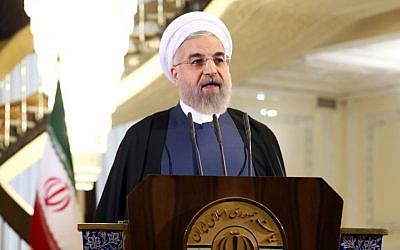
Rouhani has been a major proponent of the talks, defending them again Tuesday from hard-line attacks.
“Despite a small minority that speaks loudly, the vast majority of the population are in favor of peace, reconciliation and constructive agreement with the world,” Rouhani said during a televised speech.
“We are determined to solve our problems with the world through logic, reasoning and negotiation,” Rouhani said, adding that “the strong nuclear negotiating team takes serious steps every day toward protecting the rights of the nation.”
As part of the deal, Iran agreed to stop enrichment at Fordo, changing the facility to a nuclear research center. The preliminary agreement places various limits on Iran’s nuclear program in exchange for an end to crippling economic sanctions.
Following the announcement of the framework deal on April 3, Khamenei’s adviser and editor of the hard-line Kayhan daily, Hossein Shariatmadari, told the semi-official Fars news agency that Iran exchanged its “ready-to-race horse with a broken bridle.”
Another conservative analyst, Mahdi Mohammad, referred to the Fordo underground uranium enrichment facility and told the news outlet that under the deal, “a disaster happened in Fordo.”




The Times of Israel Community.