

Jerusalem’s Barkat vows to calm capital’s violence
Mayor says Israel will crack down on rampant Palestinian unrest following terror attack that left baby dead, eight injured
 Add ToI as a Preferred Source on Google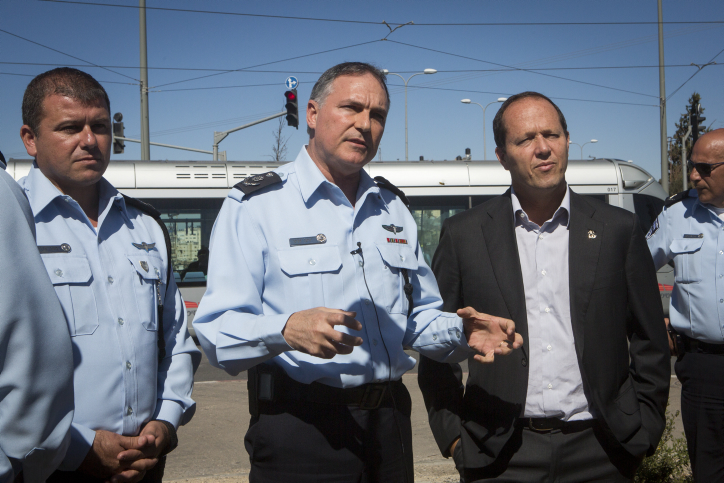
JERUSALEM (AP) — Jerusalem’s mayor on Thursday called for a crackdown against a wave of Palestinian unrest, as police beefed up security after a Palestinian with a history of anti-Israel violence slammed his car into a crowded light rail train station and killed a baby girl.
The attack Wednesday night escalated already heightened tensions in east Jerusalem, the section of the holy city captured by Israel in 1967 and claimed by the Palestinians as their capital.
Since the summer, Palestinian youths have clashed frequently with Israeli police, thrown stones and firebombs at Israeli motorists and disrupted service of the city’s light rail train — a service meant to unify the city.
In an interview, Mayor Nir Barkat said the violence has become intolerable, and he vowed to restore order.
“Yesterday what we saw is another higher level, of people running over a 3-month-old baby,” he told The Associated Press. “We must fight violence and we will win that war.”
Barkat has a particularly sensitive job, presiding over a diverse city that includes secular and observant Jews, an insular ultra-Orthodox Jewish community and more than 200,000 Palestinians. It is a cauldron of conflicting interest groups that frequently boils over into unrest.
The latest unrest has created perhaps the biggest crisis for Barkat, a former high-tech entrepreneur, during his six years in office.
The violence erupted over the summer after three Israeli teenagers were kidnapped and killed by a Hamas-affiliated terror cell in the West Bank. Jewish extremists retaliated by kidnapping and burning to death a Palestinian teenager in east Jerusalem, sparking violent riots.
The unrest continued throughout the summer after Israel attacked Gaza in response to heavy Hamas rocket fire. The arrival of Jewish nationalists into the heart of an Arab neighborhood, coupled with clashes at Jerusalem’s most sensitive holy site, have further fueled the tensions.
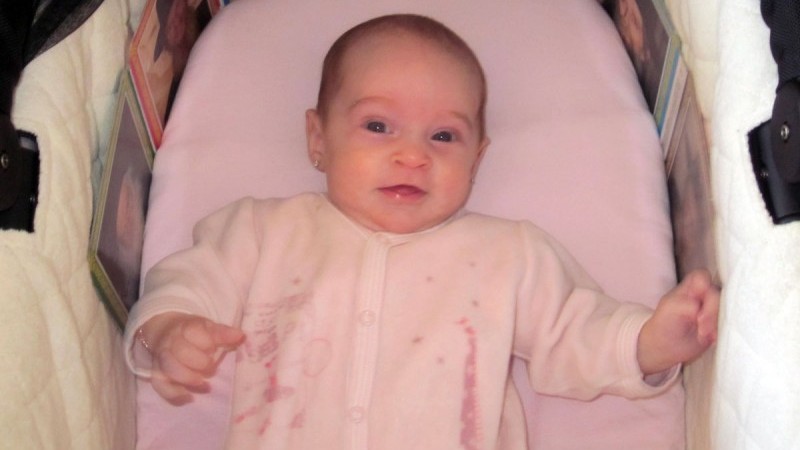
Police called Wednesday’s crash, which killed a three-month-old US citizen and wounded eight other people, a terror attack.
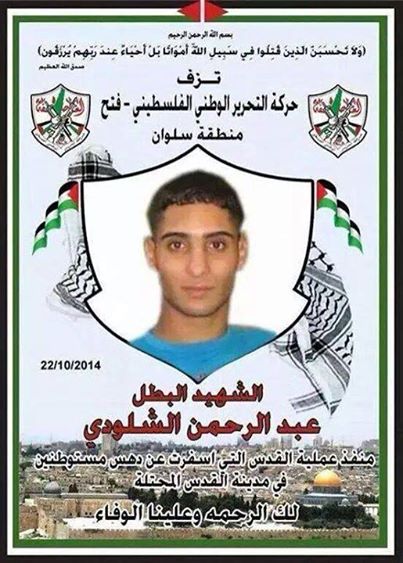
The car’s driver, identified as Abdelrahman al-Shaludi, was a Palestinian from East Jerusalem who had served time in prison for militant activities. He was shot by police as he tried to run away and later died from his wounds.
Police spokesman Micky Rosenfeld said several hundred extra police personnel had been deployed in flashpoint areas, mostly Arab neighborhoods in east Jerusalem. He said the reinforcements included riot-control troops and paramilitary border police.
Also, he said, new intelligence gathering capabilities, including small surveillance balloons, are being deployed. He called the buildup a “strategic decision” connected to the overall situation, not a response to Wednesday’s killing.
Overnight and early Thursday, police broke up unrest in several Arab neighborhoods, Rosenfeld said. No major violence was reported, though authorities were bracing for trouble during Friday’s weekly noon Muslim prayers, a time when clashes frequently erupt.
“We have a peak of terror, and the use of violence in Jerusalem in the last few months,” Barkat said. “We will deal with it and we’ll make sure it’s dramatically decreased, and it’ll happen very, very soon.”
Palestinians say they suffer discrimination when it comes to housing and municipal services, and they consider Israeli actions in East Jerusalem as provocations.
Barkat rejected such suggestions, saying there is no excuse for the violence.
He said he frequently works quietly with Arab leaders to maintain calm, and that many Arab neighborhoods have thrived with new roads and schools during his term by working with municipal authorities. But he said investment can only take place if the city is quiet.
“The majority of Arab residents in Jerusalem, they don’t want the city divided, they understand exactly what they gain by the united city of Jerusalem,” he said. “There’s no way it will ever function, God forbid, as a divided city.”
Copyright 2014 The Associated Press.



The Times of Israel Community.