

Jewish Home will hold budget hostage over outpost evacuation, MK warns
Lawmaker maintains his right-wing faction won’t allow Amona in West Bank to be moved; deputy foreign minister says next person in White House will have to get used to settlements
 Add ToI as a Preferred Source on Google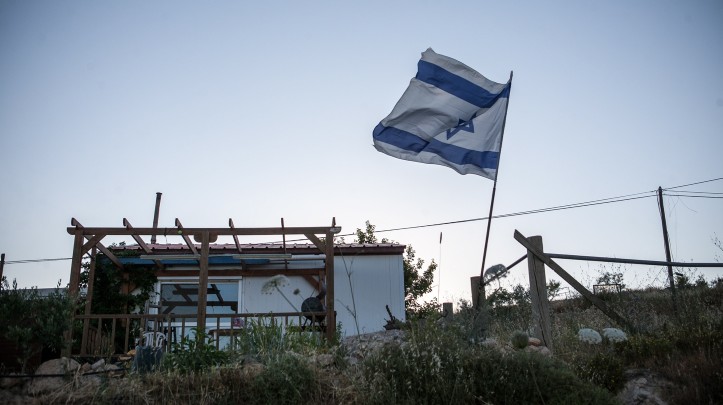
The Jewish Home party will vote against the government’s budget if a court order to evacuate an illegal West Bank outpost goes forward, a Knesset member threatened Monday.
MK Bezalel Smotrich, a back-bencher from the nationalist Jewish Home Party, said his faction would hold the coalition hostage over plans to move the Amona outpost.
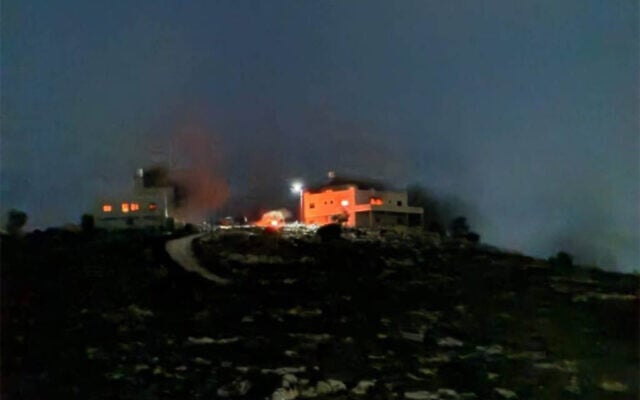
Amona, home to about 40 families, was built on lands privately owned by Palestinians who successfully petitioned Israeli courts for the outpost’s removal.
After repeated delays, the Supreme Court ordered the settlers’ eviction and the demolition of their homes by December 25 this year, and Defense Minister Avigdor Liberman has said it will be cleared out by then.
“If the prime minister understands that approving the state budget depends on an arrangement for Amona, it’s safe to assume that we will see an arrangement being passed,” Smotrich told Army Radio.
“When there is something important to a senior coalition member, it gets passed,” he added, referencing a comment by Prime Minister Benjamin Netanyahu on a separate issue that he passes measures that are important to him.
With eight seats, Jewish Home, considered close to the settlement enterprise, would have the ability to fell the governing coalition of 66 MKs, and party leader Naftali Bennett has conditioned his faction’s continued participation on other pet issues in the past.

Last month, Israeli settlement watchdog Peace Now said that Liberman’s Defense Ministry was working to transplant Amona residents to confiscated Palestinian land a few meters from the present site, effectively legalizing the rogue outpost.
“We proposed a lot of alternatives and I hope we can find an option that the Amona settlers will also accept,” Liberman said earlier this month.
Army Radio reported Monday that right-wing activists begun drafting a plan to bring some 15,000 people to the Amona site in December to disrupt evacuation efforts. It did not say if any specific group was behind the effort and Smotrich denied any knowledge of the plan.
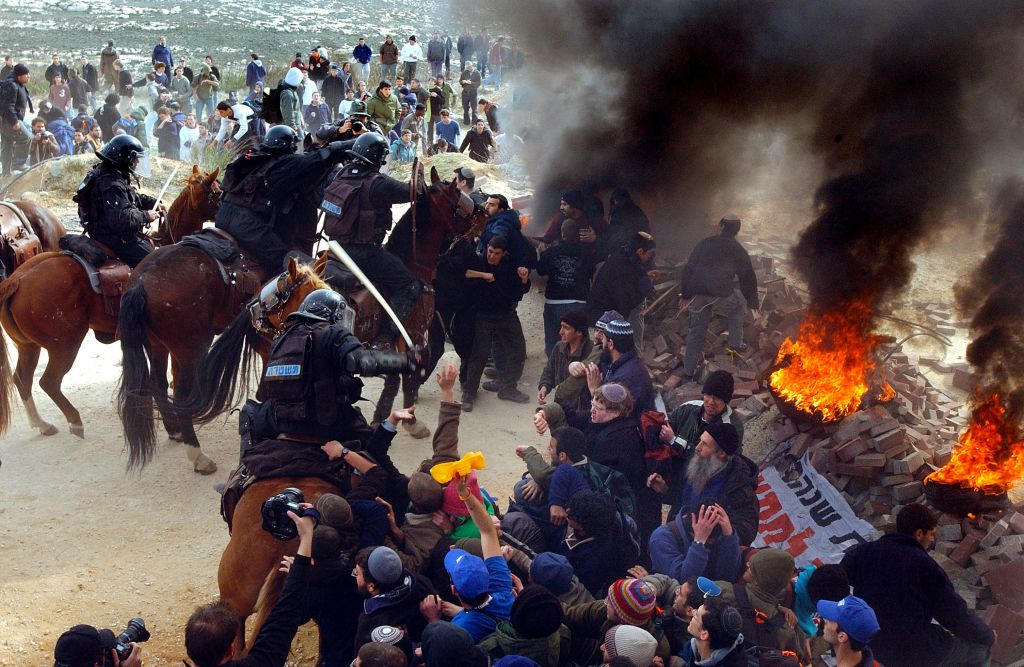
A 2006 operation to demolish several homes in Amona was met with violent resistance by thousands of activists who massed at the site.
While Prime Minister Benjamin Netanyahu has resisted international calls to halt settlement building, his governments have complied in the past with court orders to evacuate a number of other outposts and settlement neighborhoods.
‘Settlements will not be evacuated’
Deputy Foreign Minister Tzipi Hotovely said Monday that the government would not pull settlers out of the West Bank and the next US administration would have to “get used to” Israel’s West Bank settlement enterprise.
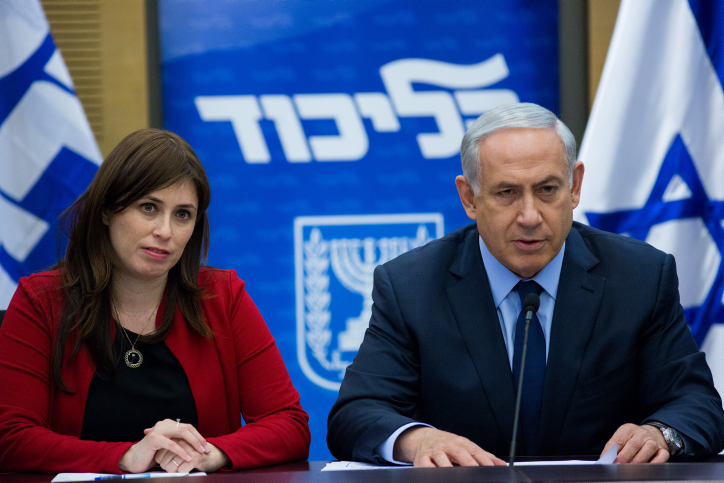
The comments to Israel Radio came on the heels of a controversial video released by Netanyahu last week in which he claimed Palestinians wanted to “ethnically cleanse” Jews from the West Bank. The video drew quick rebuke from Washington, who called the terminology used by the prime minister “inappropriate and unhelpful.”
“The next US administration — whether it’s [Hillary] Clinton or [Donald] Trump — will start to get used to the idea that the settlements will not be evacuated under Netanyahu,” she said.
She called the evacuation of settlers under a deal with the Palestinians a human rights issue and praised Netanyahu for bringing it to the table.
“For years, we’ve been talking about the human rights of the other side, of the Palestinians, but not the rights of Jewish settlers,” she said.
No Jews. pic.twitter.com/QgGJoqjz9D
— Prime Minister of Israel (@IsraeliPM) September 9, 2016
“We’ve said there is a disagreement between us and the US government, but this will be resolved in negotiations,” she added.
While the hawkish Trump has made comments generally supportive of settlements, Clinton is widely expected to continue the policies of the current administration of pursuing a halt in settlement activity while pushing toward a peace deal.
On Friday, Netanyahu, posted an online video asking whether people in other parts of the world would accept such demands for the removal of a specific ethnic group in their own countries.
It’s “outrageous that the world doesn’t find it outrageous,” Netanyahu said, urging viewers to ask themselves whether they would accept “a territory without Jews, without Hispanics, without blacks” in their nation. “Since when is bigotry a foundation for peace?” he asked in English.
Falling in line with their political allegiances, coalition Knesset members came out in support of Netanyahu’s remarks, saying he “spoke the truth,” while opposition members accused him of distorting reality and further driving a wedge between Israel and the United States.
However, Netanyahu’s comments were likely to put a damper on a new push for talks with Palestinian leader Mahmoud Abbas.
Hotovely said Netanyahu’s comments did not contradict his theoretical support for a two-state solution and accused the current Palestinian leadership of being “unwilling” to pursue negotiations.
“We find ourselves in a reality where [Palestinian Authority President] Mahmoud Abbas has refused to sit down and talk about peace negotiations,” Hotovely said.
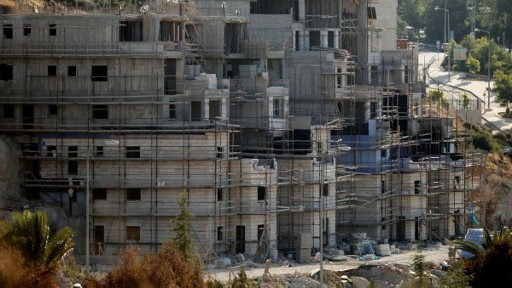
But in response to the video, the Palestinian Authority on Sunday demanded the international community take action against Israeli settlement activity, while senior Abbas aide Saeb Erekat charged Netanyahu’s remarks proved he had “crossed every red line with his egregious and blatantly unethical remarks that flout international law.”
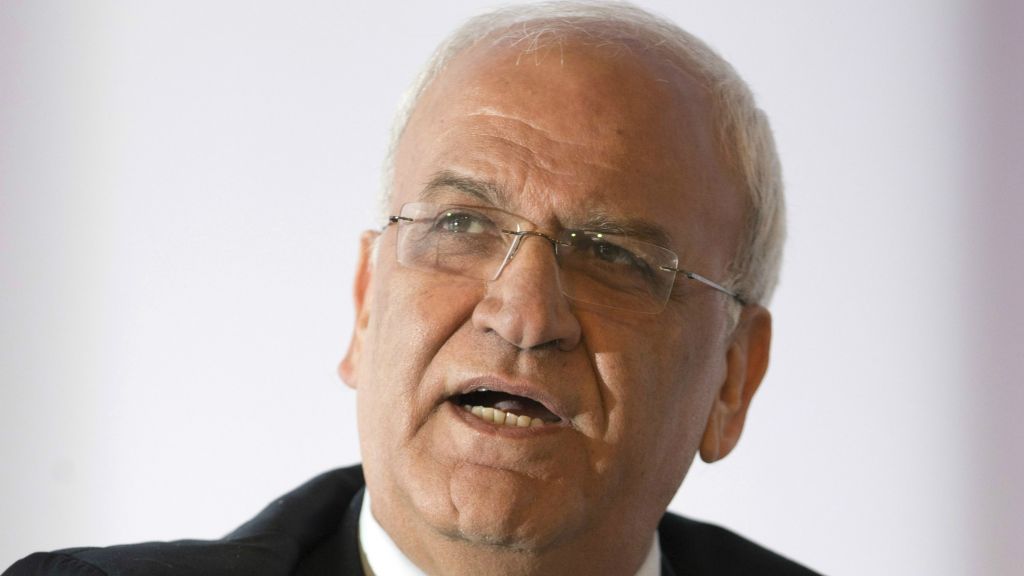
“The whole world knows who is destroying the two-state solution,” Erekat said, referring to the Netanyahu administration, which he called a government “by the settlers, for the settlers in the settlements.”
The International community considers Israeli building in the West Bank and East Jerusalem illegal. Jerusalem argues the status of West Bank settlements is subject to a final peace deal with the Palestinians.
Israel began building settlements in the West Bank after it captured the territory, previously controlled by Jordan, in the 1967 Six Day War. Today, over 350,000 Israelis live in West Bank settlements and outposts and another 200,000 in East Jerusalem, which Israel considers part of its territory.
Israel has thus far avoided a resolution in the UN Security Council against its settlements due to a US veto. There is speculation, however, that US President Barack Obama may not continue to utilize such a veto to defend Israel as his term in office winds down.



The Times of Israel Community.