

Live updates (closed)
 Add ToI as a Preferred Source on Google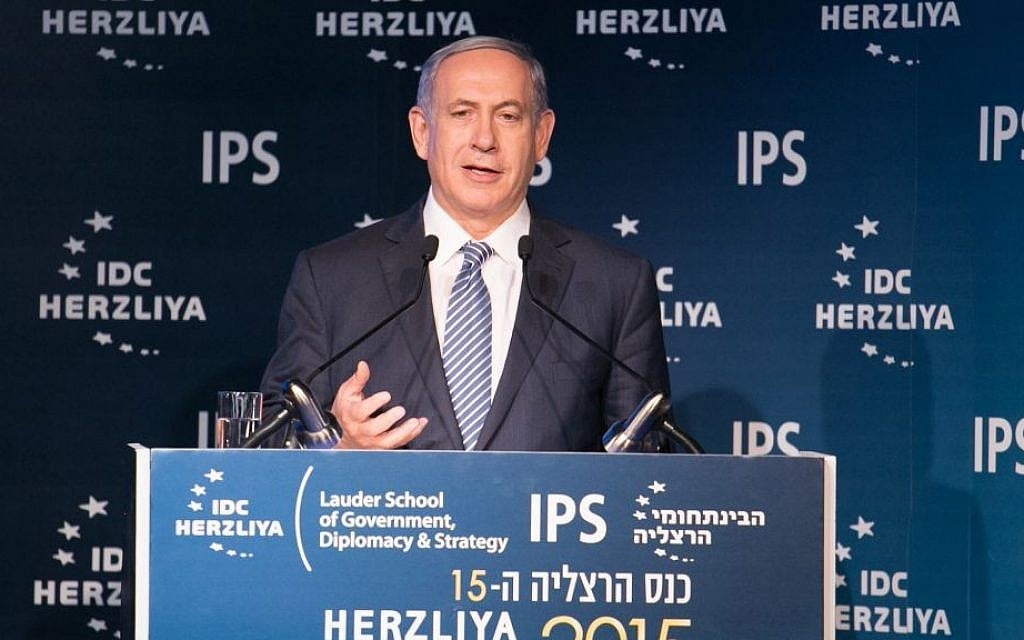
The Times of Israel live blogged Tuesday’s events as they unfolded.
Syrian dead include 838 Hezbollah fighters
Syria’s brutal conflict has left more than 230,000 people dead including almost 11,500 children since it broke out in 2011, a monitoring group says.
The Britain-based Syrian Observatory for Human Rights says it has documented the deaths of 230,618 people.
The toll includes 69,494 civilians, among them 11,493 children and 7,371 women.
Combatants account for a majority of those killed, with 49,106 regime forces and 36,464 government loyalists among the dead.
The loyalist fighters killed were mostly members of local militias, but also included 838 from Lebanon’s Shiite movement Hezbollah and 3,093 Shiite fighters from other countries.
The Observatory documented the deaths of 41,116 rebels, Syrian jihadists and Kurdish fighters.
Anti-regime foreign fighter deaths numbered 31,247, most of them jihadists.
— AFP
Egypt court sentences 11 to death
A Cairo court hands death sentences to 11 defendants in the deaths of more than 70 people during a soccer match at the Port Said stadium three years ago, Israel Radio reports.
The verdict was transferred to the Egyptian mufti, who has final say on whether the execution will be implemented.
The riot erupted during a match between the El Masry and El Ahly clubs on February 1, 2012. Seventy-two people were killed and more than 500 injured in the altercations that ensued, when El Masry fans attacked fans of the opposing team.
Regev heckled during speech in south
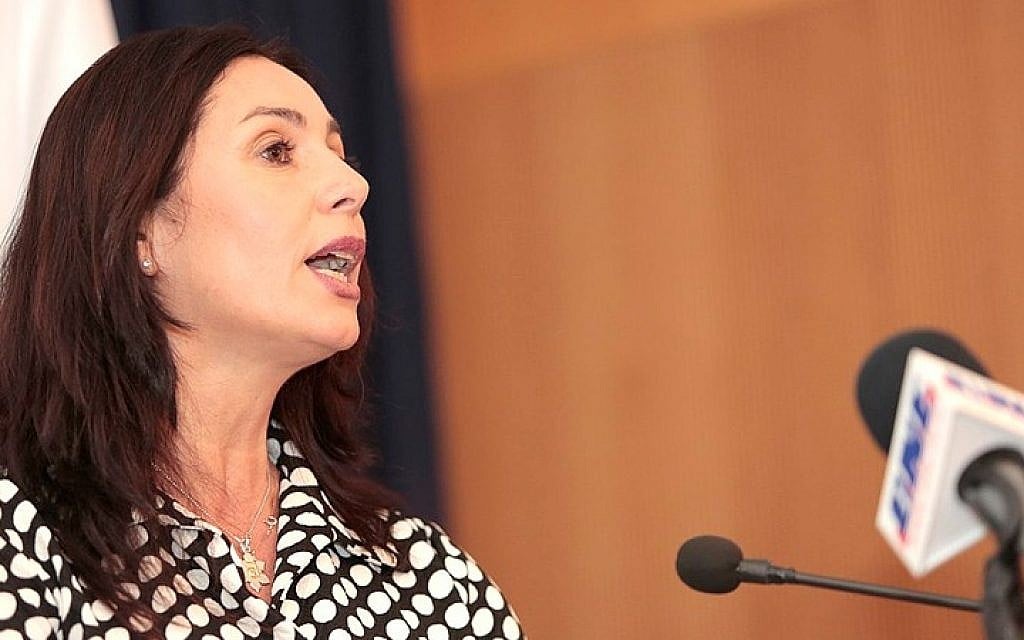
Culture Minister Miri Regev was disrupted during a speech she made during the Darom cinema festival taking place at the Sderot cinematheque.
The heckler was none other than Aner Preminger, a prominent lecturer at the Sapir College’s School for Voice and Screen Art.
Regev went on stage to speak ahead of the screening of shorts directed by graduates of the school and was interrupted by the professor, who was applauded by students supportive of his views. Sderot Mayor Alon Davidi, who was present, tried to restore calm and at one point security guards even approached Preminger in order to allow the minister to continue her speech uninterrupted, NRG reported.
Speaking to the Hebrew website, Preminger explained his actions: “I did not unplug her mic or not let her speak. I said the duty of culture is to really allow everyone to sound their voice and the minister, in what she said, actually blocked some of the voices, and this is what I see as so serious.”
“Censorship starts when people are afraid. She is actually saying: you will receive funding, but don’t delegitimize [Israel]. If a person makes movies and starts being afraid, is it delegitimizing or not? Lecturers are going to start being afraid of what they say and what they avoid saying during class. As soon as she says these things she doesn’t understand what pluralism means,” he continues.
Regev for her part said, “I am happy to see what is happening here. This is pluralism, pluralism that will be expressed in Ariel, in Kiryat Shmona, Nazareth and Sderot. We will support those who do not delegitimize the State of Israel. With all honor to the professor, those who want support from the Culture and Sports Ministry should not delegitimize the State of Israel.
The festival lasts for five days, and has been taking place since 2002.

Minister of Culture and Sport Miri Regev, May 17, 2015. (Yonatan Sindel/Flash90)
Shaked says West Bank companies not illegal
Justice Minister Ayelet Shaked says that “the entire government… and the international department at the Justice Ministry [are] fighting against a series of organizations who would like to hurt Israel, its independence, prosperity and just path.”
In her address at the Herzliya Conference, Shaked says, “A mistaken and misleading international media campaign is taking place these days, creating the impression that doing business with Israeli companies operating outside the Green Line is illegal. This argument is fundamentally mistaken, as time after time it was decided in different judicial bodies in multiple countries around the world that companies conducting business in the West Bank do not violate international law.”
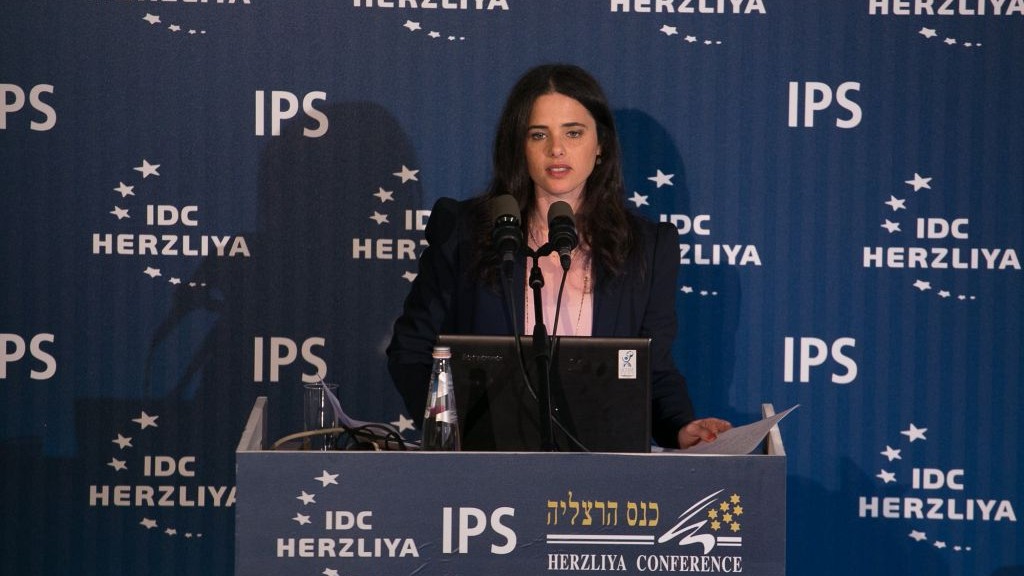
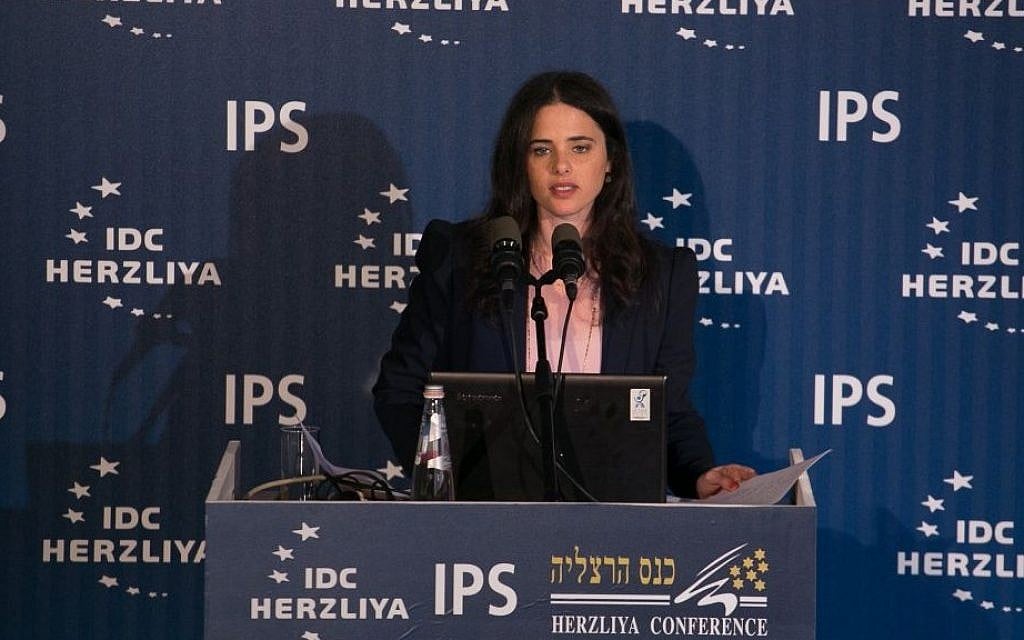
Justice Minister Ayelet Shaked speaking at the Herzliya Conference on Tuesday, June 9 2015. (Erez Harodi/Herzliya Conference)
Regev threatens to pull Jaffa theater’s funding
Culture Minister Miri Regev writes on Facebook she may withdraw funding from a Jaffa theater where Arab-Israeli actor Norman Issa is a co-manager after the actor says he will not perform in a Haifa Theater production scheduled to take place in the Jordan Valley because the venue is beyond the Green Line.
“I was disappointed to hear the actor Norman Issa’s statement this morning saying that he would not appear in the Haifa Theater’s play ‘Boomerang’ in the Jordan Valley,” Regev writes on Facebook.
“Issa’s decision does not exemplify the coexistence that he believes in and swears by. If Norman does not go back on his decision, it is my intention to reevaluate the ministry’s support of the Elmina theater, which operates under his management.”
Issa says in response that over the last 24 hours he has been the victim of “an unfair witch hunt,” according to Haaretz. “I am an Israeli Arab, married to a Jewish woman and raising a great family. My wife and I devote our entire lives to realizing coexistence among Jews and Arabs and to this end we also established the theater in Jaffa. You cannot expect me to go against my conscience and agree to perform in places which are controversial. This issue is not new and the problem was solved years ago in all theaters in Israel when it was decided that in any play, when an actor, whether Jewish or Arab, is unwilling to perform due to conscientious reasons, they can be replaced with a substitute actor.”
Issa adds that he told the Haifa Theater more than four years ago that for this particular performance he should be replaced but the exchange did not take place. “The pressure against me verges on blackmail. It is not fair… Don’t make me act against my conscience just to remove this threat,” he says.
The Elmina Theater says in response: “We have no reason to believe the Culture Minister Miri Regev will prevent subsidies from the Elmina Theater NGO – a multicultural theater for Jewish and Arab children withstanding all criteria justifying state support. This is a nonprofit organization, and its credo is that an experience of theater jointly enjoyed by Jewish and Arab children without prejudice is capable of generating a shift in societal consciousness.”
‘Israel must work to increase int’l support’
Outgoing Foreign Ministry director general Nissim Ben Shitrit says Israel has few friends around the world and the government should strive to change this fact.
Speaking at a ceremony marking his departure and welcoming incoming director general Dore Gold, Ben Shitrit says, “We have few friends and supporters around the world. A policy to increase their number must be formulated. There is no left and right in the Foreign Ministry, only patriots ready for any mission.”
Gold, who takes over from Ben Shitrit, served as Israel’s envoy to the UN in the 1990s and was a diplomatic adviser to Prime Minister Benjamin Netanyahu.

Foreign Ministry Director Nissim Ben-Shitrit, October 16, 2014. (Yonatan Sindel/Flash90)
Opposition lends hand to ‘disciplining’ Hazan
Opposition chairman Isaac Herzog agrees to a request by Knesset Speaker Yuli Edelstein (Likud) to refrain from taking advantage possible absences of MK Oren Hazan from Knesset votes.
Hazan has made headlines over the past 24 hours after a Channel 2 exposé alleged he dealt in pimping and substance trafficking in Bulgaria. Earlier today, Edelstein told Hazan, who is a deputy Knesset speaker, that he is suspended from chairing sessions at the Knesset until further notice. Fearing Hazan may try to blackmail the coalition by threatening absence from crucial votes – a real threat considering the Likud-led coalition is only 61-MK strong in a 120-member Knesset – Edelstein asked Herzog to have one opposition MK absent any time Hazan skips a vote.
Edelstein is seeking to preempt any retaliation by Hazan following efforts by Likud to discipline him.
Herzog’s assent is criticized by his party. An unnamed Zionist Union MK laments to Haaretz: “How come we’re helping Netanyahu keep his seat? This move is like missing a kick in front of an empty goal. For weeks we talk of our intention to be a fighting opposition and in the moment of truth we fold and give Netanyahu breathing space.”
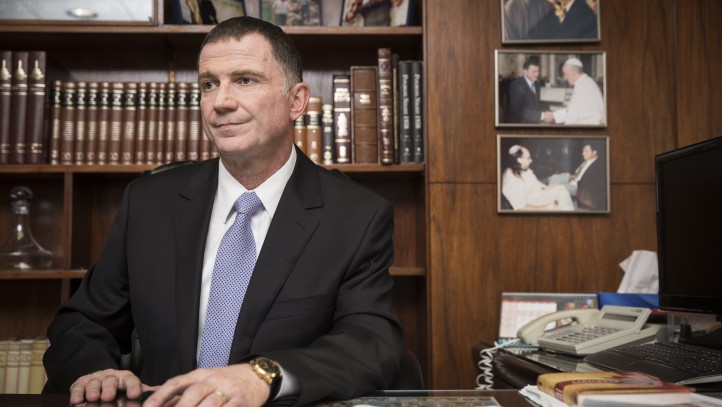
Knesset Speaker Yuli Edelstein in his office at the Knesset on April 15, 2015. (Hadas Parush/Flash90)
EU working on West Bank product label rules
European Union officials say the 28-nation bloc is preparing new guidelines that would require Israel to label products made in West Bank settlements if they are exported to Europe.
One of the officials says the EU’s foreign policy chief, Federica Mogherini, told European foreign ministers last month that work is “underway” and that a set of guidelines will be “finalized in the near future.” The officials spoke on condition of anonymity Tuesday because they were discussing internal EU affairs.
While the work is expected to take several months, it is the latest sign of international discontent with Israeli construction of settlements on lands claimed by the Palestinians. It also comes at a time when a grassroots movement promoting boycotts, divestment and sanctions against Israel is gaining steam.
— AP
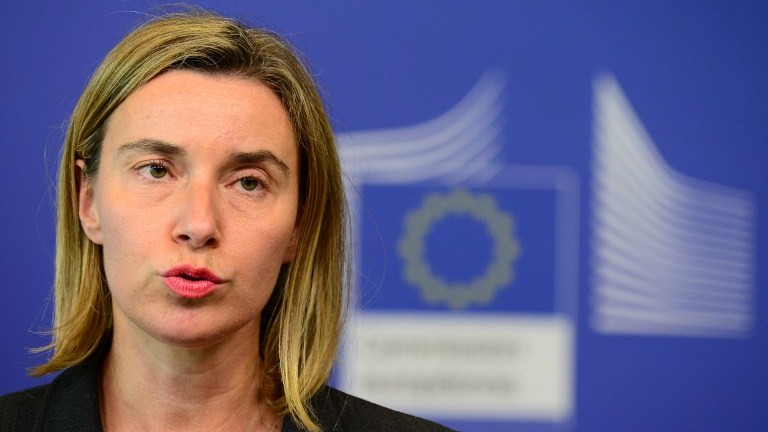
EU foreign policy chief Federica Mogherini at EU headquarters in Brussels, May 27, 2015. (AFP / JOHN THYS)
Edelstein says ‘Knesset dignity more important than Hazan’
Knesset Speaker Edelstein explains his decision to suspend MK Oren Hazan from running plenum sessions, emphasizing that the “public atmosphere” created in the wake of a Channel 2 report on Hazan’s alleged conduct in his past life as a hotel and casino manager makes it impossible for Hazan to continue functioning in his role as deputy chairman.
“In the public atmosphere created,” Edelstein says, the decision to suspend Hazan came “from ethical and moral considerations, not criminal ones.”
“The Knesset is more important than him and more important than me and its dignity is precious,” says Edelstein.
Meanwhile, Meretz leader Zahava Gal-on tells Channel 2 that she supports Zionist Union leader Isaac Herzog’s decision to “equalize” votes with the coalition if Hazan decides to be absent from important votes, but still criticizes the fact that no coalition or Likud MK, including the prime minister, has come out publicly in condemnation of Hazan’s alleged misconduct.
Channel 2 also reports that associates of Hazan “threatened” Edelstein.

Zahava Gal-on during a Knesset meeting (photo credit: Miriam Alster/Flash90)
Cop killed in Jerusalem motorcycle accident
Sergeant First Class Shachar Shafrir, 27, of the police’s anti-terror unit was killed in a motorcycle accident near Jerusalem.
A friend of Shafrir who was riding along was moderately injured and taken to Shaare Zedek Hospital in Jerusalem, Israel Radio reports.
Friend of Hazan says he’s a ‘pathological liar’
A former friend of scandal-embroiled Likud MK Oren Hazan, appearing on Channel 2 with a blurred face and distorted voice, recalls times in Burgas, Bulgaria, where Hazan had “marijuana and crystal meth and we sniffed it.”
Asked whether Hazan also partook, the man says “yeah, totally.”
“I can say with certainty that I remember one case where I was sitting with a guy… actually two guys, one of them came to Oren really naturally and asked – ‘can you get me a girl for tonight?’ and Oren was like ‘yeah, consider it done’,” says the man, who adds that he is willing to take a lie detector test.
“Everything that drives Oren Hazan is this swagger: ‘I’ll take care of you, I’ll take care of everything’,” he recounts.
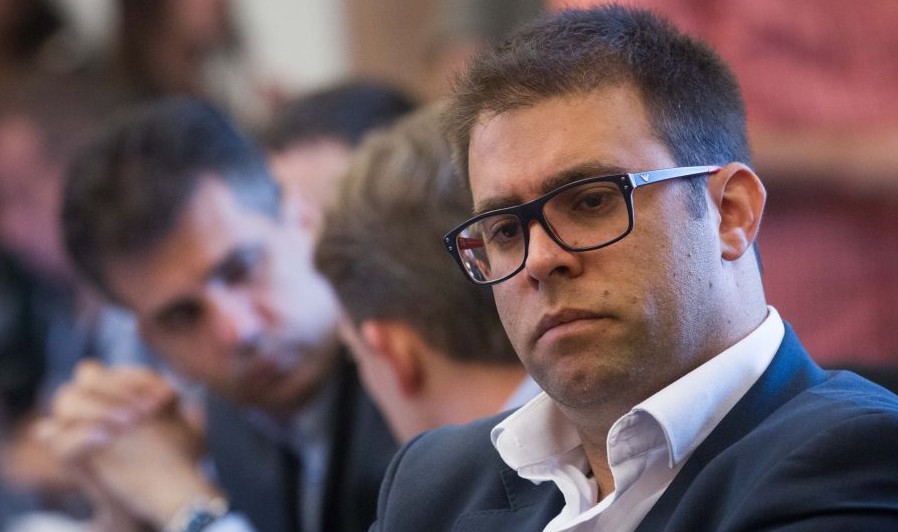
Likud parliament member Oren Hazan attends a Finance Committee meeting in the Knesset on June 8, 2015. (Photo by Miriam Alster/FLASH90)
He says he was deeply hurt by Hazan’s behavior, and without going into details says “many more” people were hurt by his conduct. “He hurts people in the most disgraceful, lowly way possible… What they say about him now is only the tip of the iceberg.”
Asked about Hazan’s denying the details of the report on his conduct, the man says “he is lying, everyone who knows him knows it’s an inseparable part of his personality, he’s a pathological liar. I think he even believes his own lies because he can be quite convincing.”
Ya’alon cannot see ‘peace deal in my lifetime’
Defense Minister Moshe Ya’alon says he does not see a stable peace agreement between Israel and the Palestinians “in my lifetime” and says the long-held belief that the Israeli-Palestinian conflict is the generator of instability in the Middle East has been debunked by reality.
Speaking at the Herzliya Conference, Ya’alon says that the Palestinians have taken a stance of refusing any draft of a diplomatic arrangement offered to them.
Speaking about Iran’s policy, Ya’alon says Tehran is acting determinedly to take over the entire Middle East. Iranian missiles can reach any point in Israel as well as most of Europe, says Ya’alon, adding that Iran is working to develop missiles that could reach the United States.
The defense minister again criticizes the deal planned to be signed between the world powers and Iran, calling it a bad deal that would make Iran a nuclear threshold state. Ya’alon warns that the deal would drive the Middle East to a nuclear arms race and that removing sanctions against Tehran would make it easier for the Islamic Republic to support terror organizations. Ya’alon said cooperation between Israel and the US on security issues deepened recently, in light of Iran’s regional aspirations.
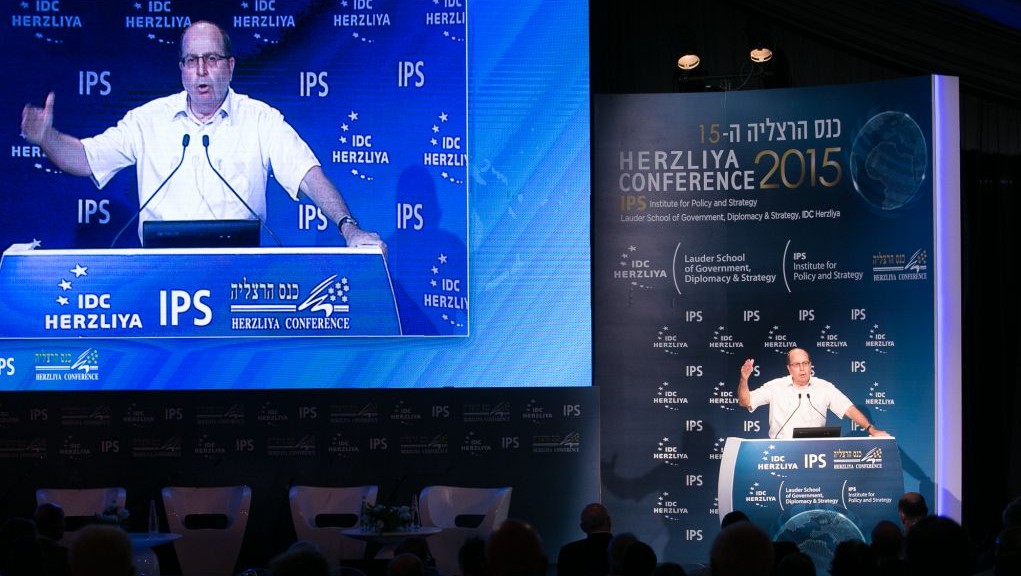
Defense Minister Moshe Ya’alon speaks at the Herzliya Conference, on Tuesday, June 9 2015. (Erez Harodi/Herzliya Conference)
Ya’alon: Terrorists in Syria could draw Israel into fight
Defense Minister Moshe Ya’alon has met with US Gen. Martin Dempsey, chairman of the Joint Chiefs of Staff, and tells him that Israel could be drawn into Syria by the large number of terror groups operating there.
There are currently some 30 terror groups active in Syria, he tells Dempsey, according to Israel Radio.
The groups are not threatening Israel at the moment but this can change any day, and if it does, the IDF will strike them forcefully, says Ya’alon.
Dempsey is visiting Israel with his wife. He landed in the country yesterday.
Barak calls on gov’t to take risks for peace
Former prime minister Ehud Barak urges the government to be proactive on the peace process and says that, as a regional superpower, Israel should not be afraid to take risks, while always acting from a position of strength and self-confidence.
“Ben-Gurion was going to accept the partition plan” in 1947, Barak reminds the audience at the Herzliya Conference. “Three cantons, connected by hardly a shoelace, and with no access to Jerusalem,” as Barak describes the plan. “In today’s government,” he says dryly, “some ministers would call Ben-Gurion a naïve and weak leader.” And yet, the achievements of the fledgling IDF in the War of Independence are still internationally acknowledged, “even as Israel’s territory at the end of the war exceeded the details of the partition plan.”
“Israel is the strongest country in the region and should be strengthened more. If we act correctly, it will also be the strongest from a diplomatic point of view,” the former prime minister and chief of staff says. “Because of this, [Israel] can to change reality from a position of strength and self-confidence, even while taking risks.
“We exist and will exist here forever not by the privilege of being powerful, but from the power of having this privilege. The right over this land is ours and no power in the world will take it from us,” he says. “But the physical borders in which a political nation fulfills its right are a different thing.”
Barak urges his audience to “open the Carta Atlas,” a famous atlas published in many editions over the years, and “see the accordion-like movement” of the borders of the Judean and Hasmonean kingdoms of biblical times.
“There was a Divine Promise then too, but the physical borders are determined by geostrategic reality,” Barak says.
Calling on the government to take risks even when factors on the ground are shifting, Barak says there will never come a time when “everything is predetermined,” and says that even though some in the government have in the past complained about the Obama administration, including Secretary of State John Kerry and Vice President Joe Biden, “you must remember that eventually they are part of the solution, not part of the problem.” The audience applauds.
PM at Herzliya conference recounts ‘threats, challenges and opportunities’
Benjamin Netanyahu is speaking at the Herzliya Conference as the keynote address for the closing of the major policy confab.
He begins by saying the region is full of “threats and challenges” but also affords opportunities.
Netanyahu recounts meeting with Google executive Eric Schmidt, quoting Schmidt as calling the country a “world digital powerhouse.”
“He said to me, There is no place like Israel anywhere in the world and a great thing is happening here,” says the prime minister.
‘No security without economy,’ says Netanyahu
Netanyahu says the economy needs to be strong and lauds his own moves to champion deregulation that allowed the Israeli economy to prosper.
“Everything we did, to open the currency through the reforms in the capital market, by doing away with barriers in competition … to housing, it’s all connected.” says Netanyahu, adding that the country needs to continue growing at the same pace it has in last decade.
A strong economy is necessary for the protection of the country, says the prime minister. “There is no security without economy,” he says.
We are looking east for trade — Netanyahu
Netanyahu talks about the country’s trade pivoting eastward to China and Japan, as well as new opportunities opening in India.
The prime minister discusses the good ties he enjoys with new Indian Prime Minister Narendra Modi, even boasting that Modi “tweeted in Hebrew” to congratulate him on winning the election.
PM calls for digital revolution as economic catalyst
Netanyahu, citing Schmidt, says Israel’s ability to drive innovation is not a vision for ten years, but for 50 years.
He adds that roads and rails must be built to support economic growth, but says the digital revolution is also important, and calls for everybody to be linked up — every Arab and Druze village — more quickly.
“In order to complete this revolution we have to connect every child in Israel, every family, to tomorrow, which is already the present,” he says. The government, he adds, is investing great sums in education.
Netanyahu vows not to give in to ‘populist pressure’ on gas
Addressing the recent finds of gas offshore, Netanyahu says Israel “received a huge gift from nature.”
“This is a land of milk and honey — and gas,” the prime minister quotes a folk song, modifying it. The audience chuckles.
He says he will not surrender to populist pressures regarding how to exploit the natural resource, which is of “huge importance” to the state of Israel.
The prime minister says the guidelines being drafted these days provide the correct balance between rights and giving investors incentive to drill for gas. “The alternative is that both sides will lose out and the gas will remain beneath the waters.”
“I don’t accept that it will happen here,” he says, adding that the draft will be presented in a few days.
Israel should ‘drive wedge in heart of boycott calls,’ says Barak
“We live at a fascinating historical intersection. Israel finds itself in the meeting point of Huntington’s war of civilization, while at the same time we are at the eye of the storm between the factions, and the rise of a new anti-Semitism,” Barak says at the Herzliya Conference.
“This is a reality with many challenges but also many opportunities,” says Barak. The threat of the Boycott, Sanctions and Divestment campaign has “at once” become central, with “FIFA, Orange, Oxford and the Vatican.” Barak says he has been warning about the “diplomatic tsunami” Israel faces “for four years or more, but not in order to say that I was the one who warned first.”
“The prime minister,” Barak notes, “said that no matter what Israel does, they [the BDS activists etc.] will always fight,” since their fight is not about Israel’s policies but the sheer existence of Israel as a Jewish state.
Barak says the prime minister’s view “is indeed true about the ayatollahs in Qom, it is true about Nasrallah, it is probably true about Hamas and about the hard core of the BDS movement… but it is not true about Merkel, it is not true about Cameron, it is not true about Obama and it is not true about Putin.”
“Our main job,” adds the former prime minister, “is to drive a wedge between the dozens of leaderships of the free world and the hard kernel of BDS. Close your eyes and imagine – I know it’s hard — a government headed by Herzog, Lapid and Kahlon. Even more – imagine a government headed by Rabin. Does anyone have a doubt that this wave [of calls for boycott] would not have risen?” asks Barak.
“A government working with determination to separate from the Palestinians would automatically pass the onus [for the failure to make progress] to the Palestinians,” says Barak.
Israel can defeat Islamic State, Netanyahu says
Shifting to foreign policy, Netanyahu says states are collapsing all around Israel; they don’t exist the way they did in the past.
He says Israel can defeat the Islamic State terror group, which he says is not a threat, since it does not compare to the real Islamic State — namely Iran.
‘Iran will go after Israel, then everyone else’
On Iran, the prime minister says Iran has unlimited ambitions, and wants to eradicate Israel and then continue onwards.
He calls the Tehran regime a special challenge, since it has five “arms” it is using to “engulf the Middle East.”
Iran more dangerous than IS — Netanyahu
Speaking out against the emerging deal between Iran and the US-led world powers, Netanyahu says the danger is not that the Iranians will break the deal, but that under its terms they can continue to grow their nuclear program.
He says they have “mountains of yellowcake” and in a short time they can create the core for an arsenal of atomic bombs.
He worries about the prospect of Islamic State getting the bomb, but says Iran is more dangerous than the terror group.
‘Iran arming groups around Mideast’
Netanyahu accuses Iran of arming groups all around the Middle East with weaponry for use against Israel.
He accuses Tehran of having a terror network through its proxies in 30 countries on five continents. He says this danger is growing from “day to day.”
He points to a recently exposed Hezbollah cell in Cyprus, one of whose alleged members was found with bomb materiel, and says there is tons more of that going around.
Iran deal will give them money, PM warns
The prime minister warns that Iran has advanced weapons, including UAVs and submarines, and says they can do things extremely fast.
But he says “Iran has a problem,” namely insufficient funding for its projects.
He says the emerging nuclear deal awards them the money they need, not less than $150 billion.
“So from the moment those sanctions will be removed, then their cash box will be replenished with billions of dollars — that will refuel all their violent acts and intentions.”
‘Bulgaria asked to keep Hazan away from bilateral ties’
The Oren Hazan scandal leads the main TV news broadcasts.
After Likud MK Hazan threatened Channel 2 with a libel suit over a report aired on Monday evening that alleged he took hard drugs and supplied prostitutes while running a casino in Bulgaria, the station fights back with more details on this evening’s news.
A photocopy of a contract in Hebrew about the operation of a casino is shown, while a status from Hazan Facebook page from several years ago, presumably written by Hazan himself, says “a new casino was opened in Burgas, in Sunny Beach[…] with [option] for transportation to and from the casino 24 hours a day[…] And all the amenities guests require. We will be happy to see you among our guests.”
It also quotes from an email in which Hazan signs himself as the “CEO”.
In the past, Hazan said he never managed a casino but rather a hotel “in which there was also a casino.” Hazan further maintained that the casino was managed by a person he had no contact with.
Channel 2 is adamant that the casino in question is not inside a hotel, and that the hotel in question has been run by the same management for over 20 years — not by Oren Hazan.
According to Channel 1, meanwhile, soon after the swearing-in of the Knesset, a Bulgarian official contacted Israeli officials and asked that Hazan not be involved in any relations between the two countries.
Iran won’t give up terrorism, Netanyahu warns
Switching back and forth between English and Hebrew, Netanyahu dismisses as “wishful thinking” the notion that Iran will give up international terrorism after a nuclear deal is sealed with world powers.
“According to this deal, Iran gets this big money regardless of its behavior,” he says.
Nobody in Mideast likes Iran nuke deal, Netanyahu says
“The deal will spark both a nuclear and a conventional arms race in many countries in the most unstable part of the planet. It won’t make Israel safer,” Netanyahu says.
The PM says he speaks with “quite a few of our neighbors, more than you think,” and says nobody around here thinks the deal will block Iran’s path to the bomb.
He notes that nobody from the region except Iran is directly involved in the nuclear talks.
“The states with the most at stake are not even in the room,” he laments.
‘Iran must act normal to be treated normal’
Netanyahu says he spoke to Jack Lew, the US Treasury official booed by Israel supporters at a conference recently, and said people should disagree respectfully.
He also thanks the White House for its support.
Netanyahu says he told Lew: “If Iran wants to be treated like a normal country, it must act like a normal country.”
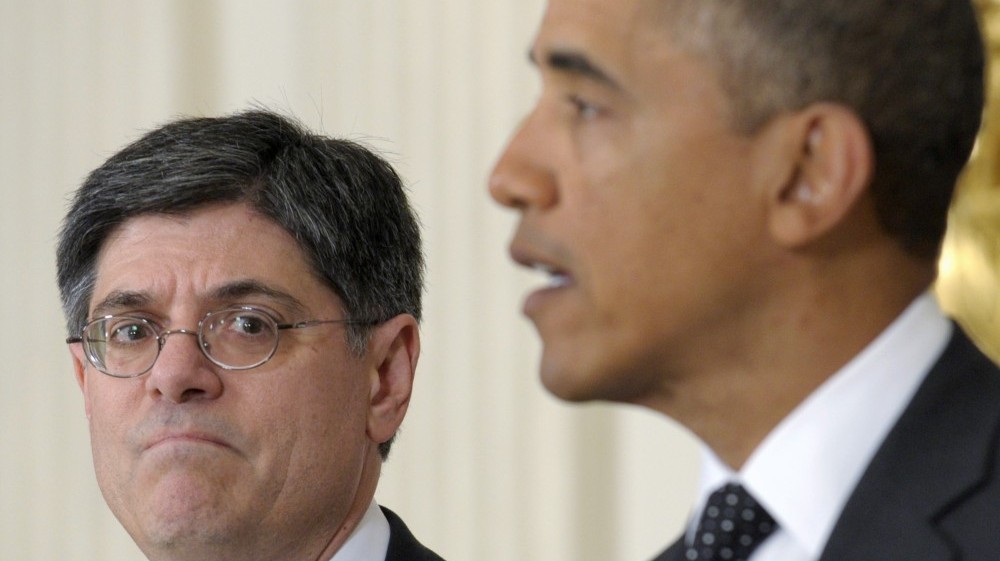
Jack Lew with President Barack Obama in the White House (photo credit: AP/Susan Walsh, File)
PM: Shifting sands present opportunities
The trepidation of Sunni states regarding Iran on one hand and ISIS on the other creates a change and a potential for cooperation, perhaps even to resolve the problem we want to resolve with the Palestinians, says Netanyahu.
I don’t think [resolving the Palestinian conflict will fundamentally] change the Middle East, he says, and it won’t affect terror groups or Iran, but it will affect us.
He says he remains committed to the principle of two-states for two peoples, to mild applause.
PM underlines Israel’s security concerns regarding West Bank
Switching in detail to the Palestinian issue, Netanyahu says the demand that the Palestinians recognize Israel as a Jewish state is not a precondition for renewed negotiations, but a basis for a lasting peace.
Netanyahu says security concerns must be addressed, and warns of the potential for terror tunnels to be dug between Kalkilya in West Bank and Kfar Saba, outside Tel Aviv — presumably in the event of Hamas and/or extremist forces gaining control in the West Bank.
“Who will ultimately guarantee that those tunnels are not dug? Who will go in and stop it?” he asks, referring to a situation in which Israel did not maintain the overall security control upon which he insists.
Netanyahu says stopping weapons smuggling in the Jordan Valley is not the prime problem, but rather the Palestinians making their own weapons.
Demilitarizing Palestinians a major issue, PM says
Netanyahu says demilitarizing the West Bank is not a small issue, and defends his security concerns as not excuses but real imperatives. He says negotiations are needed to achieve an agreement with mutual recognition and viable security arrangements.
“What’s going to happen on the other side of the border” if Israel pulls out, he asks? “Another terror state, 20 times the size of the Gaza Strip, touching on our soft belly,” he answers.
PM calls on Abbas to return to talks without preconditions
Netanyahu says he’s been trying to speak substantively to Palestinian leader Mahmoud Abbas for six years, but Abbas only wants more settlement freezes.
Recalling 2009-2010, when he froze settlement building, h says he only got six hours of talks, for 10 months of freezes.
“I call on President Abbas to return to talks without preconditions,” he declares.
International approach drives peace away, Netanyahu charges
Netanyahu says bitterly that the Palestinians gain little by talking, so why should they. They get recognition for there not being negotiations, he complains. “There are those who [seek to] impose terms in the UN Security Council because there are no talks,” he says, referring to efforts to impose terms for Palestinian statehood on Israel, and accuses those who back those efforts of pretending there are no dangers.
He says that approach drives peace away, since Israel will resist it, and it encourages the Palestinians to stay away from the bilateral negotiating table.
He expresses hopes that the Palestinians will change course, but says the recent Palestinian turn to ICC, to try to bring war crimes cases against Israel, is “ominous.”
‘Israel extended its hand over and over again’
Netanyahu says Israeli supporters, and supporters of justice and truth, should unite against war crimes effort at the ICC, which he says is “bad for peace.”
“There might be an opening because some of the Arab states silently agree with what I say, because they might be in a position to influence the Palestinians to adopt a more conciliatory and positive approach,” he suggests.
He says Israel has extended its hand for peace “time and time and time again.”
Netanyahu says negotiations need to be deep and serious and need to be buttressed; it will not be easy.
“It makes sense from the point of view of Israel to negotiate a real deal of a demilitarized Palestinian state that recognizes the state of the Jewish people.”
He warns Gaza is one factor that can inflame region. “We don’t want the region to ignite, but we are always preparing.”
Israel not making too much of BDS, Netanyahu says
Netanyahu touts Israel’s humanitarian effort in Gaza, and says 800 trucks a day regularly go into the Strip.
“I think its important that as many people in Israel unite to fight distortions and slanders,” he says, switching gears to the anti-Israel boycott movement.
He says he does not think Israel is making too much of the “threat,” without mentioning the name of the BDS movement.
‘Country must speak with one voice’
Netanyahu calls on the country to unite, says Israelis agree on a lot more than meets the eye, and the country needs to speak with one voice.
“We’re not going to get another chance from history, this is it,” he says, referring to tensions with Washington and why he risked the relationship to speak to Congress earlier this year.
“On the big things we need to tell the world, and we hope to get the message through,” he says.
Fight against militant Islam will take decades — Netanyahu
The prime minister says eventually goodness will prevail over darkness, but warns again of “radical regimes getting weapons of mass death.”
“In the long-run, militant Islam will succumb to forces of modernity but it will take many decades,” he says, adding that meanwhile, we need to make sure millions don’t die.
Netanyahu says it’s possible to fight the threat, if we are clear-eyed, resolute and strong, make alliances and “look reality in the eye.”
He adds that everybody needs alliances.
The Rivlins host special needs Masa students
First Lady Nechama Rivlin hosted ten special needs students from the ‘Onn School’ in Tel Aviv, who are taking part in a tailor-made ‘Masa/Journey Israel’ project for students requiring special assistance and/or the use of wheelchairs.
“I am very pleased to host you here. Out of all the honored guests from Israel and around the world, that come to sit in this very room, I am deeply honored to meet with you, and pleased that you chose to end your journey here at the President’s Residence,” Rivlin told the students.
At the end of the meeting, the First Lady gave each of the students a badge with the Israeli and presidential flags. Before they left, they were joined by President Rivlin, who welcomed and congratulated them.
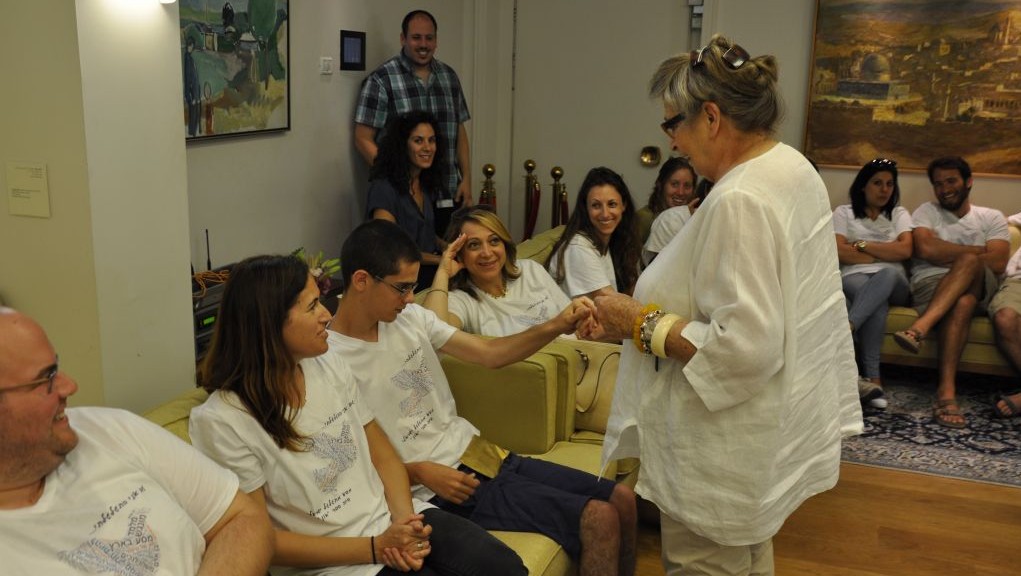
First Lady Nechama Rivlin shakes hand with Omar Lahat from Shoham, one of the students on a special ‘Masa/Journey Israel’ project for students requiring special assistance. (President’s spokesperson)
‘Israel must be strong,’ prime minister says
“Israel must be strong, it must be very strong; no one will make peace with a weak Israel,” Netanyahu says.
He also says the country must be wise.
He alludes to “bridge building” with neighbors, which is delicate but can ramp up in coming years. He calls on these neighbors to help with Palestinian issue.
Lastly, he says Israel must be confident. “Israel’s values stand out like a beacon in the dark Middle East,” he says.
He paraphrases writer George Elliot, who said “a state will shine the light of freedom against the despotism of the Middle East,” or something like that.
He points to ways Israel is unique in upholding values and helping others, even against violence and even when the country is defamed.
“We uphold universal values in a region where those values have been shunted aside, trampled in the dust,” he says.
He then ends his speech with a paean to the light Israel is, to mild applause.
IDF arrests Hebron doctor for transferring funds to Hamas
The IDF and the Shin Bet security service arrested over the weekend a physician in a village near Hebron on allegations that she was involved in transferring funds to Hamas.
Sabrin Abu Shrar, 26, was in residency at the Alia Hospital in Hebron. She was arrested in the village of Dura and is currently being questioned, Israel Radio reports.
White House briefing evacuated by secret service
The US Secret Service evacuates the White House following an undisclosed threat.
The evacuation came in the middle of a press briefing by Press Secretary Josh Earnest, USA Today reports.
Reporters were moved across West Executive drive, beside the Old Executive Office Building.
Earlier today, Capitol Police evacuated the Dirksen Senate Office Building after a phoned-in bomb threat there. No bomb was found.


read more: