

Kerry to leave nuke talks as Iran ponders next step
Iranian FM said to mull new proposal from Washington ahead of Monday deadline; French, British FMs also leave talks
 Add ToI as a Preferred Source on Google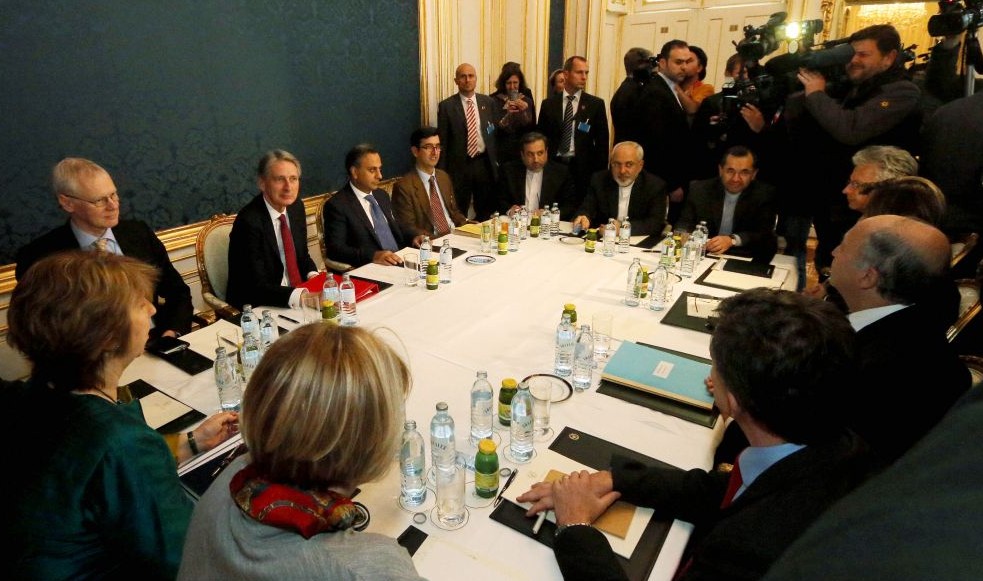
VIENNA — US Secretary of State John Kerry decided Friday to pull back from nuclear talks in Vienna, leaving Iran’s foreign minister to ponder an apparent new proposal from Washington meant to bridge differences standing in the way of a deal with less than four days to deadline.
Iranian officials and media initially said Foreign Minister Mohammad Javad Zarif was also departing Friday, to Tehran to consult after meeting with Kerry earlier in the day. But the official IRNA news agency later quoted an unidentified Iranian nuclear negotiator in Vienna as saying Zarif was staying “and the talks will continue.”
The negotiator was quoted as saying that ideas proposed by the Americans were not yet ripe enough to warrant Zarif’s trip. It was unclear whether he planned to fly to Tehran later, before Monday’s deadline for a deal.
Kerry was heading for Paris. A US statement said his “future travel schedule is still being finalized, and we have not yet determined when he will return to Vienna.” That suggested that he was waiting to see whether there was enough momentum to warrant him rejoining the talks.
The statement said he would be consulting with “European counterparts” in Paris.
Diplomats said French Foreign Minister Laurent Fabius and British Foreign Secretary Philip Hammond were also leaving the Vienna talks after arriving earlier in the day.
Hammond said Friday that Iran had a “huge” amount to gain if it could show sufficient flexibility and agree to a nuclear accord with world powers.
“The prize for Iran is huge — access to very large amounts of frozen assets, the ability to trade freely with the world again and the ability to reset relationships with the international community,” he said as he arrived in Vienna to join the talks.
“We have a long way to go if we are to get to a deal before the deadline on Monday…It’s clear that both sides want to try to get a deal done, but none of us want to do a bad deal,” he told reporters.
“And we’re very clear that we have to get more flexibility from the Iranians. In return, we’re prepared to show some flexibility on our side. Time is short. We’re up against a deadline,” he said. He added: “I’m a realist, I hope. We’ve got a very short amount of time. What we’re all focussed on now is trying to get the key principles of a deal agreed over the next 72 hours so that we can meet that important deadline.”
Russian Foreign Minister Sergei Lavrov said that “all the elements” were in place to reach an agreement on the Iranian nuclear program.
“The task of diplomats now is to correctly put together a package,” Lavrov told journalists in Moscow after discussing the talks with visiting Saudi Foreign Minister Prince Saud al-Faisal.
The Russian diplomat called for the negotiators to “show political will so that the result is based on the balance of interests, and is not subjected to attempts at the last minute to haggle something beyond what is realistic.”
“I am proceeding from the assumption that in the end common sense and the aim to reach a compromise on this long-standing problem will after all prevail,” Lavrov said.
Expectations are growing that the Monday deadline for a full deal will be missed because of differences on how much Iran needs to reduce the size and scope of key nuclear programs. Both the Iranians and the six world powers negotiating with them must soon decide whether to go beyond Monday or adjourn to a later date. They may also opt to end negotiations, but that is unlikely.
Officials from the US, Russia, China, Britain, France and Germany are seeking to reduce the potency of Iran’s nuclear program and slow its technical ability to produce atomic weapons. Iran denies seeking such arms, but is negotiating in pursuit of relief from international sanctions.







The Times of Israel Community.