

Kerry to meet with European counterparts for Iran briefing
Top US diplomat bound for London to discuss ongoing nuclear talks; France remains strongly opposed to phased lifting of sanctions
 Add ToI as a Preferred Source on Google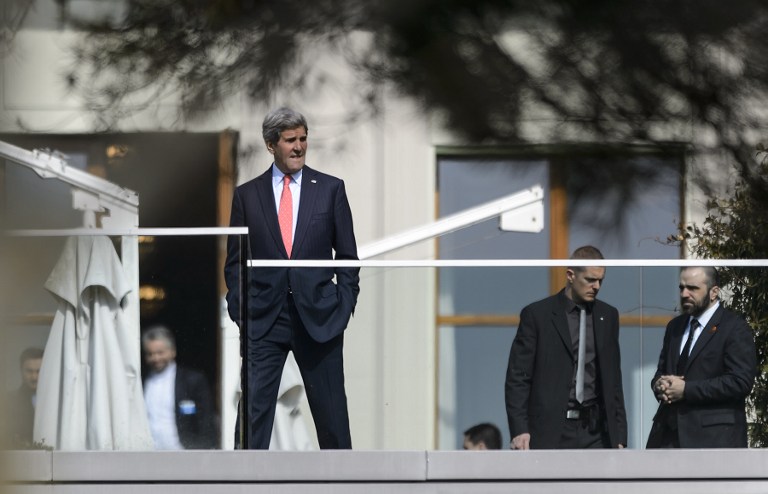
US Secretary of State John Kerry was set to meet with his European counterparts in London later Saturday for a briefing on the Iran nuclear negotiations, which were cut short Friday when the Iranian delegation headed home following the death of President Hassan Rouhani’s mother.
The US’s top diplomat was expected to discuss strong reservations expressed by France for a phased lifting of sanctions on Iran before a deal is reached. Paris would like to see only a symbolic easing of punitive measures until an agreement is inked, according to reports.
US President Barack Obama called French President Francois Hollande on Friday to discuss the disagreement between the two allies.
The presidents reaffirmed their commitment to a deal “while noting that Iran must take steps to resolve several remaining issues,” the White House said in a statement.
Almost from the get-go, France has taken the tougher line on an Iran deal, insisting on significant concessions from Tehran in the framework of an agreement.
French diplomats have been pressing their counterparts not to give in on key elements, such as the easing of sanctions before serious progress is made, and arguing that an upcoming deadline was an “artificial” date, the Wall Street Journal reported. The P5+1, France argues, should be willing to press Tehran for a better deal and wait, if necessary.
Talks are set to resume next week, according to Iranian officials, only five days before a March 31 target date for a political framework.
The State Department confirmed Friday that talks would restart on Wednesday.
Earlier Friday, Iran and the six world powers were meeting to attempt to iron out their remaining differences over Iran’s nuclear program.
Obama appealed to Tehran Friday to seize a “historic” opportunity and begin a “brighter future”.
In a Nowruz (Persian New Year) video address, Obama said that a “reasonable nuclear deal… can help open the door to a brighter future for you, the Iranian people.”
“I believe that our nations have a historic opportunity to resolve this issue peacefully — an opportunity we should not miss,” added Obama.
In an apparent response, Iranian Foreign Minister Mohammad Javad Zarif said it was the other side that had to make a decision.
“Iranians have already made their choice: engage with dignity. It’s high time for the US and its allies to choose: pressure or agreement,” Zarif wrote in a message posted on his official Twitter account.
Iran and the six world powers — the US, China, Russia, Britain, France and Germany — were seeking to agree on the outlines of a deal by March 31 after more than a year of negotiations.
The mooted agreement, due to be finalized by July, is aimed at convincing the world after a standoff now in its 13th year that Iran won’t build nuclear weapons under the guise of its civilian program.
The highly complex deal would likely involve Iran reducing in scope its nuclear activities, allowing ultra-tight inspections, exporting nuclear material and limiting development of new nuclear machinery.
In exchange, Iran, which denies wanting nuclear weapons, would be granted staggered relief from the mountain of painful sanctions that have strangled its oil exports and hammered its economy.
Negotiators missed two deadlines last July and November for a deal but the pressures in Washington — where Republicans are teeing up new sanctions legislation — all but rule out a new extension, experts say.
Both Kerry and Zarif on Thursday spoke of “progress” in the talks, but both sides have said that there remain considerable gaps still to bridge.
In earlier indications of a building deal, officials told the AP Thursday that the United States and Iran were drafting elements of a deal that commits Tehran to a 40-percent cut in the number of machines it could use to make an atomic bomb. In return, the Iranians would get quick relief from some crippling economic sanctions and a partial lift of a UN embargo on conventional arms.
Agreement on those details of Iran’s uranium-enrichment program could signal a breakthrough for a larger deal aimed at containing the Islamic Republic’s nuclear activities.
AP and AFP contributed to this report.








The Times of Israel Community.