

Mired in Syria, Hezbollah still eyed warily by Israel
A decade after the punishing Second Lebanon War, the terror group is still Israel’s ‘main enemy,’ but is seen as too busy in Syria to launch a new conflict
 Add ToI as a Preferred Source on Google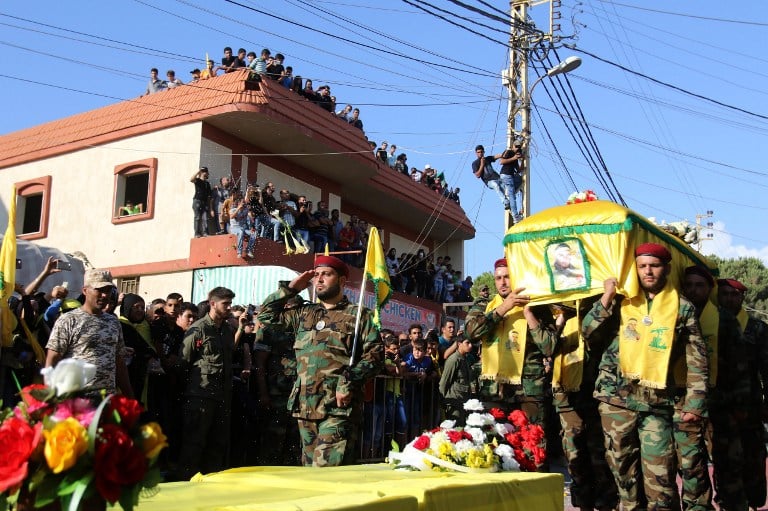
Israel this week marks a decade since its 2006 war with its “main enemy” Hezbollah, but the armed Lebanese group’s involvement in Syria has made another conflict less likely for now.
The war sparked by Hezbollah’s capture of two Israeli soldiers on July 12, 2006, is viewed negatively in Israel, with analysts saying there was a lack of a clear strategy.
Chief of Staff Gadi Eisenkot, who was head of operations at the time, posted an open letter on Sunday paying tribute to the troops involved, and also saying lessons had been learned.
“The threat from Lebanon still exists and contains many challenges, and necessitates the (Israeli military) to be prepared for any scenario,” Eisenkot wrote.
Earlier this year, he described the Iran-backed Hezbollah, which Israel labels a terror group, as Israel’s main enemy, and deputy chief of staff Yair Golan said in April that the Shiite militia’s improved capabilities were worrying.
Israel’s military believes Hezbollah has between 100,000 and 150,000 short- and medium-range missiles and rockets, as well as several hundred long-range missiles, with the medium-range missiles capable of reaching Tel Aviv.
But now the group’s focus is on the war in Syria where it is fighting in support of President Bashar Assad.
It has sent thousands of fighters to help regime forces battle rebels and jihadists.
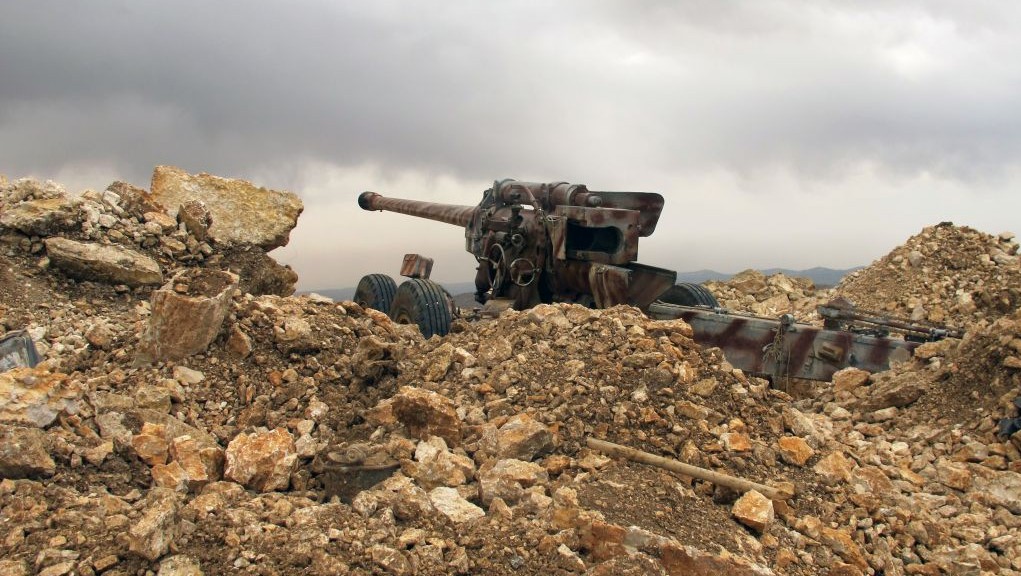
“For now, Hezbollah’s attention is on Syria,” said Phillip Smyth, an adjunct fellow at the Washington Institute for Near East Policy.
“It’s hard for them to open another front against a markedly superior foe like the Israelis, especially as they have to deal with fighting a multitude of foes across Syria.”
There are concerns, however, over whether Hezbollah could benefit from its fighting experience in Syria, becoming more battle-hardened and knowledgeable after having fought on the same side as Russia, which also backs Assad.
Jonathan Spyer, director of Israel’s Rubin Center for international affairs research, said the likelihood of another conflict with Hezbollah was low until the Syrian war ends.
But he also noted that “Hezbollah remains committed to the destruction of Israel” and that the militia is “much stronger now than it was back in 2006.”
Amid the chaos in Syria, Israel has acknowledged attacking dozens of convoys there that were transporting weapons destined for Hezbollah.
Israel occupied parts of Lebanon for 22 years until 2000, with Hezbollah claiming credit for its withdrawal following persistent guerrilla attacks, and the two countries are still technically at war.
The 34-day conflict in 2006 led to the deaths of 165 Israelis, including 44 civilians, and nearly 1,200 people in Lebanon. Israel claims that more than half — between 600 and 800 — of the Lebanese killed in the fighting were terrorists, while Hezbollah asserts that only 250 of its members died in the war.
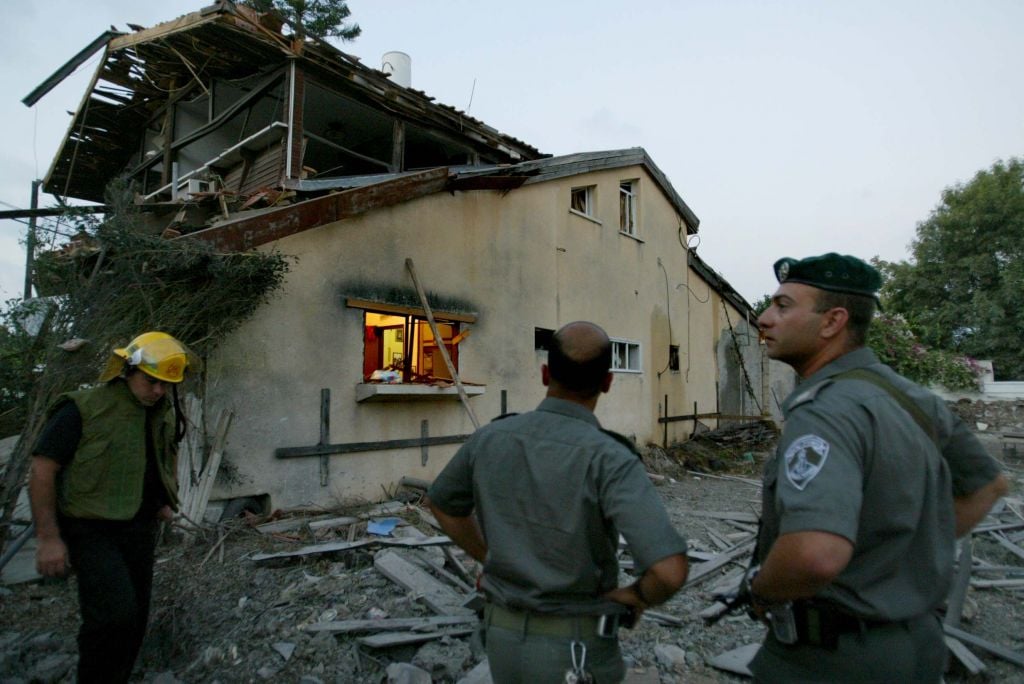
During the 34-day conflict, Hezbollah fired thousands of rockets into northern Israel. In response, the IDF carried out multiple airstrikes, artillery shellings and ground attacks against Hezbollah launch sites and infrastructure.
Many people in Israel considered the massive ground and air war on Lebanon to be a failure because it did not halt Hezbollah rocket fire or recover the two captured soldiers.
“I think it’s still viewed as a blemish on the IDF for not being prepared for it,” said Efraim Inbar, director of Israel’s Begin-Sadat Center for Strategic Studies, referring to the Israeli military.
“A lot of confusion at the highest echelons in the military. And also the political strategic leadership failed,” he told AFP.
But as the years have passed, some in Israel have adopted a more forgiving view, noting the relative quiet along the Lebanese border even before the Syrian war began in 2011 and drew in Hezbollah, said Spyer.




The Times of Israel Community.