

Mom-and-pop stores extol ruling shuttering stores on Shabbat
But some cry foul at court decision to force Tel Aviv to more strictly enforce law putting kibosh on Saturday shopping
 Add ToI as a Preferred Source on Google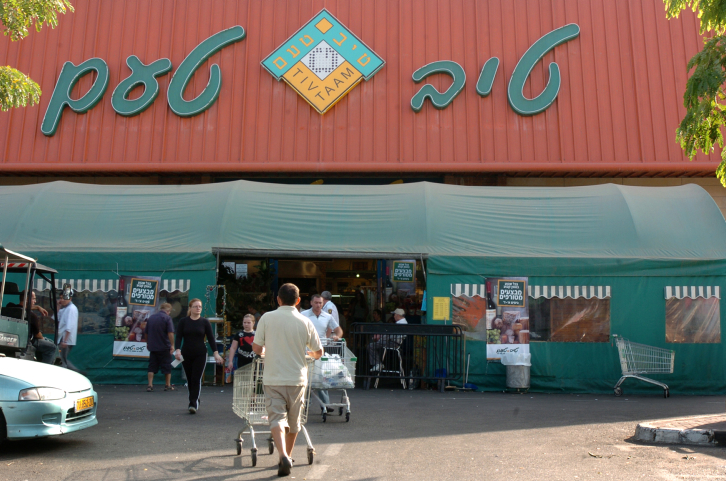
Small grocery stores in Tel Aviv celebrated after the Supreme Court ruled Tuesday that the municipality’s policy of fining supermarkets that remain open on Saturdays is ineffective in keeping them shuttered.
The plaintiffs in the case, a group of small corner-store owners, had claimed that the token fines levied against larger chains for remaining open did nothing to enforce the law against keeping shops open on Shabbat.
Kobi Berner, a small grocery store owner who led the six-year legal campaign against the municipality, which, he argued, was squeezing mini-marts out of business, spoke of his relief at the decision.
“We began the campaign against a number of shops that were open on Saturday and today there is a plague of 24-hour supermarket chains,” Berner told Maariv.
While the ruling was roundly supported by Knesset members, some in Tel Aviv cried foul over the imposition of religious rules in what is considered the country’s secular heart.
“I came to Tel Aviv to from Beersheba to live in an open city,” consumer Omer Dvir told the Yedioth Ahronoth daily newspaper. “Part of the fun of city life is being able to buy things at any hour.”
Berner, who heads the Forum of Grocery Stores and Mini-marts in Israel, spearheaded a group of several local grocery store owners that petitioned against the municipal practice of levying fines against stores that stayed open on Saturday.
According to the plaintiffs, large grocery chains like Tiv-Ta’am and AM:PM could easily absorb the fines while smaller shops could not afford to pay them. In addition, he explained, everyone needs a day off from work. Unlike the supermarket chains that have a large pool of staff to rotate, he was needed every day to keep his store open.
“We felt that the municipality was specifically harassing small businesses, and we would get endless fines that we had to pay,” Berner said. “That was a feeling that they were trying to get us out of the market.”
Since it is against the law in Israel to operate retail businesses starting sunset on Friday and throughout the Jewish Sabbath, businesses that remain open are frequently forced to pay a token fine of several hundred shekels. The plaintiffs in the case argued that this unfairly discriminates against small businesses.
Cafes, cinemas, bars, and other leisure sites are not included in the law.
On Tuesday, Supreme Court President Justice Asher Grunis, his deputy Miriam Naor and Justice Elyakim Rubinstein overturned a 2007 ruling by the Tel Aviv Magistrate’s Court that rejected an appeal by small businesses and the local merchants union, who argued that the fines issued to offenders put smaller businesses at a disadvantage.
The court gave the Tel Aviv municipality 60 days to decide how it intends to enforce the laws that prohibit trading on Saturday, the Jewish day of rest.
Lior Kamchazi, one of the owners of the City Market chain, told Voice of Israel radio that consumer habits dictated they stay open on Saturday.
“It’s clear we would rather rest on Shabbat, but that’s the problem. The consumers will run to open places and then get used to going there.”
The Tel Aviv municipality said it would study the response but would continue to be an “open city.”
The decision drew support from across the political spectrum, though a number of MKs said the issue of religious influence on secular life needed to be reconsidered in light of the ruling.
MK Dov Khenin (Hadash) backed the court’s decision but said the matter of laws surrounding Shabbat observance needed to be considered anew. The former Tel Aviv mayoral candidate suggested implementing a rotating system of corner stores to stay open on Shabbat for each neighborhood, similar to a system currently used by pharmacies.
MK Merav Michaeli (Labor) said her support for the decision was not for any religious reasons but rather out of socioeconomic considerations.
“It is important that everyone have a day of rest,” she said according to the Ynet news website. “Vacation time on any other day is not the same as on the communal day of rest. A day of rest from shopping is also a very healthy idea. It is true that it will be necessary to do the shopping on Friday, but on the other hand it means it won’t be necessary to go shopping on Saturday.”
The Yesh Atid party called for a thorough review of Saturday trading laws that will embrace both the ideals of a free market and also protect small businesses.
“In my opinion a liberal city should allow every business to be open all of the time, but because of the harm it causes to small business the court decision is justified,” said MK Boaz Toporovsky (Yesh Atid).
However, his party peer MK Yoel Rozbozov criticized the court decision and vowed to push legislation that will permit businesses to stay open on Saturdays.










The Times of Israel Community.