

Netanyahu inches closer to deal with Shas party
After securing first 2 coalition partners, PM agrees to support Deri’s sales tax cut; Kulanu wins veto on controversial bills
 Add ToI as a Preferred Source on Google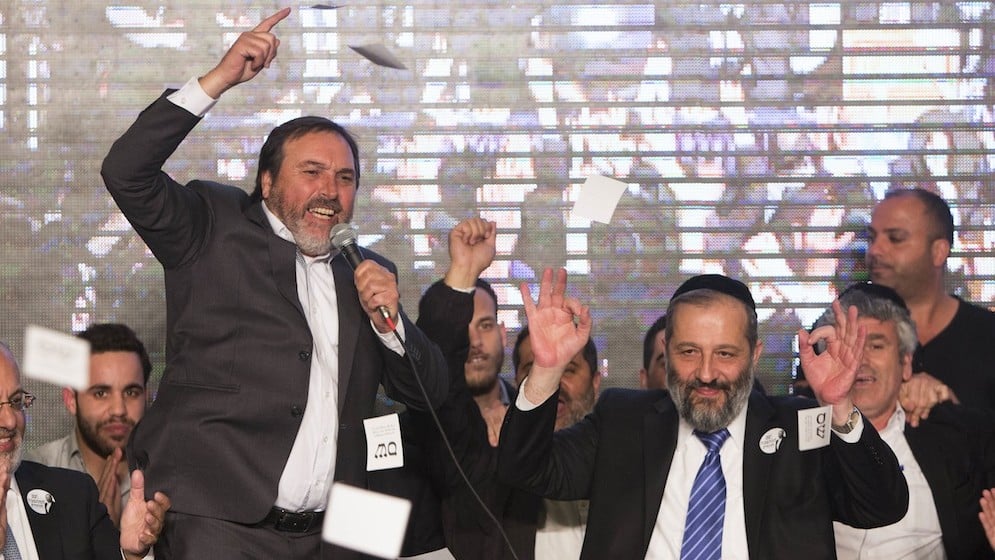
Prime Minister Benjamin Netanyahu has accepted the demand of the Sephardi ultra-Orthodox party Shas to remove the sales tax on basic food staples as a condition for resuming coalition negotiations.
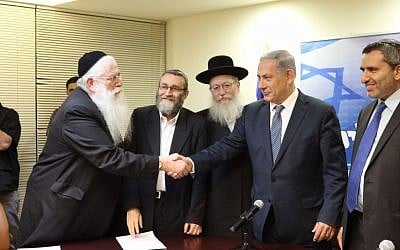
Shas leader Aryeh Deri was meeting Netanyahu Thursday to continue talks, a day after the prime minister signed up his first two government partners: the Ashkenazi ultra-Orthodox party United Torah Judaism and the center-right Kulanu party.
Netanyahu initially refused to support Shas’s sales tax exemption initiative, only acceding to the demand after Deri said it was a condition for Shas entering the government, Hebrew-language media reported Thursday.
According to reports, Shas’s Deri is likely to receive the economy and religious affairs ministries, as well as two deputy minister positions.
The Religious Affairs Ministry has been a major stumbling block in coalition talks with another of Likud’s potential partners, the Jewish Home party, which is also seeking the office.
Earlier on Thursday, Deri announced he would not be seeking the interior minister position, telling Army Radio that although the office would have allowed him to create major social change, he is “attentive to public criticism.”
Deri previously served as interior minister for five years but was forced to step down in 1993 following an indictment filed against him. He was eventually convicted of bribery, fraud and breach of trust, and served two years in prison.
Deri said his party’s demands also included raising the minimum wage and expanding public housing. If those terms were not met, he would refuse to join the government “even if offered the Foreign Ministry,” he said.
“I am stating my demands. Nothing is set in stone. I was outside [the government] for 15 years, and we will do fine serving the public from the opposition,” Deri warned.
Kulanu wins veto on Jewish Statehood, High Court bills
On Wednesday, Netanyahu’s Likud party clinched coalition deals with Kulanu and United Torah Judaism, bringing the emerging coalition up to 46 seats, meaning he requires only 15 more to form a government by the May 7 deadline.
Kulanu, headed by former Likud minister Moshe Kahlon, will be given control of the finance, environmental protection, and housing and construction portfolios, as well as the leadership of the Israel Land Administration, under the deal.

Kulanu’s coalition agreement also includes a clause that would allow the party to block controversial bills aimed at curbing the Supreme Court’s powers, and prevent the controversial Jewish State Bill from being signed into law.
Avigdor Yitzchaki, a member of Kulanu’s negotiating team, told Army Radio that his party would not abide bills that would reduce the court’s power to cancel Knesset laws and give politicians more clout in the panel that appoints judges.
Kahlon, in addition to being finance minister, will also be head of the Ministerial Committee for Privatization, the Calcalist business daily reported.
Under the deal with UTJ, several major reforms drafted by the previous government, and aimed at integrating the ultra-Orthodox community into Israeli society, will be frozen, including aspects of legislation that would mandate ultra-Orthodox army or national service.
UTJ party leader Yaakov Litzman will be handed the Health Ministry and appointed its deputy minister (UTJ party members do not assume top ministerial positions on ideological grounds), and MK Moshe Gafni will head the powerful Knesset Finance Committee, which Kahlon had at one time demanded during negotiations with Likud.
Times of Israel staff contributed to this report.










The Times of Israel Community.