

Netanyahu, Kahlon said to close in on coalition deal
Though significant progress reported, Kulanu’s opposition to Likud plans to undercut Supreme Court remains an obstacle
 Add ToI as a Preferred Source on Google
Prime Minister Benjamin Netanyahu’s Likud party and Moshe Kahlon’s Kulanu were moving closer to striking a coalition deal Monday night, as the premier continues to lead difficult negotiations to build a new government following the March 17 election.
The two party leaders issued joint statement following a meeting in the evening, saying they had “made progress in coalition talks” and “scheduled a follow-up meeting.”
A Likud source involved in the negotiations told Walla News that “significant headway has been made.” The sides reportedly agreed that Kulanu would receive the Finance Ministry, Construction and Housing Ministry and Environmental Protection Ministry.
However, a major sticking point is a set of laws Likud wants to advance in the new Knesset to restrict the powers of the Supreme Court, laws which Kahlon opposes. These include a bill which would severely limit the court’s ability to annul bills passed by the Knesset, as well as allow the plenum to re-legislate laws shot down by the court; and a bill that would change the make-up of the Judicial Selection Committee to give the government increased clout in the process.
The first bill would require a panel of 11 judges to review laws passed by the Knesset, and would require 9 of those to rule against a law in order to invalidate it. The bill would also enable the Knesset to circumvent such a repeal with a majority of 61 members.
The second bill would increase the number of politicians sitting in the selection panel from four (out of nine) today to six.
On Monday President Reuven Rivlin gave Netanyahu a 14-day extension to coalition talks on Monday, the maximum allowed under law. Netanyahu now has until May 7 to complete the negotiations and establish his new government.
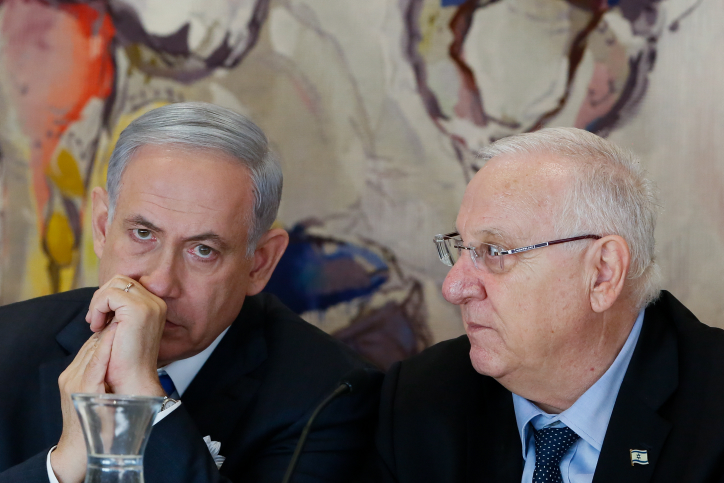
“We’ve moved forward, and we’re well on our way,” Netanyahu said in a joint press conference with the president at the President’s Residence in Jerusalem on Monday morning, “but more time is needed to make sure [the government] is a stable one, and to reach agreement on a number of important [issues] that will enable us to tackle the challenges facing the state of Israel.”
“The nation as a whole is eager for a government that can make decisions,” said Rivlin, urging a swift conclusion to the coalition negotiations.
“The public sees an interim government as something that must be corrected. I wish you success in establishing a stable government for the State of Israel in the coming days,” the president added.
Netanyahu looks close to finalizing deals with two ultra-Orthodox parties, Shas and United Torah Judaism, who are seeking ministries and parliamentary committees with large budgets catering to their constituents.
But large gaps remain with the two other pieces needed to complete the puzzle, the nationalist Jewish Home and Yisrael Beytenu parties, both of whom are led by long-time Netanyahu associates who have a tumultuous relationship with the prime minister.
Despite disappointing election results, both parties are demanding top cabinet posts and major influence that appear disproportionate to their numbers. Netanyahu has yet to budge and has signaled he may leave them out.
According to a report on the Ynet news site, Jewish Home demands that Ayelet Shaked, the party’s No. 3, be given a ministerial post, and that the Religious Affairs Ministry not be handed over to Shas. Jewish Home party leader Naftali Bennett on Sunday threatened to break from negotiations with Netanyahu should the prime minister give Shas the religious affairs portfolio.
“Taking the religious [affairs] portfolio unilaterally from religious Zionism and giving it to Shas is the end of negotiations with the Jewish Home [party],” he tweeted.
Yisrael Beytenu, a right-wing secular nationalist party, won’t budge on rolling back religious legislation on universal national service for the ultra-Orthodox and reforms of the state conversion and marriage registration systems, matters which Netanyahu’s religious party allies seek to change. If Netanyahu concedes these issues to Shas and United Torah Judaism, party officials told Ynet that Yisrael Beytenu has no qualms about joining the opposition.
Meanwhile, Kahlon on Sunday night said he would only join the coalition if Yisrael Beytenu or the Zionist Union were in, Channel 2 reported. Without one of the two parties, Netanyahu’s majority would not rise above 61 seats in the 120-seat Knesset, giving every individual MK in the coalition the power to threaten the government’s stability.
With a resounding election victory last month, Netanyahu seemed to have an easy path toward quickly establishing a coalition government with his traditional nationalist, religious and ultra-Orthodox Jewish allies. But after weeks of negotiations with potential partners, Netanyahu is finding the task harder than expected and is reportedly — at least according to threats from Likud officials — flirting with the idea of reaching out to his main dovish rivals in Zionist Union to form a unity government.
Throughout the heated campaign, Netanyahu ruled out the possibility of joining forces with Isaac Herzog and his center-left Zionist Union and vowed to rule from the right.
Election results gave his Likud party 30 seats and secured him a potential 67-seat majority with his traditional allies. In negotiations, however, these allies have made demands to head powerful government ministries.
Under Israeli election rules, if Netanyahu fails to form a coalition at the end of 42 days — the first 28 plus the two-week extension — Rivlin can assign someone else the task of doing so. While this is technically possible, it is unlikely that Zionist Union would have an easier time establishing a coalition. If no one succeeds in forming a coalition, the president would be left with no choice but to order a new national election.
Zionist Union head Isaac Herzog is under heavy pressure from his followers not to join Netanyahu. Both men have denied reports of a secret meeting. Over the weekend, Herzog vowed to go to the opposition.









The Times of Israel Community.