

Netanyahu’s electoral trip to Washington
The PM’s address to Congress on Iran next week won’t move Obama one inch, but he ignores the West Bank to Israel’s peril

 Add ToI as a Preferred Source on Google
Avi Issacharoff, The Times of Israel's Middle East analyst, fills the same role for Walla, the leading portal in Israel. He is also a guest commentator on many different radio shows and current affairs programs on television. Until 2012, he was a reporter and commentator on Arab affairs for the Haaretz newspaper. He also lectures on modern Palestinian history at Tel Aviv University, and is currently writing a script for an action-drama series for the Israeli satellite Television "YES." Born in Jerusalem, he graduated cum laude from Ben Gurion University with a B.A. in Middle Eastern studies and then earned his M.A. from Tel Aviv University on the same subject, also cum laude. A fluent Arabic speaker, Avi was the Middle East Affairs correspondent for Israeli Public Radio covering the Israeli-Palestinian conflict, the war in Iraq and the Arab countries between the years 2003-2006. Avi directed and edited short documentary films on Israeli television programs dealing with the Middle East. In 2002 he won the "best reporter" award for the "Israel Radio” for his coverage of the second intifada. In 2004, together with Amos Harel, he wrote "The Seventh War - How we won and why we lost the war with the Palestinians." A year later the book won an award from the Institute for Strategic Studies for containing the best research on security affairs in Israel. In 2008, Issacharoff and Harel published their second book, entitled "34 Days - The Story of the Second Lebanon War," which won the same prize.
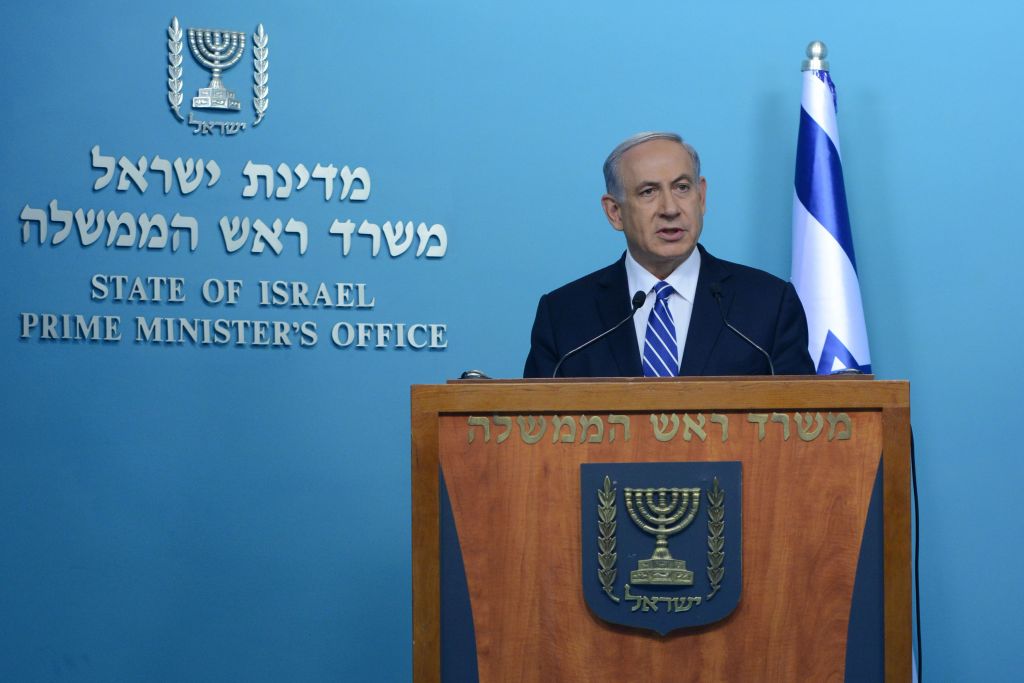
In four more days it will happen. On Tuesday, March 3, Prime Minister Benjamin Netanyahu will address the US Congress and try to save an entire nation from the disaster unfolding before us: A nuclear Iran.
Netanyahu could not have imagined a better issue for him to tackle on the eve of Israeli elections, at least not until House Majority Leader John Boehner came to his aid, and initiated a move that could help him greatly against Isaac Herzog come election day. But at what cost? Some argue that this maneuver will cause significant damage to the relations between Israel and the United States, if it hasn’t done so already.
What’s more, the chances that the Democrats will stand by Israel’s side and against President Barack Obama on the nuclear negotiations issue are nil. As such, what we may be witnessing is a showdown by Netanyahu and the Republicans against Obama and the Democrats.
US-Israel relations, which were always based on bi-partisan support, will experience one of the most significant fractures to date, and so will the pro-Israel Jewish organizations in America. Whether they want to know it or not, they will be seen as supporters of Netanyahu and opponents of Obama, even though this may not at all be true.
Everyone in Washington knows that the chance of Netanyahu’s speech changing Obama’s policy is a big, fat zero. This is not the way to convince the administration, nor is it the way to influence Congress; the successes of Israel and the pro-Israel lobby in Washington have usually come about through cautious moves and quiet contacts.
Netanyahu’s claim that he is going to the US to convince the Americans that the agreement taking shape between the P5+1 powers and Iran is a disaster, is like throwing sand in the eyes of Israeli voter, even though the agreement is indeed bad.
And this is perhaps the important point that many Arab leaders understand. The way negotiations with Tehran have been handled by the US and the five other world powers has been problematic in their eyes, to say the least. Washington has been holding conversations for many months with Tehran without the use of sticks, only carrots. As it appears, the emerging agreement will allow Iran to remain a nuclear threshold state.
The lack of seriousness, or even disregard, with which moderate Arab states are treating Netanyahu’s trip to Congress, does not derive from conciliatory attitudes toward the negotiations. Quite the opposite. It is mostly that they understand that the speech won’t accomplish anything. Arab leaders also understand that any connection with Netanyahu will harm them politically in their own countries.
In many ways, Arab countries are treating the possibility of a bad deal with Iran with more gravity than Israel. Most Arab leaders fail to understand Obama’s handling of foreign policy, especially toward Iran. The prevailing approach in Riyadh, Cairo, Amman and the UAE, is that one must not conduct negotiations at all with Tehran. For moderate Arab states, the US should only be brandishing the stick; no carrots.
A nuclear Iran presents a strategic threat to these states – militarily, because of the fear of ballistic missiles and terror attacks, and domestically because of Iranian subversion in these countries, and in other places like Yemen. For moderate Arab countries, Iranian nuclear capabilities, or that of Shiites in general, mean a threat that will be impossible to stop or handle. They will have to develop a response, either a nuclear weapon or threshold capability.
The threat a nuclear Iran poses to Arab countries is staggering, no less than the threat Israel would face. This is a broad camp against Iran, the biggest imaginable as long as no one declares it publicly.
But despite the shared fate regarding Iran, there is a still a deep disagreement between the moderate Arab states led by Egypt’s Abdel Fattah al-Sissi and Israel — the Palestinian issue. To them, this is one of the most important factors to prevent further regional escalation, and Jerusalem’s policies on this matter have been mystifying at best, even harmful.
Playing with fire and electricity in the West Bank
On August 31, 2010, a dinner was held in the IDF’s Judea and Samaria Division to mark the end of the Ramadan fast. Israeli and Palestinian commanders gathered to celebrate the meal together. The division commander then was Brig.-Gen. Nitzan Alon, currently the outgoing head of the Central Command. With Alon were many other officers, and of course all the heads of the Palestinian Security Services like Ziad Habariah and Majed Faraj, and the Palestinian interior minister.
Just before the start of the meal, news was received of a terrorist attack at the Bnei Naim junction near Hebron. Four Israelis were killed, Yitzhak and Tali Ames, and two passengers in their car, Kochava Even Chaim and Avishai Schindler, all residents of the Beit Hagai settlement.
The notice of the brutal attack put an end to the meal. Demonstratively, the Palestinians put their forks down and emphasized how seriously they saw the incident. One of those present said that, “This was not a show, this was real.”
The heads of the security services said immediately that it was their intention to do their duty and catch the murderers. About five weeks later, two of those involved in the attack, Hamas members from Hebron, were eliminated by an IDF and Shin Bet force. Rumor had it that the intelligence on their location came from the Palestinian security forces.
Since then a lot of bad blood has flowed between the PA and Israel. The negotiations stopped. The PA asked to join the International Criminal Court. Israel stopped transferring tax money. And despite it all, security coordination continued. But those who know the subject intimately explain that the coordination is no longer at its height, and it’s hard to say how long it will last.
Yes, the PA still carries out arrests of Islamic Jihad and Hamas members. But the real desire to fight the terrorist groups is gone, mostly because of the suspension of the tax transfers and the payroll problems. It’s hard to think of a situation that is more problematic for maintaining quiet in the West Bank.
It’s the security forces, of all people, those who go out to stop terror attacks against Israeli targets and angry demonstrations that could slide into an intifada, who are not likely to receive their salaries at the beginning of March because of the Israeli decision to stop the money transfers.
For the past two months, they have only received part of their salaries.
Did anyone in the Israeli government think about this in depth, and consider its consequences? Did anyone understand fully the potential impact of 180,000 PA workers, who support more than a million people, being unable to make a living?
The Israeli defense establishment opposes the suspension of the tax transfers, decided on by the political leadership as reprisal for the PA joining the ICC (International Criminal Court). The prime minister, defense minister and their staffs thought it would be wise to take the step, but there is a price to the move.
Still, it must be said, the Palestinian leadership is not rushing anywhere. It doesn’t want an escalation now, certainly not on the eve of the Israeli elections. It will likely wait patiently until the elections in order to see if Netanyahu intends to transfer the money or not.
If Israel does transfer the money, a new target date will appear on the horizon – the creation of a new Israeli government around May. In the meantime the PA will prepare a petition for the international courts and the Security Council. Even then, it doesn’t mean the end of security coordination or the dismantling of the PA.
Ramadan starts in June and ends in late July. What happens before, or right after Ramadan, is hard to say. There are so many variables that could contribute to instability: terrorist attacks, burning mosques, soldiers who feel mortal threats during operations, any number of factors could cause an escalation before the summer.
For a while it seemed the issue of electricity could be added to the list of possible catalysts. The Prime Minister’s Office claimed earlier this week that the decision to cut off Nablus and Jenin from power did not come from the political leadership, but rather from the Israel Electric Corporation. And to its credit, it moved on Thursday to resolve the problem. Netanyahu also approved the much-delayed connection of the new West Bank city Rawabi to the water supply. On the eve of his highly politicized visit to the United States, welcome steps indeed. More are needed.









The Times of Israel Community.