

New Palestinian envoy in DC sees ‘opportunity’ in Trump
Husam Zomlot says that for US president to succeed where others have failed, he will need to take on a more neutral role
 Add ToI as a Preferred Source on Google
Dov Lieber is a former Times of Israel Arab affairs correspondent.
US President Donald Trump seems “committed” and “serious” about helping Israelis and Palestinians reach a peace deal, but he will have to adopt a more neutral role than past US administrations to reach the “win-win” situation he hopes for, the incoming Palestine Liberation Organization ambassador to Washington said.
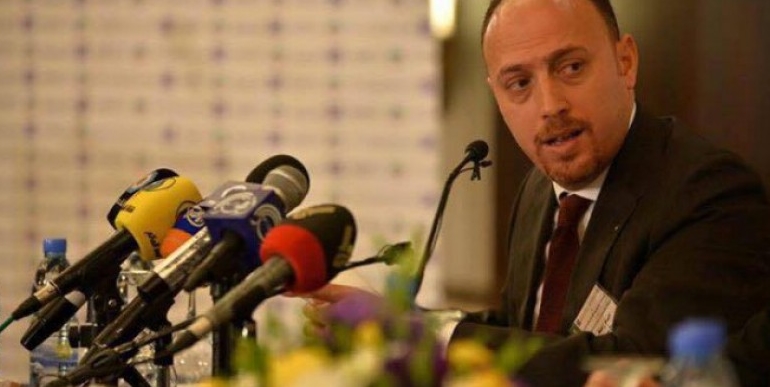
Husam Zomlot, who met with journalists at the Grand Park Hotel in Ramallah last week, was enthusiastic when talking about the “opportunity” that has presented itself since Trump declared his desire to strike a peace deal between Israelis and Palestinians after decades of negotiations.
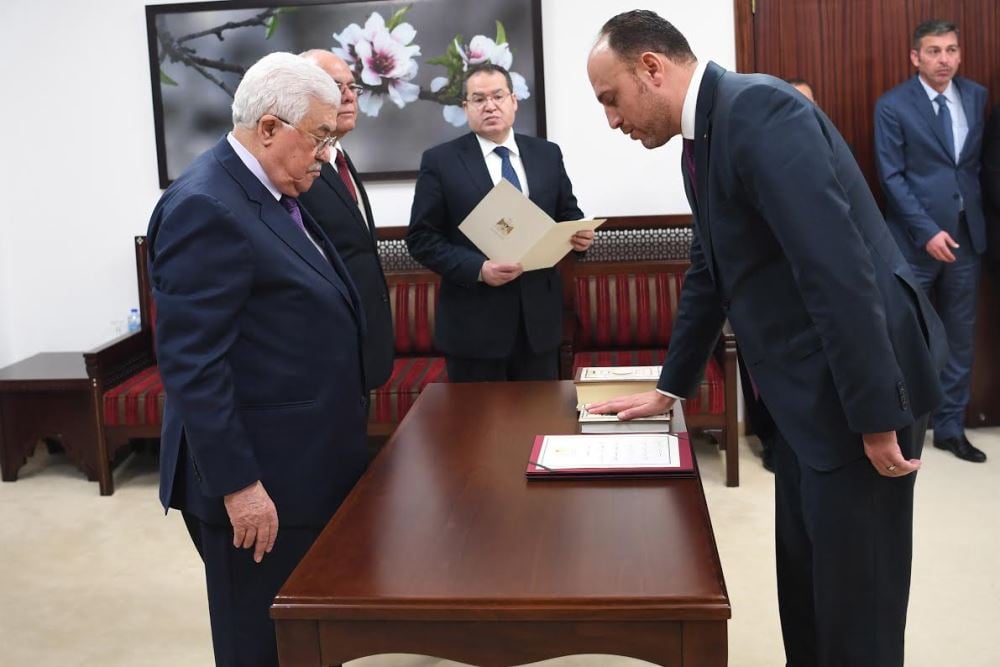
Zomlot, who was born Khan Yunis, Gaza, will arrive in Washington on March 29, after working as a senior political adviser to Palestinian Authority President Mahmoud Abbas.
“We see an opportunity on our side. The call from President Trump was very clear in terms of his commitment and intention to engage the two parties toward a final political settlement,” said Zomlot, “what he has described as the ‘ultimate deal.’ Inviting our president is definitely a step in the right direction. He has heard the other side. Now he will hear ours.”
It was a remarkable change in tone for the PA.
In the immediate aftermath of Trump’s election, panic had begun to spread in Ramallah as the new president did not respond to any of the PA’s messages. Back then, however, Zomlot was certain it was just a matter of waiting until the new US administration could get up and running. Time seems to have proved him right, as a little over a month later Abbas received an invite over the phone from Trump to visit the White House.
That visit is slated for sometime in mid-April, though no official date has been set.
Soon after Abbas and Trump spoke, the US president sent his Special Representative for International Negotiations Jason Greenblatt to Jerusalem and Ramallah to get the ball rolling on restarting the peace process.
Zomlot described Greenblatt as “very attentive and in a listening mood.”
“He was able to see the political/human side of the story, and I think his visit was seen very positively here,” he said.
The PA frequently refers to the current Israeli government as the most right-wing and radical since the founding of the Jewish state.
Zomlot was asked why he was hopeful about the peace process if the conditions seemed worse than they were during the failed attempts of the Obama administration.
“We should never lose hope for reaching peace. This is a very precious thing. And it’s not like we have any other options. All other options are bleak for us and the rest of the world,” he responded.
“There is the bitter taste of trying and failing,” he admitted. “But there is the upside that we Palestinians have learned the lessons of failure, especially that peace requires firm commitments from all sides. We are going to explain these lessons to President Trump very clearly and transparently.”
Asked how things might be approached differently in order to avoid previous pitfalls, Zomlot said, “The magic solution to this is the word borders. That’s why, first and foremost, we must agree on the 1967 lines as the border of the two states. We have to agree on the final destination and then work backward.”
Abbas has made similar statements in the past.
Israel has always rejected such an approach, saying that borders need to be negotiated and that concessions can’t be made at the outset.
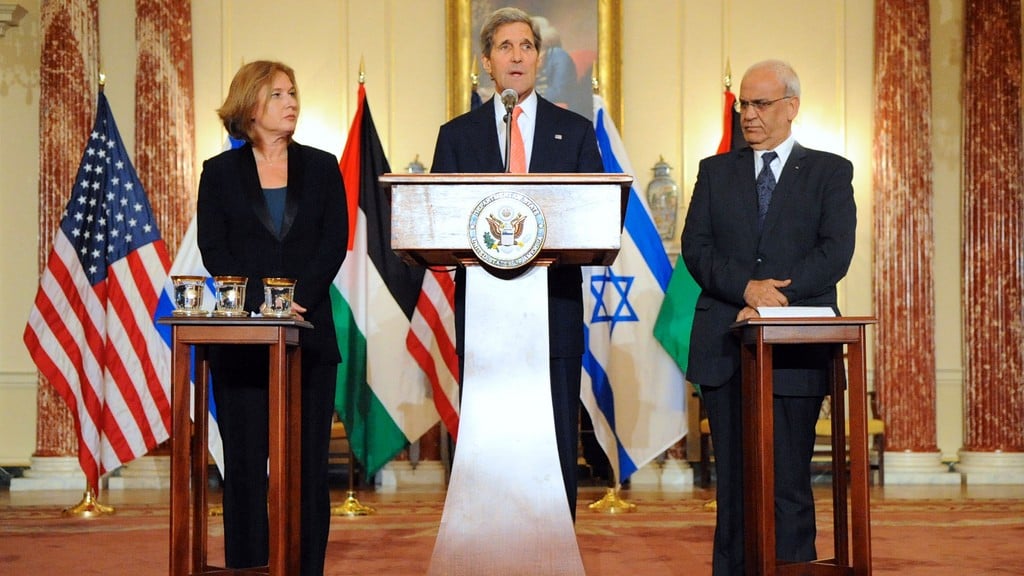
Former US secretary of state John Kerry, who led the Israeli-Palestinian negotiations in 2013-2014, said they failed primarily due to a severe lack of trust between both sides.
When asked about this, Zomlot responded: “It’s the chicken and the egg. I think trust cannot really be built without resolving the political issue, and you need trust to solve the political issue.
“We have shown the Israelis that we are serious by deeds, not words, especially in the arena of maintaining stability and security,” he continued, referring to the deep and ongoing security coordination between Palestinian forces and the IDF in the West Bank, adding that “Israel has pocketed that, but it has remained uncommitted to peace.”
Prime Minister Benjamin Netanyahu has said he is open to meeting with Abbas at any time and any place. However, Abbas said he agreed to meet with Netanyahu in Moscow last year at the invitation of Russian President Vladimir Putin, without any preconditions, but the Israeli premier declined to come.
Zomlot was adamant that for Trump to succeed as a peace broker, he needs to become the “equalizer” between the two sides.
“In the past, America has not been able to play the equalizer and added to the already vast asymmetry of power between the occupied and the occupier,” he said.
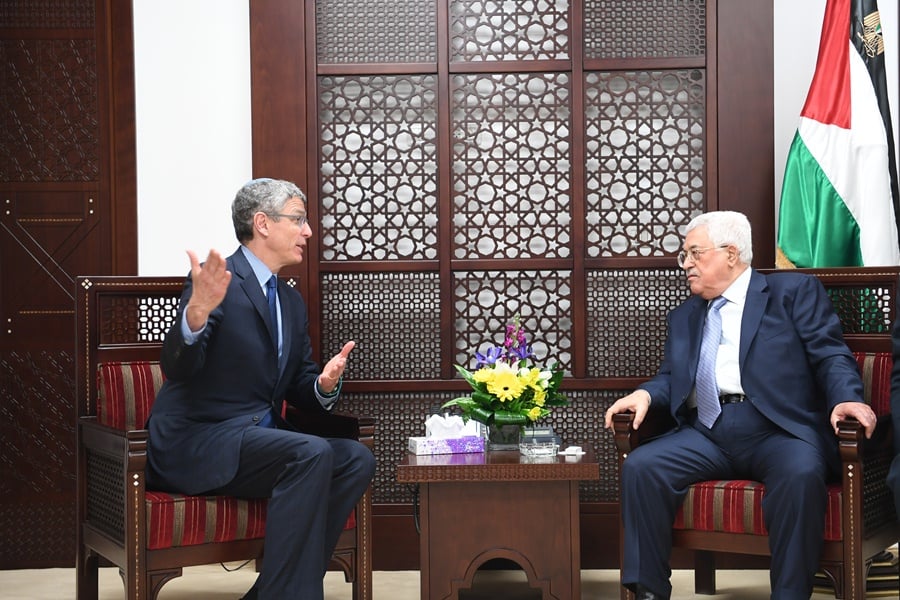
Zomlot, who helped set up a meeting between the Jewish Reform movement leader Rabbi Rick Jacobs and Abbas, said he intends to continue his outreach to the Jewish community when he arrives in Washington.
“One of my main missions is to tell the truth and depict the situation as it is, but oriented toward the future and ways to move forward,” he said.
“To do so, we need to show this is not a conflict between Muslims and Jews, nor is it a conflict between the aspirations of the two societies to establish independent modern states. The majority of Palestinians and Israelis, in my opinion, are similar in seeking a different future.”






The Times of Israel Community.