

Nuclear negotiators to hold potential final meeting
Announcement of a nuclear accord with Iran expected later this morning amid conflicting reports on its terms
 Add ToI as a Preferred Source on Google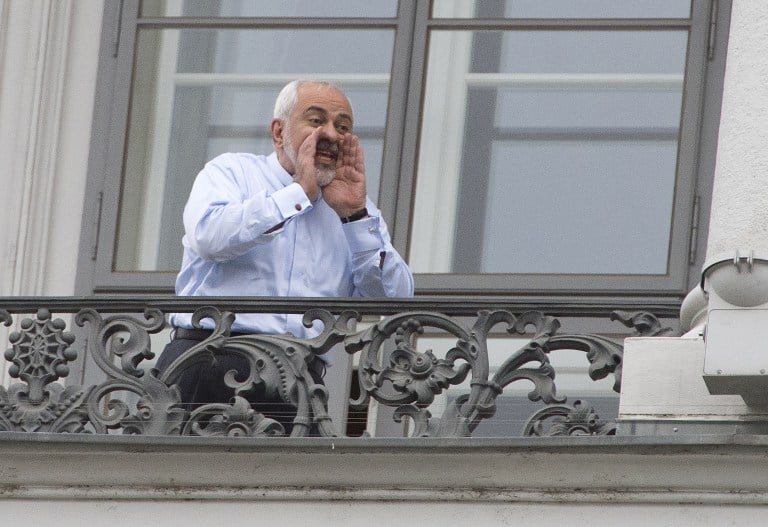
Marathon talks between Iran and major powers towards a historic nuclear deal ran into the early hours Tuesday as signs emerged that an agreement might be imminent.
Foreign ministers of the six powers (P5 +1) were expected to hold a potentially final meeting Tuesday morning ahead of a planned announcement that would bring to a close an 18-day marathon push to strike an accord.
Reuters reported late Monday that the draft nuclear deal called for allowing UN inspectors access to all suspect Iranian sites, including visits to military sites such as the Parchin facility. An Iranian official later denied this, calling the claims “psychological warfare” and saying entry to military facilities was a “red line” that would not be crossed.
According to the Reuters report, based on conversations with an unnamed diplomatic source, the accord would also see crippling international sanctions on Tehran removed during the first half of 2016.
Additionally the UN Security Council was expected to adopt a resolution later this month on the steps required by both sides to fulfill their obligations under the terms of the agreement.
The Reuters report noted that the information was based on a draft of the agreement and not the final document, and could still change.
Speculation was rife throughout the night that a deal could be announced before dawn Tuesday. Different delegations at the negotiations advised reporters to stay up all night and be ready for an early morning news conference. But US State Department spokeswoman Marie Harf and EU spokeswoman Catherine Ray both noted in identical tweets that there are “all kinds of unfounded rumors on the schedule.”
Iran’s Fars news agency later reported that a “comprehensive” meeting on a possible final deal would be held by the sides at 0800 GMT (11 a.m. Israel time). According to some reports, Iranian Foreign Minister Mohammad Javad Zarif and EU foreign policy chief Federica Mogherini were expected to make a statement in the morning.
The P5+1 — the United States, Russia, China, Britain, France and Germany — have been trying to nail down an accord to end a 13-year standoff over Iran’s nuclear program.
The mooted deal would sharply curb Iran’s nuclear program and impose strict UN inspections in order to make any drive to make nuclear weapons all but impossible and easily detectable.
In return the web of UN and Western sanctions choking Iranian oil exports and the economy of the 78-million-strong country would be progressively lifted.
The diplomatic push began when Iranian President Hassan Rouhani came to power in 2013. In November that year an interim deal was agreed but two deadlines in 2014 for a lasting accord were missed.
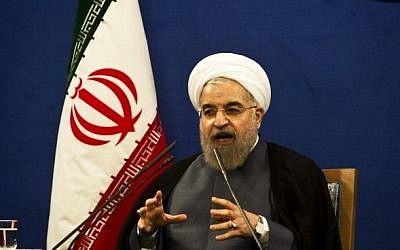
Then in April, the parties scored a major breakthrough by agreeing the main outlines of an accord, aiming to finalize it by June 30, a deadline since pushed back twice.
Since April, legions of legal and technical experts have made great strides working out the nuts and bolts of how the highly ambitious and technical agreement will work.
But the talks have stumbled on the exact timing and pace of sanctions relief and Iran’s desire to have a UN arms embargo lifted.
The White House said on Monday that the marathon discussions in Vienna had “made genuine progress.”
“But there continues to be some sticking points that remain unresolved,” White House spokesman Josh Earnest told reporters in Washington.
He said the United States and its partners did not want to rush the final stages of the lengthy talks.
“Typically, some of the most difficult issues are the ones that get kicked to the end, and that’s why the president is going to resist any effort to sort of fast-forward through the closing here,” Earnest said.
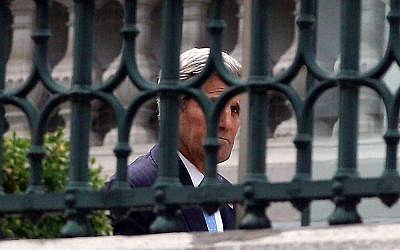
Foreign ministers from the major powers rejoined US Secretary of State John Kerry and Iranian counterpart Mohammad Javad Zarif in Vienna’s Palais Coburg hotel late Sunday and early Monday to try to nail down the deal.
China’s Foreign Minister Wang Yi told reporters as he arrived there should be “no more delays.”
No deal could be “perfect” but “conditions are already in place for a good agreement,” Wang said through an interpreter.
Zarif said he believed there should be no further extension to the talks — but added that he would negotiate as long as needed.
“I always believe there shouldn’t be any extension but we could work as long as necessary to finish this,” Zarif said as he met Wang.
Also present were Russian Foreign Minister Sergei Lavrov and his counterparts from Britain, France and Germany — Philip Hammond, Laurent Fabius and Frank-Walter Steinmeier.
Lavrov left the venue of the talks at around 1:35 a.m. Tuesday (2335 GMT Monday), telling reporters he was going to bed.
If a deal can be sewn up, the prospect of a subsequent possible thawing of US-Iranian relations unsettles many in the Middle East, however.
These include Shiite Iran’s Sunni-ruled rivals Saudi Arabia and other Gulf monarchies who see Tehran as a destabilizing influence in the region.
Israel, widely assumed to have nuclear weapons itself, is also deeply concerned, complaining that the proposed deal will fail to stop its arch foe getting the bomb.
“We are heading toward a bad deal, and in the period after it we will of course have to continue preparing to protect ourselves on our own,” Israeli Defense Minister Moshe Ya’alon said on Monday.
Many in the United States, particularly among US President Barack Obama’s Republican opponents, agree that the mooted deal is too weak.
The agreement will prove a “hard sell” in the US Congress, which will have 60 days to chew over the accord, top Republican Mitch McConnell said in an interview broadcast Sunday.







The Times of Israel Community.