

Off Comey Island, but still on the rollercoaster
Thousands of miles away, Israel’s press hangs onto the FBI head’s announcement like chads on a ballot and keeps the drama dialed up to 11
 Add ToI as a Preferred Source on Google
Joshua Davidovich is The Times of Israel's Deputy Editor
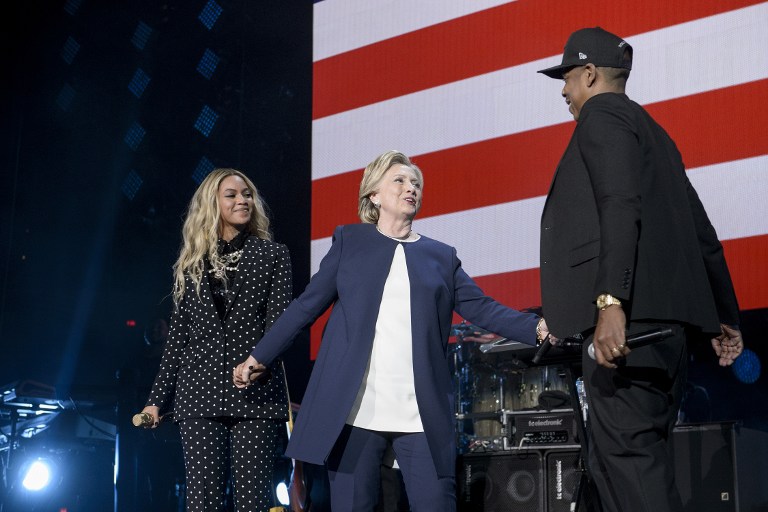
Despite all the frightening threats and attacks on journalists this election season – including a shirt spotted at a Donald Trump rally that provided (hopefully) the exclamation point of this worrying trend – journalists would be amiss if they didn’t admit that the last year of campaigning has been a boon to their industry. Between the clownish bombastic buffoonery of Trump and rival Hillary Clinton’s email travails, the campaigns have given reporters, newshounds and the public a roller coaster ride the US (and world) won’t soon forget (even if that’s exactly what they will want to do).
The final (?) twist in the never-ending saga came Sunday night, as FBI director James Comey confirmed that nevermind about all that stuff about re-looking into Clinton’s emails – you know, that little affair that briefly threw her campaign into a tailspin last week. Papers in Israel hang on the news like chads on a Florida ballot – with one commentator calling it a November Surprise (like October surprise, but a month later) and another dubbing it a November shock.
It’s not wise, from a professional perspective or a business one, to call the race too early (see Dewey def. Truman) and so despite the announcement, papers keep the drama turned up to 11, including Israel Hayom, which has stuck by its man Trump all along and plays the Comey announcement much smaller than the other two major dailies.
In Haaretz, which leads its front page with an analysis of the Comey announcement from Chemi Shalev, the drama comes not from the short time left a day before Americans head to the polls but from Democratic annoyance at Comey for running their campaign, and the country, through a needless rigmarole.
“Even though Democrats might have been expected to praise Comey for his courage in publishing the new findings 48 hours before the elections, despite the criticism he knew he would face, they were actually even more livid than before,” he writes. “If the FBI had the resources to go over the new emails found on the computer of Anthony Weiner, husband of Clinton adviser Huma Abedin – why didn’t it do so before Comey’s letter to Congress, which upended the presidential race, they asked. If Clinton wins in the end, perhaps things can be ultimately be ironed out, possibly with Comey paying with his own head. If she loses however, a dark cloud will hang over American democracy for decades to come. Comey and the FBI will bear the responsibility of having subverted the electoral process and possibly thwarted the will of the American public.”
In Yedioth Ahronoth, commentator Nahum Barnea at first writes that those who voted early and based their votes on the FBI announcement (as polls show few did) were essentially hoodwinked by Comey, in electoral meddling he describes as “truly unprecedented, both in US history and in the history of other countries.”
But then he seems to change his mind about how much it really mattered.
“The announcement last night won’t change much: the opinions of the voters have been set. Whoever decided to vote Trump or give up voting based on unhappiness with the two candidates won’t change their minds because of the new announcement,” he writes. “The Republicans, who saw the FBI chief as a miracle, will accuse him now of folding to political pressure. Trump and his voters will continue to send Clinton to prison. Even if there’s some chance of restoring a smidgen of her good name, a smidgen of respect, now is not the time for that.”
While it indeed buries the story somewhat, Israel Hayom still covers the Comey announcement, calling it his “second bombshell” about Clinton’s “apparent corruption” a term the paper continues to use despite the FBI clearing her again.
City of Trumperly love?
Yet it’s clear that the tabloid wants to send readers a message that this is still anyone’s game, reporting that 184 electoral votes remain up for grabs, and crowning the Mayfair diner in Philadelphia as the place where the election will be decided.
Reporter Boaz Bismuth tries to paint the diner, and the surrounding eponymous neighborhood, as a microcosm of America, or at least a microcosm of the America Trump is hoping to win over, a blue stronghold ripe for some rouge.
“Mayfair in northeast Philadelphia is a neighborhood made up of mostly Irish Americans. Other neighborhoods in Northeast Philly are seen as Italian, Russian, German or Jewish. But one thing unites them all doubly: They have experienced demographic shifts because of immigration, and all of them are blue-collar, believe in an America proud of itself and what it can do – fertile ground for a candidate like Trump,” he writes. “Even though Pennsylvania hasn’t voted Republican since 1988 … maybe this time they will turn back the clock. Hillary isn’t especially loved here, especially not among the middle class. Here it’s more because of the millions shes made more than the emails. Here, to tell the truth, nobody cares about the emails. Here Hillary’s riches are more bothersome, especially since they have trouble making it through the month, and the economy is the more worrying issue. The positive employment numbers published last week don’t come to fruition here.”
Trying to find a microcosm of the American melting pot in any neighborhood from sea to shining sea is a fool’s errand, though yesterday I noted that papers had failed to send correspondents further west than I-95, which could only give a view of one slice of the country.
But on Monday, papers also include dispatches from reporters further afield, including Yedioth, which puts Danielle Barron back on its front page, this time not for accusing Haaretz columnist Ari Shavit of sexual assault, but to write about the election from LA, where she normally covers entertainment for the Jewish Journal.
Tasked with giving a taste of the Jewish mood surrounding the election, she notes that Jews find themselves most influential through donations and in advisory roles. As for those just watching the vote, things don’t look so hunky-dory.
“This stormy election season, entering its final round, finds American Jews worried, worried and divided in their opinions,” she writes. “For a year and a half they have been made to watch a horse race of American politics, which bordered on parody: wide hints of racial disparities, class warfare, chauvinism, corruption and refurbished voices of neo-Nazis and the Ku Klux Klan put everyone in a stormy, highly turbulent election season from which neither candidate has emerged clean.”
In Haaretz, Tali Krupkin writes from Texas (another state whose electoral votes are already all but doled out), where she describes a Dallas afternoon, where the talk of the town is on Trump’s chances of winning, and, at least among local journalists, voter suppression efforts at play among minorities.
“Southern states have closed hundreds of voting booths — a move that has hurt poor voters, mostly Hispanics and blacks,” she writes before quoting someone in Arizona (where she also reports from) saying they won’t be voting because of long lines at voting booths.
In rich white neighborhoods they have lots of voting stations, but in Hispanic areas not so much, the person is quoted saying. “I have to work. I can’t waste the whole day to vote.”








The Times of Israel Community.