

Over a quarter of voters made decision at last minute
Poll shows large percentage of Israelis were unsure which ballot to cast in final days before election
 Add ToI as a Preferred Source on Google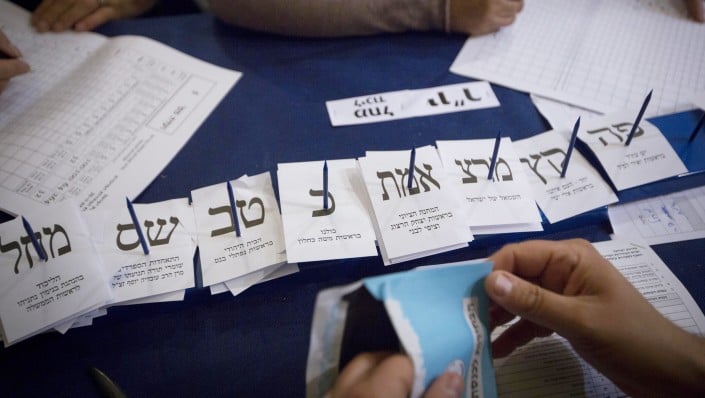
More than one-quarter of Israeli voters did not decide how they would vote until the final days of the campaign, according to a new survey.
The survey, commissioned by the New Majority, a group that sought to unseat Prime Minister Benjamin Netanyahu, found that 15 percent of voters made their decision on the way to the voting site on March 17, while 13% decided in the final days of the campaign, Al Monitor reported. By contrast, only 9 percent of American voters in 2012 made their decisions so late in the election.
Of Israel’s last-minute decision makers, 62% voted for right-wing parties, 16% for left-wing parties and 21% for centrist parties.
The poll of 1,133 voters in the election also found that 66% viewed Netanyahu as a strong leader, compared to 24% who felt that way about Zionist Union leader Isaac Herzog. In addition, 79% of voters who ranked security as their top concern voted for right-wing parties.
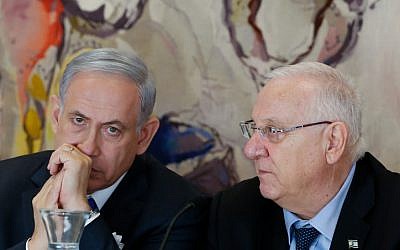
On Monday President Reuven Rivlin gave Netanyahu a 14-day extension to coalition talks, the maximum allowed under law. Netanyahu now has until May 7 to complete the negotiations and establish his new government.
“We’ve moved forward, and we’re well on our way,” Netanyahu said in a joint press conference with the president at the President’s Residence in Jerusalem on Monday morning, “but more time is needed to make sure [the government] is a stable one, and to reach agreement on a number of important [issues] that will enable us to tackle the challenges facing the state of Israel.”
Netanyahu looks close to finalizing deals with two ultra-Orthodox parties, Shas and United Torah Judaism, who are seeking ministries and parliamentary committees with large budgets catering to their constituents. He also appears to be close to a deal with the centrist, economy-focused Kulanu party.
But large gaps remain with the two other pieces needed to complete the puzzle, the nationalist Jewish Home and Yisrael Beytenu parties, both of whom are led by long-time Netanyahu associates who have a tumultuous relationship with the prime minister.
With a resounding election victory last month, Netanyahu seemed to have an easy path toward quickly establishing a coalition government with his traditional nationalist, religious and ultra-Orthodox Jewish allies. But after weeks of negotiations with potential partners, Netanyahu is finding the task harder than expected and is reportedly — at least according to threats from Likud officials — flirting with the idea of reaching out to his main dovish rivals in Zionist Union to form a unity government.
Under Israeli election rules, if Netanyahu fails to form a coalition at the end of 42 days — the first 28 plus the two-week extension — Rivlin can assign someone else the task of doing so. While this is technically possible, it is unlikely that Zionist Union would have an easier time establishing a coalition. If no one succeeds in forming a coalition, the president would be left with no choice but to order a new national election.
AP contributed to this report.









The Times of Israel Community.