

Poll: Terror tops Americans’ foreign policy concerns
8 in 10 Republicans and two-thirds of Democrats favor military action to prevent the spread of nuclear weapons
 Add ToI as a Preferred Source on Google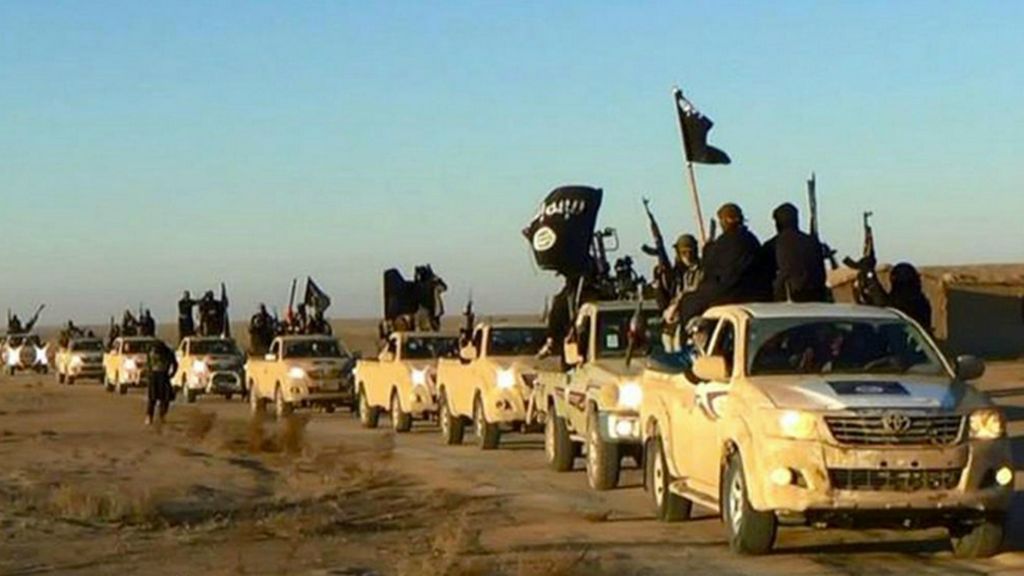
WASHINGTON (AP) — Few Americans want to see the United States take a more active approach to foreign policy, but the vast majority thinks it may be appropriate to take military action to achieve at least some goals in international affairs, according to a new poll conducted by the Associated Press-NORC Center for Public Affairs Research.
Within the Republican Party, there is a significant divide between those who desire a more active and a more passive foreign policy.
Little appetite for intervention
Americans overall are more likely to say that the US should take a less active role than a more active one in world affairs, 38 percent to 28% — while 33% say its current role is about right.
But the poll reveals a significant divide within the Republican Party, with 38% saying the United States should take a more active role in world affairs and 44% saying it should take a less active role. Just 17% fall in the middle, saying its current role is about right.
Among Democrats, 23% prefer a more active role, 31% a less active role and 45% say its current role is about right.
Terrorism, immigration most important issues
Asked to name the foreign policy issues that will be the most important to face the next president, the threat of terrorism and the Islamic State group emerged as the most prominent by far. More than half of Americans named them as top issues, including similar percentages of Democrats and Republicans.
That includes 3 in 10 Americans who specifically mentioned the Islamic State group.
After terrorism, immigration was the second most mentioned issue — especially by Republicans. Nearly a quarter of Americans, including 3 in 10 of Republicans, named immigration as a top foreign policy issue facing the next president.
Other topics named by significant numbers of Americans (between 10 and 20 percent) include Russia, Iraq and Afghanistan, environmental issues like climate change, humanitarian issues, the global economy and foreign trade.
Military action favored against terrorism
Despite relatively little appetite for a more active foreign policy generally, 9 in 10 Americans say the US should use military force to protect itself from terrorist attacks. Republicans are nearly unanimous on that issue, with 9 in 10 Democrats in agreement.
Eight in 10 Americans, including 9 in 10 Republicans and three-quarters of Democrats, say the US should also use military action to protect US allies from attack. And 7 in 10 Americans, including 8 in 10 Republicans and two-thirds of Democrats, favor military action to prevent the spread of nuclear weapons.
Large majorities also say the US should use both economic and diplomatic power to achieve those goals.
Diplomacy, economic action preferred for other goals
Most Americans, including similar percentages of Democrats and Republicans, say the US should not use military force to promote democracy or human rights in other countries, or to advance US economic interests. To achieve these goals, Americans would rather use diplomatic or economic pressure.
Diplomacy is favored by 9 in 10 to protect US economic interests, by 8 in 10 to defend human rights in other countries and by 7 in 10 to promote democracy in other countries.
Economic pressure is supported by about 8 in 10 to protect the country’s economic interests, by 7 in 10 to promote and protect human rights, and by just under half to promote democracy in other countries.
What Americans want to hear from candidates
Terrorism-related issues top the list of topics Americans want to hear about from whoever becomes the next president of the United States. Nearly 9 in 10 Americans said it was very or extremely important for them to know about the next president’s plan to deal with terrorism generally, as well as the Islamic State group specifically.
About 9 in 10 Americans also said it was very important for them to know that person’s plan for dealing with cyberattacks by foreign countries or terrorist groups.
Lower on Americans’ list of priorities come Iran (73 percent), China (64 percent), government surveillance programs (64 percent), trade (63 percent), Russia (60 percent) and the conflict between Israel and the Palestinians (59 percent). Just 34 percent say it’s important for them to know what the next president will do about Cuba.
The poll was conducted before the nuclear deal reached between the United States, Iran and other world powers, and after the US and Cuba formally re-established diplomatic ties.
The AP-NORC Poll of 1,167 adults was conducted online and by phone June 25-July 7, using a sample drawn from NORC’s probability-based AmeriSpeak panel, which is designed to be representative of the US population. The margin of sampling error for all respondents is plus or minus 4.5 percentage points.
Respondents were first selected randomly using address-based sampling methods, and later interviewed online. People selected for Amerispeak who didn’t otherwise have access to the Internet were interviewed over the phone.
Copyright 2015 The Associated Press.







The Times of Israel Community.