

‘Syria peace negotiations depend on weapons talks’
After contentious start to Geneva conference, Kerry says US ‘committed to try to work together’ with Russia
 Add ToI as a Preferred Source on Google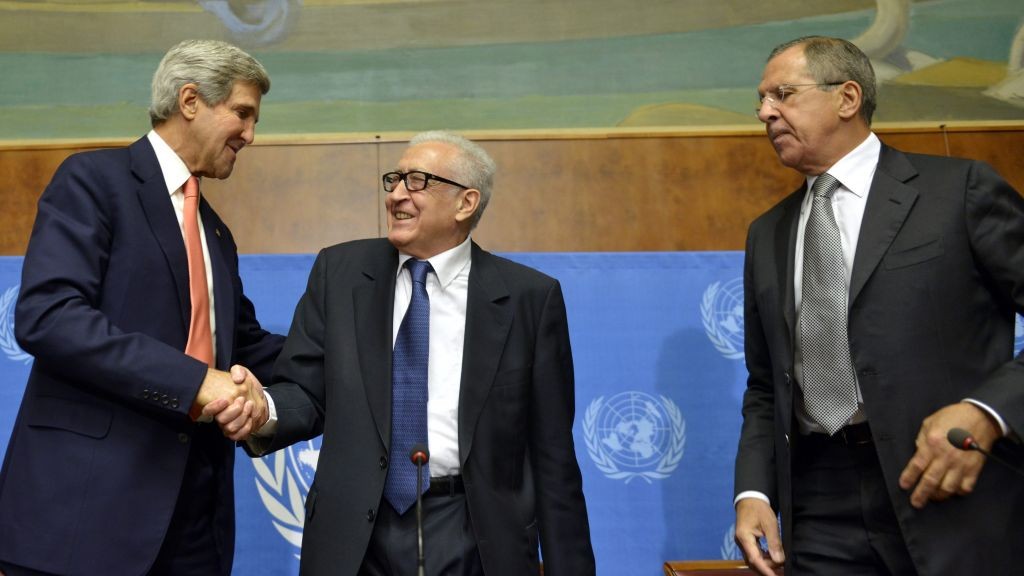
GENEVA — Prospects for restarting peace talks in Syria’s civil war depend on the outcome of negotiations for the Syrian government to give up its chemical weapons, US Secretary of State John Kerry and Russian Foreign Minister Sergey Lavrov said Friday as meetings on the arsenal lurched into a second day.
Kerry and Lavrov met with UN-Arab League envoy Lakhdar Brahimi about the potential for a new Geneva peace conference, while a short distance away American and Russian chemical weapons experts were huddled in a hotel to haggle over technical details critical to a deal on chemical weapons.
In the background was the lingering threat of a limited US military strike against Syria if President Bashar Assad doesn’t hand over his chemical weapons in time.
Brahimi acknowledged the high stakes. He told Kerry and Lavov that their chemical weapons negotiation “is extremely important in itself and for itself, but it is also extremely important for us who are working with you on trying to bring together the Geneva conference successfully.”
More than 100,000 people have been killed in two years of civil war. On Friday the international group Human Rights Watch accused the Syrian government and militias fighting on its side of carrying out summary executions that killed at least 248 people in two towns in May.
Kerry, flanked by Lavrov and Brahimi, told reporters after an hourlong meeting that the chances for a second peace conference in Geneva will require success first with the chemical weapons talks, which have been “constructive” so far.
“I will say on behalf of the United States that President (Barack) Obama is deeply committed to a negotiated solution with respect to Syria, and we know that Russia is likewise. We are working hard to find the common ground to be able to make that happen,” Kerry said.
“We discussed some of the homework that we both need to do,” he added.
Kerry said they agreed to meet around Sept. 28 on the sidelines of the annual UN General Assembly high-level meetings in New York.
But, he said, the future of peace negotiations depends on the outcome of the weapons talks.
“We are committed to try to work together, beginning with this initiative on the chemical weapons, in hopes that those efforts could pay off and bring peace and stability to a war-torn part of the world,” he added.
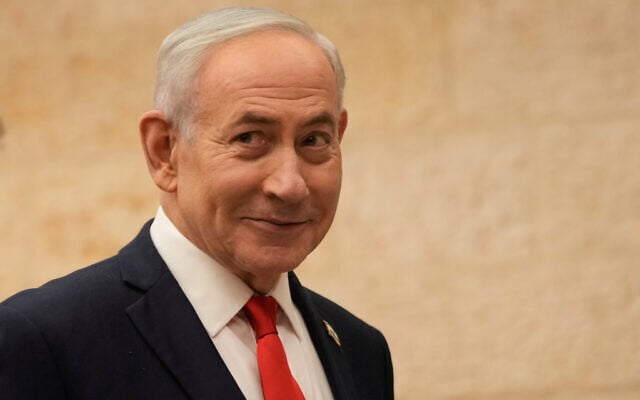
The State Department announced Friday that Kerry would travel to Israel on Sunday to meet with Prime Minister Benjamin Netanyahu regarding the ongoing Israeli-Palestinian negotiations and developments in Syria.
On Thursday, Brahimi met privately with Kerry at a Geneva hotel to explore ways to resume international negotiations last held in Geneva in June 2012 aimed at ending the Syrian civil war.
Lavrov said Russia has supported the peace process from the start of the Syrian conflict and said he had discussed with Kerry and Brahimi the Geneva communique from the 2012 meeting on Syria and ways of preparing for a second conference.
“It is very unfortunate that for a long period the Geneva communique was basically abandoned,” said Lavrov.
He said that document “means that the Syrian parties must reach mutual consent on the transitional governing organ, which would come with full executive authority. And the communique also says that all groups of Syrian society must be represented.”
President Barack Obama says he is hopeful negotiations Secretary of State John Kerry is having over the future of Syria’s chemical weapons “bear fruit.”
The president said during an Oval Office meeting with Kuwait’s ruler Friday that they agree Syrian President Bashar Assad’s government used chemical weapons in a criminal act.
Obama told reporters it’s important for the international community to respond and get those weapons out of Syria.
He said he told Kuwaiti Sheik Sabah Al Ahmed Al Sabah he is hopeful for progress during talks this week between Kerry and Russian Foreign Minister Sergey Lavrov. He said any agreement to remove Syria’s chemical weapons stockpile “needs to be verifiable and enforceable.”
When the chemical weapons talks began Thursday, Kerry bluntly rejected a Syrian pledge to begin a “standard process” by turning over information rather than weapons — and nothing immediately. The American diplomat said that was not acceptable.
“The words of the Syrian regime, in our judgment, are simply not enough,” Kerry declared as he stood beside Lavrov. “This is not a game.”
Salem Al Meslet, a senior member of the opposition Syrian National Coalition, said he was disappointed that the Kerry and Lavrov meeting on chemical weapons wasn’t about punishing Assad.
“They are leaving the murderer and concentrating on the weapons he was using,” he said of Assad. “It is like stabbing somebody with a knife then they take the knife away and he is free.”
He spoke on the sidelines of a two-day opposition conference in Istanbul.
The talks were the latest in a rapidly moving series of events following the Aug. 21 gas attack on suburbs in Damascus. The US blames Assad for the use of chemical weapons. Assad denies his government was involved and instead points to the rebels fighting a 2-year-old civil war against it.
Obama began trying to win support at home and abroad for a punitive military strike on Assad’s forces, but put that effort on hold when the Syrian government expressed willingness to turn over weapons to international control.
Obama dispatched Kerry to Geneva to hammer out the details of the proposal even as he kept alive the possibility of US military action.
UN associate spokesman Farhan Haq said Friday that the documents Syria submitted to join the international treaty banning chemical weapons were still being reviewed to determine whether they provide enough information. If accepted as complete, Syria would become a party to the Chemical Weapons Convention 30 days later, Haq said.
Syria’s ambassador to the United Nations had said that as of Thursday when it submitted the documents his country had become a full member of the treaty, which requires destruction of all chemical weapons.
Assad, in an interview with Russia’s Rossiya-24 TV, said his government would start submitting data on its chemical weapons stockpile a month after signing the convention. He also said the Russian proposal for securing the weapons could work only if the US halted threats of military action.
At a meeting in Kyrgyzstan on Friday, Russian President Vladimir Putin said that Syria’s efforts have demonstrated its good faith.
“I would like to voice hope that this will mark a serious step toward the settlement of the Syrian crisis,” Putin said.





The Times of Israel Community.