

The end of the world?
A day after the Iran deal, the papers all agree it’s ‘bad,’ but not everyone is convinced an apocalypse is imminent
 Add ToI as a Preferred Source on Google
Marissa Newman is The Times of Israel political correspondent.
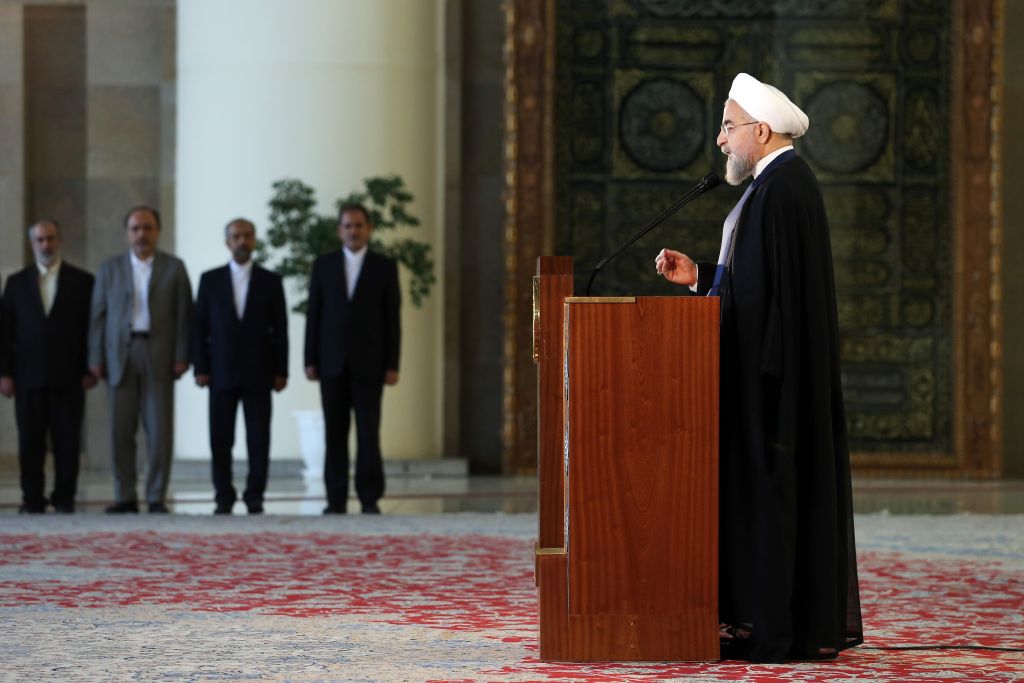
The deal is done. After months of grueling negotiations and endless conjecture, the Iran nuclear agreement between world powers and Tehran prompts ample punditry in the Hebrew newspapers on Wednesday that vary from doomsday predictions to a cautious wait-and-see attitude.
But make no mistake – the deal is bad and considerably favors Tehran, the Israeli press warns, in a rare moment of consensus. How bad? Well, there the papers are split.
“The world capitulated to Iran,” screams Yedioth Ahronoth’s headline. “An agreement that will go down in infamy,” Israel Hayom’s front page reads. Haaretz, meanwhile, goes with a straightforward “The negotiations are over: Iran and the world powers signed a nuclear deal.”
Over in Yedioth, veteran columnist Nahum Barnea is more concerned about Israel’s exclusion from the deal than the terms of the accord itself.
“In all the 159 pages of the deal with Iran I haven’t found one mention of Israel – not even indirectly. On the one hand, that’s good: If the world powers would impose the same demands on Israel that it did to Iran, we would be in deep trouble. On the other hand, it’s outrageous: a deal that has such fateful ramifications on those who live here was signed over our head, as if between Vienna and Tehran nothing exists but the ayatollahs regime’s good intentions,” he writes.
“The disregard for Israel is not only insulting: it’s dangerous. It’s possible it’s even more dangerous to Israel than Iran’s nuclear threshold.”
Still, Barnea does not completely dismiss the deal, arguing that it’s better than the alternative and lashing out at Prime Minister Benjamin Netanyahu for what he argues are his unreasonable demands and apocalyptic predictions.
“Netanyahu is acting like someone who is convinced this is a fight for Israel’s very existence. He’s wrong: Israel will live on. The Holocaust is not imminent. The fact that Israel didn’t manage to thwart the deal or even affect its contents is an utter failure. But Netanyahu is immune to failure: in his world there are only two options – either he wins, or he’s a victim. He won the elections; he’s a victim in the Iran deal.”
Similarly, columnist Alex Fishman writes that the deal “is bad, it’s true. Israel wouldn’t have signed it. But the nuclear deal signed with the Iranians is far from being a disaster or a national catastrophe.”
Rather than attempting to bring down the deal in Congress, which Fishman maintains is an impossibility, Israel should press US for a generous defense package in compensation.
Over in Israel Hayom, the daily features a photo of US Secretary of State John Kerry holding the nuclear agreement text, alongside one of British Prime Minister Neville Chamberlain brandishing the Munich Agreement.
“Yesterday, July 14, 2015 — a day that will go down in infamy — the Islamic Republic of Iran got an international kashruth certificate,” writes columnist Boaz Bismuth. “’We’ve achieved all our goals,’ boasted Iranian President Hassan Rouhani. Obama gave — Iran took.”
“He [Obama] doesn’t understand that July 14, 2015, is a big day for Iran and a shameful day for humanity. Obama yesterday praised the American diplomacy that brought change. Indeed, it did bring change, the enemy of yesterday is today’s friend, without changing his colors. Obama wanted a legacy. He got it yesterday in the form of this deal, which will go down in infamy.”
The paper also mocks the international inspection system on Iranian facilities, under the headline: “Inspection? Please give 24 days’ notice.”
A political source quoted by the paper says the time period would give Iran enough time to hide any covert military activity, likening it to the cops giving a criminal organization a warning before a drug bust.
Over in Haaretz, diplomatic correspondent Barak Ravid concurs with Kerry’s assessment of Netanyahu’s criticism as “way over the top,” while listing the numerous “problematic” elements in the deal.
“Netanyahu was right when he said that it was not a good agreement, but he is mistaken and misleading when he tells the Israeli public that there can be such a thing as a good agreement regarding the Iranian nuclear program,” he writes. “The document approved Tuesday by the representatives of Iran and the world powers has many problematic sections, like the mechanism reimposing sanctions on Iran if it violates the agreement, which is so cumbersome it’s doubtful it could ever be applied; or the long period UN inspectors will need to get approval to visit suspicious installations, a period that would give the Iranians enough notice to destroy evidence of what went on there.”
Other failings of the deal include the R&D on centrifuges and the lifting of the arms embargo, Ravid writes. “It’s scary to think what this section will do the weapons arsenals of Hezbollah and Hamas in a few years.”
Still, Ravid reserves judgment about the deal’s effect on Israel’s security.
“A decade in the Middle East is an eternity. It’s enough to look at what has happened in our region over the past five years to understand how much is liable to change in Iran as a result of this agreement. The change could be for the worse, but it might also be for the better. An Iran that is closer to the West, that is full of foreign companies, that is closer to the United States and maintains a normal dialogue with it may become an Iran that’s less dangerous for Israel.”
Haaretz’s editorial similarly urges Israel to give the deal a chance, while keeping a watchful eye on Tehran.
“The State of Israel, which sees itself, justifiably, as the primary target of the Iranian threat, is entitled to view the agreement with suspicion and distrust. Just as it exposed an important part of Iran’s nuclear program, it must continue to monitor Iran’s behavior and warn of any violation of the deal. Although Israel was not a partner to the negotiations, it cannot give up the role of watchdog that it has taken upon itself. At the same time, it must give a fair chance to Iran and the world powers to inaugurate a new path in their mutual relations.”










The Times of Israel Community.