

There’s always room for one more with 100 Chairs
New York group Moatza Mekomit connects expat Israelis with American Jews for holiday meals
 Add ToI as a Preferred Source on Google
Luke Tress is The Times of Israel's New York correspondent.
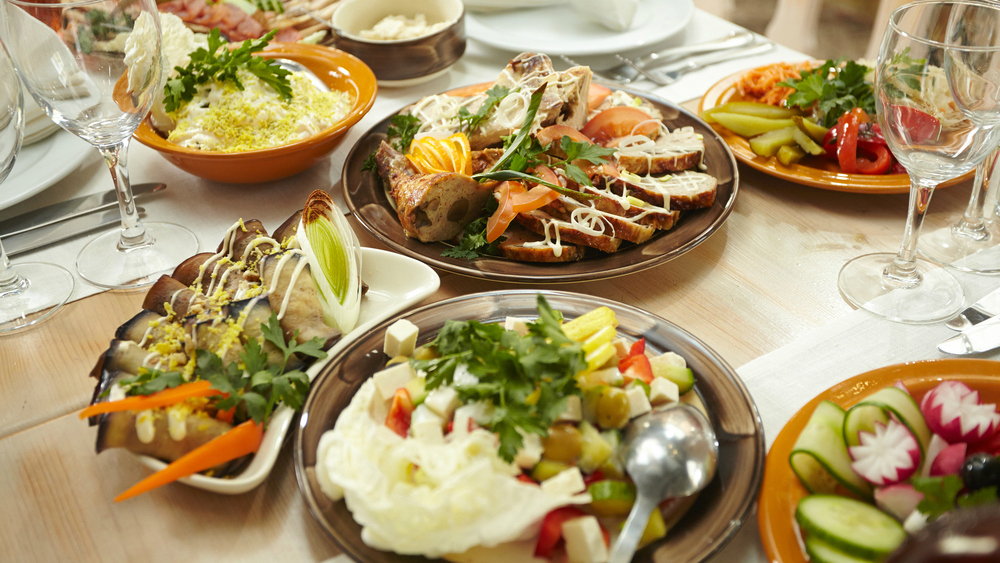
NEW YORK — Ella Scheinwald’s Rosh Hashanah spread includes everything from honey cakes and fruit salads, to spicy Moroccan fish. She spends at least three days getting ready and hosts up to 50 people.
“Chicken with raisins, oranges and honey, lamb, tons of pies, roasted vegetables. There’s always too much food,” she said. “We open our house to anyone who wants to do the holidays with us.”
The Scheinwald dinner is part of a program called 100 Chairs that connects Israelis who are looking for a place to celebrate the holidays with families who volunteer to host them. The initiative was organized by Moatza Mekomit, an umbrella organization for Israeli groups in the New York area, because Israelis sometimes struggle to adjust to life without family in New York.
According to Anat Ziv, one of the organizers of 100 Chairs, the program is meant to help welcome Israelis to New York and also improve the connection between the Israeli and American Jewish communities in the city.
“This is part of the desire to be responsible for people in the community who do not have a place to celebrate,” Ziv said. “You don’t want anybody to stay alone.”
Moatza Mekomit established 100 Chairs several years ago in response to the Israeli community’s needs, Ziv said. The organizers advertise through social media, Israeli news outlets and by word of mouth. They try to match guests with host families based on religious and language preferences, age, interests and location.
Ziv took over the program last Passover. She works as a therapist and sees how hard holidays can be. She realized working with 100 Chairs was a way to help alleviate suffering during the holiday season.
New York’s size, tempo and intensity can be overwhelming for Israelis when they first arrive, she said.
“Being away from the homeland is something that is really hard, at least in the first two or three years. Although they’re both western societies, it’s still difficult getting adjusted to the culture,” Ziv said.
“For example, a play date is an American concept. In Israel there is no such thing, there is no planning ahead of time. In America the kids are very busy with after school activities, and after a while you understand and you don’t think it’s weird,” said Ziv.
Dovik Biran moved to New York from Boston five years ago. He missed celebrating holidays with a large group of friends and family when he first came to the US and would go home to Israel during his first few years.
“My ex-wife is in Israel, we are very close friends, and she tells me ‘Hey, tomorrow I’m having 17 people over including your sister,’” Biran said. “That’s a moment when you feel it in your heart that you would rather be there.”
He signed up for the program last Passover to share the holiday with his wife, who is not Jewish. He found a family in New Jersey through 100 Chairs and has remained close to them since.
“My wife, she’s learning the customs, how it works, now we’ll be at their place again for Rosh Hashanah,” Biran said.

Another expat Israeli, Shiran Achrak, said adjusting to life in New York was difficult at first for her and her husband, partly because they do not know many Israelis in the city. They moved to New York from Israel two years ago after she finished her studies at Bar-Ilan University. She found 100 Chairs online and hopes to connect with other Israelis on Rosh Hashanah through the program.
“I can’t believe that I’m here and I’m not with my friends,” Achrak said. “I’m from Israel, I’m used to a lot of people.”
‘I can’t believe that I’m here and I’m not with my friends. I’m from Israel, I’m used to a lot of people’
Achrak met most of her friends in New York at work, in her building and in her synagogue. The latter is relatively rare among Israelis: Most are not connected to a synagogue, Ziv said.
“Here, to be a member of a synagogue, you have to pay heavy dues and Israelis are not used to being a part of a synagogue,” Ziv said. “In Israel you get the feeling of the holidays from the street or from the family.”
Moatza Mekomit started a project to go with 100 Chairs called Hazmana L’Tfila, or “invitation to prayer,” to open New York synagogues to Israelis. At least 18 synagogues in the area have invited Israelis to attend holiday services for free, Ziv said.
The effort is especially important this year, in light of the divisive debate over the Iran nuclear deal this summer, Ziv said.
“We felt like there was something happening between the American government and Israel and we’re not happy about it,” Ziv said.

The work has been successful so far and benefits both groups, Ziv said. Israeli Memorial Day is now observed in both Hebrew and English by organizations in New York, for example.
‘We are at the beginning of a new era of collaboration’
“I think this is a result of living more together and working more together and understanding the needs of each other’s communities,” Ziv said. “We are at the beginning of a new era of collaboration.”
She said the program is growing and may soon also include Shabbat dinners.
“I found warm-hearted families who open their doors and house and are willing to host — no matter what. It makes you feel really good and see that good people are still in this world. Not everything is so dark,” Ziv said.




The Times of Israel Community.