

Ultra-Orthodox lawmaker: We’re not afraid of early elections
After earlier opposing move to topple government over public broadcaster row, MK Moshe Gafni says his party would do well in new vote
 Add ToI as a Preferred Source on Google
Amid an ongoing coalition crisis that threatens to send Israel to early elections, a senior ultra-Orthodox lawmaker called the prospect “irresponsible” on Monday, but said his party was not afraid of going back to the voters.
“There is this perception that the ultra-Orthodox parties are opposed to elections,” United Torah Judaism MK Moshe Gafni told Channel 10. “I wan to state that this is not true.”
His faction “believe that in a country like ours, which faces such enormous challenges and serious problems, going to elections over the broadcasting authority and the public broadcaster — we think this is an irresponsible move,” he added.
Even so, “we won’t oppose it.”
The last elections were held in March 2015 and the next elections are not scheduled for another two years.
But Prime Minister Benjamin Netanyahu threatened earlier this month to call early elections if the coalition refuses to cancel reforms advanced by his own Likud party that would shutter the Israel Broadcasting Authority and launch the replacement broadcaster, called “Kan,” by April 30.
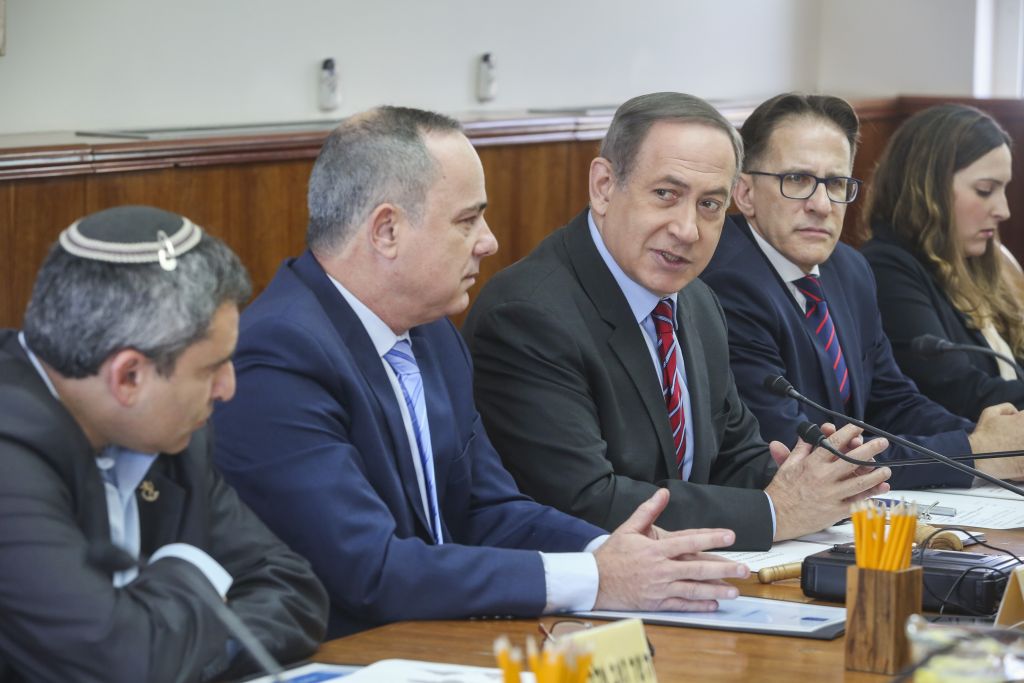
Finance Minister Moshe Kahlon opposes the closure of the new broadcaster, which has been in the works for two years with hundreds of staff already hired and whose closure at this late date would cost taxpayers hundreds of millions of shekels in wasted spending, according to treasury officials.
Following the weekly cabinet meeting Sunday at the Prime Minister’s Office, Netanyahu and Kahlon sat down together along with Interior Minister Aryeh Deri, who then left the two men to talk things through together. They met again Sunday evening, but an agreement remained elusive.
At the cabinet meeting, all three ultra-Orthodox party chiefs, Gafni and Health Minister Yaakov Litzman of UTJ and Deri of the Shas party, told Netanyahu that they opposed early elections and would do everything they could to oppose the toppling of the current government.
In a subsequent public statement that distanced the ultra-Orthodox parties from any unilateral moves by Netanyahu to dissolve the government, the three said, “We will not agree to advance [the date of the elections], and we will have no hand in it.”
In a further push to avert elections, Gafni said later on Sunday that he was in favor of incorporating other political parties into Netanyahu’s coalition.
“If, in the current situation, they must add other parties to the coalition, we are in favor,” Gafni, who heads the powerful Knesset Finance Committee, told Army Radio.

He said that expanding the coalition was “possible,” but that he didn’t anticipate an alternative coalition that would knock Netanyahu’s Likud out of power — as Isaac Herzog, who leads the opposition and the Zionist Union faction, has urged.
But on Monday, Gafni seemed to change his view.
“I’ve heard it said that we are the ones preventing [early elections]. We aren’t. As soon as such a decision is taken, we will be saddened by it, because it’s irresponsible, but we won’t oppose it. We’re the last ones who fear or oppose elections. It may even benefit us, according to polls,” he told Channel 10.
Over the weekend, coalition chair MK David Bitan of Netanyahu’s Likud party attacked Kahlon, saying the finance minister did not have his priorities straight.
“The treasury does not mind throwing away NIS 700 million [$192 million] every year on the [new broadcasting] corporation, while the elderly and the handicapped are barely living on food benefits. The same treasury repeatedly rejects any initiative to raise the disability benefits, but works hard to protect a handful of rich-kid snobs,” Bitan said, referring to the journalists hired by the new broadcaster.
Netanyahu is widely believed to be opposed to the new body because he perceives it as being too left-wing. Netanyahu has long complained of a media hostile to him.
The long-simmering crisis escalated last week when Netanyahu backtracked on an agreement with Kahlon to launch the new public broadcasting corporation — set up through a law passed by his previous government in 2014 and backed by his government.
If Kahlon refused to scrap the new broadcaster, “we’ll go to elections,” Netanyahu was reported to have told Likud ministers at his home on March 18.
Other coalition members have balked at the idea of going to elections, with Deri saying last week that such a move would be “unforgivable.”










The Times of Israel Community.